Archive for war on drugs

Review of Mark A. R. Kleiman, Jonathan P. Caulkins, and Angela Hawken, Drugs and Drug Policy: What Everyone Needs to Know (Oxford: Oxford University Press, 2011), xxi + 234 pgs., paperback, $16.95; and Jonathan P. Caulkins, Angela Hawken, Beau Kilmer, and Mark A. R. Kleiman, Marijuana Legalization: What Everyone Needs to Know (Oxford: Oxford University Press, 2012), xx + 266 pgs., paperback, $16.95.

These two books are part of a series by Oxford University Press called What Everyone Needs to Know. There are currently twenty-six books in this series. The books are written in a question-and-answer format. Obviously, with titles like Invasive Species, Pandemics, and Overfishing, not every book in the series is of interest to libertarians. But aside from Libertarianism: What Everyone Needs to Know (reviewed by David Gordon here), these two books on the drug war are the two titles that libertarians would be the most interested in.

The three common authors of these books are all academics at major universities. Beau Kilmer is co-director of the RAND Drug Policy Research Center. The marijuana book also includes an additional author, Christina Farber, for one chapter.

Drugs and Drug Policy contains 10 chapters with between 9 and 23 questions per chapter. The book also contains acknowledgments, an introduction, a conclusion on "what is to be done?" that is not in a question-and-answer format, an appendix on "how drugs work in the brain" with eight questions and answers, a bibliography, and an index. Each chapter concludes with recommendations for additional reading. There are no footnotes.

Drugs and Drug Policy "includes facts about drugs and drug-related behavior, pharmacology, prohibitions, regulations, and taxes, and how drug enforcement, drug prevention, and drug treatment work, along with their characteristic problems and limitations."

Marijuana Legalization is divided into 2 parts with a total of 16 chapters with between 5 and 17 questions per chapter. The book contains acknowledgments, an introduction, a concluding chapter not in a question-and-answer format that gives the author’s opinions about marijuana legalization, a bibliography, and an index. Each chapter except the last concludes with recommendations for additional reading. There are no footnotes.

Marijuana Legalization is "not intended to persuade" the reader of any particular answers to questions about marijuana legalization and use. The authors "hope to provide both sets of advocates with material for an honest and logically coherent debate, and give people who have not yet made up their minds the raw material needed to develop informed opinions."

Due to their question-and-answer format and skillful manner of explaining technical information, both books are extremely readable. And in spite of the brevity (in a good way) of the answers, the books are very thorough. Although I disagree with the authors’ conclusions, I recommend both books for the information they provide about drugs and the drug war.

What I want to focus on are those parts of these books that relate to drug legalization, drug decriminalization, and drug freedom.

In Drugs and Drug Policy, that would mainly be chapter 2, "Why Have Drug Laws?" and the conclusion, "What Is to Be Done?" In Marijuana Legalization, that would mainly be most of the chapters in part 2, "Legalization and Its Consequences," and the concluding chapter, "What Do the Authors Think about Marijuana Legalization?"

In Drugs and Drug Policy, the authors point out that alcohol and tobacco "far exceed all the illicit drugs combined in the number of problem users and the resulting ill health and death." But instead of pointing out the hypocrisy of the war on drugs and calling for full drug legalization, they recommend tripling the tax on alcohol because it would "improve the health and longevity of heavy drinkers" and "protect nondrinkers from drinking-related accidents and violence" and "banning additives and the pre-rolled cigarette" and "requiring that all smoking products be made from strains of tobacco that do not produce the tobacco-specific nitrosamines (TSNs) that create most of the cancer risk." They reject John Stuart Mill’s "harm principle":

That the only purpose for which power can be rightfully exercised over any member of a civilized community, against his will, is to prevent harm to others. His own good, either physical or moral, is not sufficient warrant. He cannot rightfully be compelled to do or forbear because it will be better for him to do so, because it will make him happier, because, in the opinion of others, to do so would be wise, or even right.

Why? Because "the case for protecting people from themselves – when it can be done at acceptable cost in terms of intrusive enforcement – seems attractive." The authors are utilitarian nanny statists.

In their conclusion, the authors present three lists of policies: a "consensus" list of eleven items they "think might command widespread support," a "pragmatist" list of six items "that could appeal to those prepared to think about drug abuse as a more or less straightforwardly practical problem," and a "political-bridge-too-far" list of six changes "that make good sense to some drug-policy wonks, but that involve departures from current practice and more radical thinking than a prudent politician would endorse."

Obviously, the third list is the most radical. But aside from calling for higher alcohol and cigarette taxes, the authors propose "allowing users to grow their own cannabis, or to form small consumer-owned cooperatives to grow it for them." But "alas," they say, "this approach would yield no tax revenue, which greatly reduces its political appeal."

In Marijuana Legalization, the authors again point out how much more dangerous alcohol and tobacco are than marijuana. They even say:

If we were making laws for a planet whose population had never experienced either marijuana or alcohol, and we had to choose one of the two drugs to make available, there would be a strong case for choosing marijuana, which has lower organic toxicity, lower addictive risk, and a much weaker link with accidents and violence.

But since "that’s not the planet we inhabit," and "alcohol has been an ingrained part of many cultures since the Neolithic revolution," the authors reject treating marijuana as alcohol. "History matters. Custom matters. Practicality matters," say the authors. I guess freedom doesn’t matter.

In the book’s final chapter, "What Do the Authors Think about Marijuana Legalization?," drug freedom is not in their thoughts.

Angela Hawken says: "Existing policies suit me well." But then she goes on to say that she thinks "it’s pretty clear that the cost-benefit balance is in favor of loosening the reins on marijuana." She deems it "worthwhile to experiment with legalization" of marijuana, although she is "concerned with the exploitation of medical-marijuana laws." Hawken also calls for raising taxes on alcohol and restricting its advertising.

Jonathan Caulkins says he would "vote against legalizing marijuana." He prefers reforms and "middle path" options. He is worried about "the children of dependent users." He claims to "generally agree with libertarian notions of letting people harm themselves if that’s what they choose," but "only to a point."

Mark Kleiman posits six options: current policy, decriminalization of use but not production and distribution, permission to use, grow, and give away marijuana, but not to grow or sell it professionally, legalization without commercialization that allows home production and small cooperatives, commercialization with high taxes and tight restrictions, and commercialization on the alcohol model. Missing, of course, is the drug freedom option. Kleiman’s first choice of what he would like to see happen is "permission for production and use through small not-for-profit cooperatives, with a ban on commerce."

Beau Kilmer doesn’t "see much difference between alcohol and marijuana when adults use either in moderation." He has "serious concerns about our current marijuana policies." Although his "thoughts about marijuana policy continue to evolve," if he were "approached for advice by a policymaker who represented a constituency seeking significant changes in their marijuana policies," he advises the incorporation of a "sunset provision" to whatever is decided and rejects legalization because "it is risky to implement the most extreme alternative to prohibition."

Both Drugs and Drug Policy and Marijuana Legalization suffer from the same problems.

There is little attention paid to the views of principled libertarians who argue for absolute drug freedom for freedom’s sake.

There are no references to important works such as Our Right to Drugs: The Case for a Free Market, by psychiatrist Thomas Szasz, or The Economics of Prohibition, by economist Mark Thornton.

The authors take it for granted that the federal government should have a drug policy. Churches may want to have a drug policy. Families may want to have a drug policy. Businesses may want to have a drug policy. Sports teams may want to have a drug policy. Fraternal organizations may want to have a drug policy. But it is not the concern of the federal government to solve drug use problems or ensure that there aren’t any drug abuse problems.

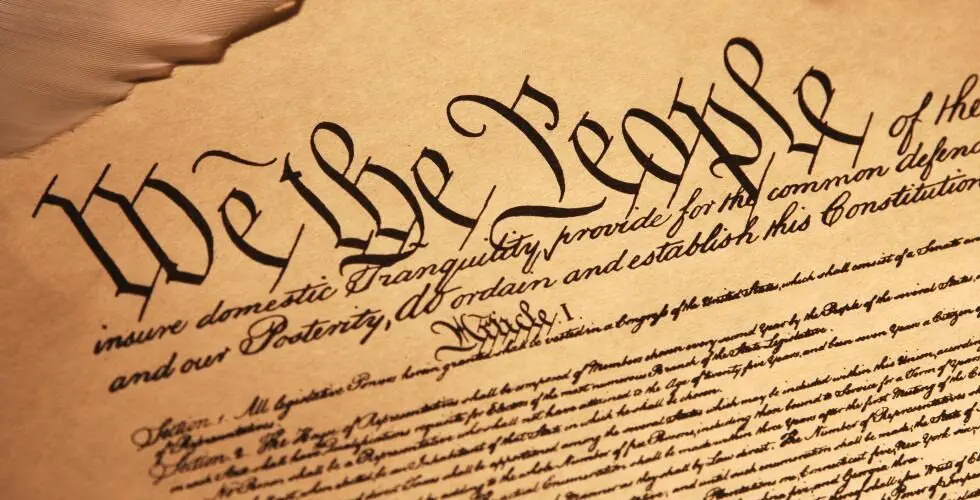
The authors take it for granted that the federal government has the authority to ban substances it deems to be harmful, dangerous, or immoral. But as anyone who has read the Constitution even once can see, the federal government has no such authority.

The main problem, of course, is that real and absolute drug freedom isn’t even presented as a viable option.

So, as I said earlier, although I disagree with the authors’ conclusions, I recommend both books for the information they provide about drugs and the drug war.

And that, in this reviewer’s opinion, is what every libertarian needs to know about these two books on the drug war.

Originally posted on LewRockwell.com on February 6th, 2013.

Tags: , , , , , , ,
Categories : Book Reviews
Comments (4)

http://mises.org/store/Assets/ProductImages/B1035.jpgBook review of The War on Drugs is a War on Freedom by Laurence Vance. Vance Publications, 2012. Orlando, FL. $9.95 at Amazon.com.

To many newcomers to libertarian ideas – especially Christians – it is not always perfectly clear why libertarians oppose the War on Drugs so strenuously. Some Christians even think that the only reason libertarians oppose government prohibition is so that they can get high legally. Nothing could be further from the truth. Simply put, we despise government prohibition because it is a power no government should have. Moreover, the War on Drugs is an incredible example of precisely how a government usurps liberty, destroys lives, and consolidates power unto itself. This short book by Dr. Laurence Vance, writer at LCC, LewRockwell.com, Mises.org, and the Future of Freedom Foundation, explains in great detail why everyone should oppose the War on Drugs .

Vance begins the introduction by giving his purpose in collecting these essays into book form:

This is not a book about the benefits of drugs; this is a book about the benefits of freedom. I neither use illegal drugs nor recommend their use to anyone else. I am even skeptical about the health benefits of most legal drugs.

So why this book? Because I believe in freedom. I believe in individual liberty, private property, personal responsibility, a free market, a free society, and a government as absolutely limited as possible.

The book then contains 19 essays, written over the past 4 years, that tackle the War on Drugs from a variety of angles. A few common themes resonate throughout the book:

1. The War on Drugs is unconstitutional. You would think that “conservatives” who support the United States Constitution would readily admit when the Federal government has overstepped its bounds, but such is rarely the case. Still, the Feds do not follow their own rules, and we should point this out whenever possible. Substance prohibition has never been constitutional.

2. The War on Drugs is a total failure. It has clogged the judicial system and incarcerated completely innocent people, instigated worldwide violence, corrupted law enforcement, eroded civil liberties, and destroyed financial privacy. Additionally, it hasn’t even been able to prevent drugs from getting into prisons much less the general population. By any standard of “helping” anyone, the War on Drugs has completely failed. To me, those in jail for possession of illegal drugs – assuming they have not committed a violent act – are prisoners of war and deserve to be liberated immediately.

3. Drug abuse is a health issue, not a legal issue. If you oppose government intrusion into health care, then there is no reason at all to support the War on Drugs. It is not the government’s business to dictate health issues to you.

4. The War on Drugs is a war on the ideals of liberty and a free society. Actions that are not aggressive in nature have no business being prohibited by government. Vices are not crimes, and it is not the purpose of government to monitor the behavior of citizens like a nanny! The War on Drugs is a perfect example of why government intrusion into people’s lives does nothing but harm. In order to ward off “vices” like illicit drugs, the government must continuously undermine liberty.

Vance even has an essay for why Christians should oppose the War on Drugs. Yes, Christians are free to consider drug abuse a great evil, but such evil should not be compounded by a drug war that is an even greater evil. Vance argues that Christians are both inconsistent and immoral for calling upon the state to punish non-crimes:

It is not the purpose of Christianity to use force or the threat of force to keep people from sinning. Christians who are quick to criticize Islamic countries for prescribing and proscribing all manner of behavior are very inconsistent when the support the same thing [in the United States]. A Christian theocracy is just as unscriptural as an Islamic theocracy.

Now more than ever we Christians ought to expose the War on Drugs for what it is: a War on Freedom. Laurence Vance concisely brings you a wealth of information to educate you on the issues, and I highly recommend this book to any believer anywhere.

Interested in learning more? Check out The War on Drugs is a War on Freedom at Amazon.com. Remember that you support the work of LibertarianChristians.com every time you make a purchase at Amazon for 24 hours after clicking an LCC link!

Tags: , , , , , , , , ,
Categories : Book Reviews
Comments (11)

http://www.biography.com/imported/images/Biography/Images/Profiles/P/Ron-Paul-265881-1-402.jpgToday, Ron Paul gave his farewell address to the U.S. House of Representatives. Here is the text of his speech. Or, watch the entire address at C-Span Video.

Farewell to Congress

This may well be the last time I speak on the House Floor. At the end of the year I’ll leave Congress after 23 years in office over a 36 year period. My goals in 1976 were the same as they are today: promote peace and prosperity by a strict adherence to the principles of individual liberty.

It was my opinion, that the course the U.S. embarked on in the latter part of the 20th Century would bring us a major financial crisis and engulf us in a foreign policy that would overextend us and undermine our national security.

To achieve the goals I sought, government would have had to shrink in size and scope, reduce spending, change the monetary system, and reject the unsustainable costs of policing the world and expanding the American Empire.

The problems seemed to be overwhelming and impossible to solve, yet from my view point, just following the constraints placed on the federal government by the Constitution would have been a good place to start.

Read More→

Tags: , , , , , , , , , , ,
Categories : Articles
Comments (0)

Do you want to live in an authoritarian society? Do you desire an intrusive government? Do you wish for a government that is a nanny state? Do you yearn for government bureaucrats to tell you what you can and cannot do? Do you like puritanical busybodies telling you how to live your life? Do you believe that the government should define and enforce morality? Do you reason that vices should be crimes? Then you should support the war on drugs.

Do you love liberty? Do you treasure freedom? Do you want to live in a free society? Do you prefer government at all levels to be as limited as possible? Do you think people should be responsible for the consequences of their own actions? Do you wish the federal government would at least follow its own Constitution? Do you reason that vices should not be crimes? Then you must oppose the war on drugs.

There is no middle ground. The war on drugs is a war on the free market, a free society, and freedom itself.

If you oppose drug use, you should oppose the war on drugs even more. If you consider drug abuse to be evil, you should consider the war on drugs to be more evil. If you think that taking drugs is a sin, you should think that the war on drugs is a greater sin.

Now, lest there be any misunderstanding, let me make myself perfectly clear. I don’t abuse drugs. I don’t use drugs. And I don’t recommend that anyone else abuse or use them either.

But not only do I not use what are classified by the government as illegal drugs, wouldn’t use them if they were legal, and would prefer that no one else do so whether they are legal or illegal, I would rather see people use drugs than the government wage war on them for doing so.

Even though I neither advocate nor condone the use of mind-altering, behavior-altering, or mood-altering substances, I don’t think anyone should support the government’s war on drugs any more than they should support the government’s wars on poverty, obesity, dietary fat, cholesterol, cancer, tobacco, and salt.

And even though I consider the use of any drug for any reason other than because of a medical necessity to be dangerous, destructive, and immoral, I consider the government’s war on drugs to be even more dangerous, destructive, and immoral.

Yes, I know I am being redundant. But that’s because some people still just don’t get it. So if I wasn’t clear enough for you, then let me try again: Smoking crack is evil. Getting high on marijuana is a vice. Snorting cocaine is destructive. Shooting up with heroin is sinful. Swallowing ecstasy is immoral. Injecting yourself with crystal meth is dangerous.

But as bad as these things are, that doesn’t mean there should be a law against any of them. And it doesn’t matter if those who favor marijuana legalization or drug decriminalization just want to get high without being hassled by the police. The drug war should still be opposed root and branch.

Okay, now that you know for sure that I don’t want kids to use drugs, that I would rather air traffic controllers not be high on the job, and that I prefer Americans don’t walk around all day stoned out of their minds, I can talk about the war on drugs and why it is a war on freedom.

There was a time in this country when drugs were perfectly legal – all drugs. Just like there was a time in this country when you were free to do what you wanted with your own property without the EPA declaring it a wetland, freely associate with whomever wanted to associate with you, and hire and fire whomever you wanted to.

Although drug freedom was drastically reduced by the Harrison Narcotics Tax Act of 1914, the Marijuana Tax Act of 1937, and the Comprehensive Drug Abuse Prevention and Control Act of 1970, it was President Richard Nixon’s condemnation of drug abuse as American’s "public enemy number one" that really began the war on drugs that wars against our liberties every day.

Nixon declared drug use to be a "menace," an "increasing grave threat," and a "national emergency." He appointed the first drug czar and oversaw the establishment of the DEA. He talked of an "effective war" and a "full-scale attack" on the problem of drug abuse to be "faced on many fronts."

The country was used to unconstitutional wars by then. Over 36,000 American soldiers died fighting a "police action" in Korea in the 1950s that began with neither a declaration of war nor the slightest pretense of consulting Congress. The undeclared war in Vietnam, which Nixon inherited and then escalated just like Obama inherited and then escalated the war in Afghanistan, was raging at the time Nixon began his war on freedom we call the war on drugs.

The drug war was expanded by Ronald Reagan and the "Just Say No" campaign of the 1980s, reached the height of absurdity under George W. Bush’s Combat Methamphetamine Epidemic Act of 2005, and continues unabated under Barack Obama and his crackdowns on medical marijuana dispensaries.

And what are the results of this 40-year war on freedom?

One result is the huge bureaucracy known as the Drug Enforcement Administration. The DEA employs 10,000 government parasites in 226 offices in 21 divisions throughout the United States and 83 foreign offices in 63 countries around the world. There are 300 chemists working for the DEA. The DEA’s Office of Aviation Operations has 100 airplanes and 124 pilots. The agency made almost 31,000 arrests last year. And this is just the federal DEA. Each state has a similar agency.

Another result is the increase in violence that is directly correlated with the drug war. I don’t need to tell you about the murder and mayhem that has taken place in Mexico as a result of its president declaring war on Mexico’s drug cartels in 2006. But even if this violence had not spilled over into the United States, all you have to do is look at the gangs, drug lords, and ruined lives in American cities to see the destructive effects of the government’s drug war. When the government bans something, it creates huge financial incentives for people to sell it on the black market. This is exactly what happened during the days of Prohibition.

Another result is the United States intervening in yet more countries. It is bad that Mexico is fighting a drug war, but it is even worse that the United States is fighting Mexico’s drug war. The United States has agents from the DEA, Immigration and Customs Enforcement, Marshal Service, ATF, FBI, Coast Guard, TSA, and State Department in Mexico waging war on drugs. And just last month the Associated Press reported that a "team of 200 U.S. Marines began patrolling Guatemala’s western coast this week in an unprecedented operation to beat drug traffickers in the Central America region, a U.S. military spokesman said."

Another result is gross absurdities. Like when a grandmother from Mississippi was arrested in Alabama for making an out-of-state purchase of Sudafed, abused, humiliated, and jailed for 40 days before being released – thanks to George Bush and the Republicans passing the Combat Methamphetamine Epidemic Act in 2005. Or like when police in the city of Daytona Beach Shores illegally strip-searched female dancers in front of a group of male officers during a raid on a club because its employees allegedly sold illegal drugs to patrons.

Another result is making crimes out of things that have no victims. Every crime needs a victim. Not a potential victim or a possible victim but an actual victim. Having bad habits, exercising poor judgment, engaging in dangerous activities, and committing vices are not crimes. It is on this latter point that Lysander Spooner so famously explained: "Vices are those acts by which a man harms himself or his property. Crimes are those acts by which one man harms the person or property of another."

Yet another result is an unnecessarily swollen prison population. The United States leads the world in the incarceration rate and in the total prison population. According to the Justice Department’s Bureau of Justice Statistics Bulletin "Prisoners in 2009" (the latest year available), there were, at the end of 2009, over 1.6 million prisoners under the jurisdiction of state or federal correctional authorities. There are almost 350,000 Americans in state or federal prison at this moment because of drug charges. Almost half of those in federal prison are incarcerated because of drug charges. And no wonder, since there is one drug arrest in the United States every 19 seconds. According to the FBI’s latest report, "Crime in the United States," more than 1.6 million Americans were arrested on drug charges in 2010, with almost half of those arrests just for marijuana possession.

Still another result is yet one more failed government program. It is without question that the war on drugs is a failure. In spite of decades of prohibition laws, threats of fines and/or imprisonments, billions of dollars spent, and massive propaganda campaigns, the war on drugs has had no impact on the demand, availability, or use of most drugs in the United States. It has failed to prevent drug abuse. It has failed to keep drugs out of the hands of addicts. It has failed to stop drug overdoses. It has failed to keep drugs away from teenagers. It has failed to stop the violence associated with drug trafficking. It has failed to help drug addicts get treatment. It has failed to prevent the cultivation of marijuana and the making of illicit drugs. It has failed to halt the flow of illegal drugs into the United States.

And not only does the $40 billion a year cost of the war on drugs not exceed its supposed benefits, all of the results of the drug war are negative. It has destroyed financial privacy, violated personal privacy, clogged the judicial system, fostered violence, corrupted law enforcement, taken finite law-enforcement resources away from fighting real crime, militarized the local police, resulted in ridiculous sting operations, hindered legitimate pain management, unreasonably inconvenience retail shopping, eroded civil liberties, made a mockery of the Fourth and Tenth Amendments, and last, but certainly not least, the war on drugs has increased the size and scope of government.

Clearly, the war on drugs is a monstrous evil that has ruined more lives than drugs themselves.

Yet, the drug war enjoys wide bipartisan sponsorship in Congress, is equally supported by both major presidential candidates, is not an issue in any congressional race, is backed by the majority of Americans, is cheered by most religious people, is espoused by most parents with young children, is championed by liberals and conservatives alike, is encouraged by the majority of law-enforcement personnel, and is even defended by those who say they advocate "civil liberties" or "limited government."

The biggest supporters of the drug war are the conservative Republicans who talk the most and the loudest about free markets, limited government, and the Constitution. But how could anyone who said he believed in following the Constitution support the federal government’s war on drugs? One does not have to be a libertarian to recognize that the drug war is incompatible with individual liberty, private property, personal responsibility, free markets, limited government – and the Constitution.

"The powers delegated by the proposed Constitution to the federal government, are few and defined," said James Madison in Federalist No. 45, "Those which are to remain in the State governments are numerous and indefinite."

Nowhere does the Constitution authorize the national government to intrude itself into the personal eating, drinking, or smoking habits of Americans.

Nowhere does the Constitution authorize the national government to regulate, criminalize, or prohibit the manufacture, sale, or use of any drug.

Nowhere does the Constitution authorize the national government to restrict or monitor any harmful or mood-altering substances that any American wants to eat, drink, smoke, inject, absorb, snort, sniff, inhale, swallow, or otherwise ingest into his body.

Nowhere does the Constitution authorize the national government to concern itself with the nature and quantity of any substance Americans want to consume.

Nowhere does the Constitution authorize the national government to ban anything. If cocaine and heroin were the most dangerous substances known to man, the federal government would still have no more authority to ban them than it would to ban baseball, hot dogs, or apple pie.

When the national government sought to prohibit the "manufacture, sale, or transportation of intoxicating liquors" after World War I, it realized that it could only do so by amending the Constitution. That is why the 18th Amendment to the Constitution was adopted in 1919.

So why does the Constitution Party candidate for president say: "Without commenting on morality, drug laws should be enforced"? The platform of the Constitution Party is ambiguous. After quoting the Tenth and Fourth Amendments, it says about drugs: "The Constitution Party will uphold the right of states and localities to restrict access to drugs and to enforce such restrictions." But then it says: "We support legislation to stop the flow of illegal drugs into these United States from foreign sources. As a matter of self-defense, retaliatory policies including embargoes, sanctions, and tariffs, should be considered." Does that mean federal legislation or just state legislation? Embargoes, sanctions, and tariffs are things done by the federal government. Does the Constitution Party advocate national action to halt the influx of drugs? Apparently so.

But aside from the Constitution, it is simply not the purpose of government to protect people from bad habits, harmful substances, or vice. As the economist Ludwig von Mises so powerfully wrote in Human Action: "Opium and morphine are certainly dangerous, habit-forming drugs. But once the principle is admitted that it is the duty of government to protect the individual against his own foolishness, no serious objections can be advanced against further encroachments."

So, what are we to make of conservative Florida politicians like Connie Mack, John Mica, Mike Haridopolis, Jeff Miller, and Allen West? They are enemies of the Constitution if they support the federal war on drugs. And they are also enemies of freedom. Ron Paul took a lot of heat for saying during one of the presidential debates that Americans don’t need government prohibitions against heroin to keep them from using heroin, but he was exactly right. Practically all other politicians see themselves as nannies and overseers entrusted to use the power of government to stamp out vice and keep Americans healthy and safe because they are too stupid to take care of themselves.

The war on drugs is an illogical, illegitimate, and unconstitutional function of the federal government.

Yet, even some libertarians think that absolute drug freedom is a nice philosophical concept that is fine to intellectually assent to, but should never be talked about publicly. The issue embarrasses some libertarians so much that they would rather not mention it outside of libertarian circles. Again we turn to the wisdom of Mises: "As soon as we surrender the principle that the state should not interfere in any questions touching on the individual’s mode of life, we end by regulating and restricting the latter down to the smallest detail."

Even the Libertarian Party presidential candidate is not in favor of absolute drug freedom. Gary Johnson has said although marijuana should be legalized, "harder drugs should not be legalized," because marijuana "is a big enough step."

Either Johnson is limiting his position to only legalizing marijuana because he is trying to be tactful and not offend too many people that might be inclined to vote libertarian, in which case he is being deceitful, or he actually believes what he says, and I have no reason to think otherwise, and is therefore confused about the nature of libertarianism.

The libertarian view on the drug war is simple and consistent: Since it is not the business of government to prohibit, regulate, monitor, restrict, license, limit, or otherwise control what someone wants to eat, drink, smoke, snort, sniff, inhale, inject, swallow, or ingest, then there should be no laws whatsoever regarding the buying, selling, possessing, using, growing, processing, or manufacturing of any drug for any reason. Therefore, not just marijuana, but all drugs should be decriminalized – immediately; all drug laws should be repealed – immediately; all government agencies fighting the drug war should be abolished – immediately; and all those imprisoned solely for drug crimes should be released – immediately. Ending the drug war is not something that needs to be planned out, like say, ending the government-created dependency that is Social Security.

The war on drugs is the most senseless and hypocritical of the government’s wars.

Have you ever noticed that there is no government ban on alcohol and tobacco? Yes, they are heavily regulated, but anyone is free to drink and smoke as much as he wants in his own home. Yet, alcohol and tobacco use are two of the leading causes of death in the United States. It seems rather ludicrous for the government to outlaw drugs and not outlaw alcohol and tobacco.

Everything bad that could be said regarding drug abuse could equally be said of alcohol abuse – and even more so. Alcohol abuse is a factor in many drownings, home accidents, suicides, pedestrian accidents, fires, violent crimes, divorces, boating accidents, child abuse cases, sex crimes, and auto accidents. In fact, the number one killer of young people under twenty-five is alcohol-related car crashes. Numerous studies have shown that smoking marijuana is much safer than drinking alcohol.

Tobacco use is supposed to cost the U.S. economy nearly $200 billion annually in medical costs and lost productivity and cause more than 440,000 premature deaths each year from heart disease, stroke, cancer, or smoking-related diseases. One of the new cigarette warning labels that the FDA tried to institute before being thwarted by a U.S. appeals court said: "Smoking can kill you." Yet, the number of deaths attributable every year to marijuana smoking is a big fat zero. And the majority of drug overdoses are caused, not by heroin or cocaine, but by prescription opioid painkillers.

Most of the negative externalities that result from people’s taking drugs are due to the government’s war on drugs.

But in spite of all the hypocrisy and lunacy that is the war on drugs, the drug war continues full speed ahead with no end in sight. Yet, there is no logical or sane reason that a policy like the war on drugs that is so blatantly unconstitutional, that has so trampled on individual liberty, that is such a miserable failure, that has so eroded civil liberties, that has so destroyed financial privacy, and that has fostered so much violence should be supported by so many people.

So why is it?

I think all the arguments against legalizing drugs can be reduced to three reasons: Using illegal drugs is unhealthy, dangerous, and immoral.

I don’t dispute these things. But since doughnuts are unhealthy, parachuting is dangerous, and adultery is immoral – yet no drug warriors support the government waging war on these things – I find their arguments hypocritical, nonsensical, and unconvincing.

I think the real reasons are ignorance of the freedom philosophy, looking to government to solve problems, paternalism, and authoritarianism.

"The only freedom which deserves the name," said John Stuart Mill, "is that of pursuing our own good in our own way, so long as we do not attempt to deprive others of theirs, or impede their efforts to obtain it. Each is the proper guardian of his own health, whether bodily, or mental and spiritual. Mankind are greater gainers by suffering each other to live as seems good to themselves, than by compelling each to live as seems good to the rest."

In the absence of drug prohibition, drug abuse could be handled the same way as alcohol abuse – by families, friends, religion, Alcoholics Anonymous-type programs, physicians, psychologists, and treatment centers. Wasn’t it conservative icon Ronald Reagan who said: "Government is not the solution to our problem; government is the problem."

The nanny state is at its worse when it comes to the war on drugs. Busybodies in and out of the government think it is their business to mind everyone else’s business. And as C.S. Lewis remarked: "Of all tyrannies a tyranny sincerely exercised for the good of its victims may be the most oppressive. It may be better to live under robber barons than under omnipotent moral busybodies. The robber baron’s cruelty may sometimes sleep, his cupidity may at some point be satiated; but those who torment us for our own good will torment us without end for they do so with the approval of their own conscience."

There are, unfortunately, too many people in the United States – the land of the free – who want to remake society in their own image and compel others to live in ways that they approve of. Did you ever notice that there is no shortage of Americans willing to kill for the military, torture for the CIA, wiretap for the FBI, grope for the TSA, and destroy property for the DEA?

The war on drugs is a war on personal freedom, private property, personal responsibility, individual liberty, financial privacy, the free market, and the natural right to do "anything that’s peaceful" as long as one is not aggressing against someone else’s person or property.

Practical and utilitarian arguments against the drug war are important, and I use them, but not as important as the moral argument for the freedom to use or abuse drugs for freedom’s sake. That’s right: there is a moral case for drug freedom, and I don’t just mean the freedom to get high. The moral case for drug freedom is simply the case for freedom. The theme is freedom. Freedom to use one’s property as one sees fit. Freedom to enjoy the fruits of one’s labor in whatever way one deems appropriate. Freedom to make one’s own health and welfare decisions. Freedom to follow one’s own moral code. Freedom from being taxed to fund government tyranny. Freedom from government intrusion into one’s personal life. Freedom to be left alone.

Those of us who advocate absolute drug freedom and a free market in drugs are the ones taking the moral high ground. What is the war on drugs? It is simply government bureaucrats, nanny state do-gooders, and puritanical busybodies telling you want you can and can’t grow, buy, sell, and put in your mouth. And as Mises observed: "It is a fact that no paternal government, whether ancient or modern, ever shrank from regimenting its subjects’ minds, beliefs, and opinions. If one abolishes man’s freedom to determine his own consumption, one takes all freedoms away." And as G. K. Chesterton reminds us: "The free man owns himself. He can damage himself with either eating or drinking; he can ruin himself with gambling. If he does he is certainly a damn fool, and he might possibly be a damned soul; but if he may not, he is not a free man any more than a dog."

The war on drugs is not only incompatible with a free society, it is not a war on drugs at all; it is a war on freedom.

Originally published on LewRockwell.com on October 18, 2012.

Tags: , , ,
Categories : Articles
Comments (5)

Recapping the interesting and significant news and articles of the past week.

There is a terrible war on kidneys the government is waging, and it has to stop!

LCC writer Isaac Morehouse writes that intellectual property is childish. Well, when even the New York Times is concerned about patents being used as swords, you have to wonder…

LCC writer Laurence Vance has a two new articles out as well: Americans Are Already Double and Triple Taxed and Government Impossible.

By some standards, a number of other countries are more economically libertarian than the United States.

Are government regulators destroying your home appliances? Yes, Virginia, they are.

Here is how the government created a problem that created another problem, then problematized things even more with a pathetic solution.

Have you been to LCC recently? If not, here’s what you might have missed:

Have something you want to share? Please let us know in the comments. I read every comment and respond to most of them. Thanks for your support!

Tags: , , , , , , , ,
Categories : Articles
Comments (0)

Who is behind LCC?

Norman Horn is the creator and primary writer for LCC. Learn a little bit about him in the About Page. You can write him a note or ask a question at the Contact Page. Follow him on Twitter.

Photobucket

×

Need a good read? Check out our bookstore!