Welcome

Welcome to LibertarianChristians.com! If you are new here, you may want to see the About Page for a welcome message and more information about the site. Check out the posts on the right and the Top Posts page to get started! Don't forget to subscribe for free with RSS or Email.

Archive for theology

imageSince the bombs began to fall on Baghdad in March of 2003, churches, Christian leaders, religious organizations, and individual Christians have been telling us to pray for U.S. soldiers fighting in Iraq. We have been told to pray for the safety of U.S. troops while they defend our freedoms, protect us from another terrorist attack, rid the world of weapons of mass destruction, bring to justice the perpetrators of the 9/11 attacks, fight the global war on terrorism, liberate the Iraqi people, spread democracy, fight "over there" so we don’t have to fight "over here," protect American interests in the Middle East, ensure the security of Israel, and make the world a better place.

Read More→

Tags: , , , ,
Categories : Articles
Comments (5)

A few days after the Washington Post published my article on Christianity, libertarianism, and Ron Paul, one Dana Loesch, a former talk-show radio host and leader in the St. Louis, Missouri Tea Party, wrote a response piece on BigJournalism.com. Although I am flattered by the coverage, unfortunately the content itself is less than impressive.

She begins by discussing money and quoting my article:

Libertarians talk a lot about economics, and rightfully so. Money is central to a healthy economy. Christians are also concerned about money; in fact God talks frequently about money in the Bible. [Horn]

Actually, money is mentioned more in the Bible than anything else. I’ve written previously of this here. Scriptures tell us that money is a tool with which evil can control man. The Bible obviously doesn’t give political doctrine specific to the Fed, but rather as Christians we are taught to use our access to money as a way of evangelism through deed. This is something libertarianism leaves out, the God part. Are libertarians conservatives without God? That’s a question friends and I have discussed.

Yes, money is mentioned in the Bible a lot. Nonetheless, money is is not “a tool with which evil can control man.” “Evil” does not “control” man. Man has sinful desires, and he chooses to follow after those desires and commit evil actions. This is an important distinction, lest we become metaphysical dualists. Sin is indeed personified sometimes in the Bible, but it is clearly absurd to take such personification too far. As James 1:14-15 tells us, “But each person is tempted when they are dragged away by their own evil desire and enticed. Then, after desire has conceived, it gives birth to sin; and sin, when it is full-grown, gives birth to death.”

The language of James likens our sinful state to a struggle going on inside us, and it fits very well with what Paul says in Romans 7. Still, never do Paul or James imply that some ethereal “evil” controls the Christian. On the contrary, Romans 6:6-7 says, “For we know that our old self was crucified with him so that the body ruled by sin might be done away with, that we should no longer be slaves to sin – because anyone who has died has been set free from sin.”

Money is indeed a tool, and man can use it do great good, or great evil, or anything in between. I would argue that money has a far greater potential for good than for evil, as is evidenced by the market ecosystem that produces such amazing things as, for instance, computers and the internet, or Bibles and theology books.

Now, although Loesch is right that there is no specific doctrine for the Federal Reserve, Loesch’s statements above are completely non-responsive to the actual substance of my argument: (1) that we need sound money in order to have genuine prosperity and to avoid the business cycle, and (2) sound money, as opposed to state fiat, is the proper moral and Biblical position. Stranger still, she somehow transitions from talking about money – and ignoring the Biblical point about money I was trying to make – to declaring that libertarians leave out “the God part.”

This statement is rather silly and also, quite frankly, rather insulting. It is clearly meant to stand in contrast to Christian “conservatives,” whom I suppose categorically make sure God is in every one of their doctrines, including big government national security and war, big government social security, big government education, and big government health care so long as it’s sponsored by Republicans like Bush or Romney.

More importantly, Loesch misses the point of the article. Libertarianism is a political philosophy that expounds upon natural law, and whose critical ethic is the non-aggression principle. Though not all libertarians believe in God (just as not all conservatives believe either), a vast number admit from the outset that natural law comes from a higher authority. It is transcendent to man, and no man is exceptional to it. The Christian libertarian takes the particular position that natural law was created by the God of the Bible, and that natural law will always stand in concordance with Biblical revelation. This stands in stark contrast to the typical conservative stance that is perfectly fine with giving special moral privilege to American leaders for various purposes regardless of what natural law or the Bible says.

Loesch moves on to war and peace, quoting my article once again:

It is truly unfortunate that modern American churches seem to think the state’s means of “spreading democracy” through aggressive war is more important than spreading the peaceful message of the Gospel of Christ. Jesus came to bring “peace on earth, good will to men,” and by extension the Christian’s goal ought to be the same. [Horn]

This passage presupposes that every conflict in which the United States has ever engaged is due to the United States’s frat boy aggression and need to sow its seed of democracy by force.

No, it does not make such a presupposition, but it does imply that I think the litany of recent wars is completely evil. Such an implication would be correct, in fact. Reader, if you are curious about the effects of American interventionism over time, perhaps you should peruse this article on the Middle East. George W. Bush eventually even admitted that the point of the Second Iraq War was to bring democracy to the Middle East, after the lies about WMDs and such were fully abandoned and they needed a new excuse to continue the violence.

Lest you think I spoke too quickly about the American churches at large – and I mean this in the general sense rather than every church everywhere in America – how many Christians noticed when the Department of State released its report saying that there are no more churches in Afghanistan? How many who did notice thought that this just might be related to American interventionism in Afghanistan for the past 10 years? Christians are typically fine with praying for their military members (I get that), but rarely, if ever, do you hear prayers on the behalf of the innocent people whom their military members directly affect. Where are their priorities?

One year after the Civil War was over, Church of Christ luminary David Lipscomb said: “Why is it that we see men willing to sacrifice property, the comforts of home, the sweets of the domestic and family relationship, undergo privations and sorrows, suffer hunger, and cold, and nakedness, and want for long and weary years, and freely give up life itself at the bidding of earthly rulers and for the sake of corrupt and perishing human kingdoms, while so few are willing to undergo the slightest inconvenience or suffer the least self-denial for the heavenly and eternal kingdom?” Yes, why is it?

Furthermore, it’s odd to me that a follower of limited government would advocate for a state-endorsed religion as a way of nation building, supplanting the previous logical fallacy.

How Loesch discerned from my writings that I support some sort of state-endorsed religious means of nation-building I will never know. Libertarians don’t endorse nation-building by governments at all. If anything, we are interested in spreading our values via peaceful interaction, never through force. Quite a “Christian” thought, I might add.

This author quotes Paul more than the Bible, which tells me everything I need to know about this piece. Ron Paul is not God.

This is potentially the worst accusation in Loesch’s post. Honestly, I do not feel as though I even have to answer it, because the quality of the statement is so poor and the accusation so ridiculous that it should be obvious how wrong it is. I will, however, make one note. When the Washington Post asked me to write an article for them, they requested 600 to 800 words on why some Christians embrace libertarianism and how Ron Paul fits into that. I cannot cover all topics nor can I quote everything I might want. I gave it a good shot, and even so my article ended up being just over 850 words. Loesch, you need to stop reading into my article too much, and trying to make me say things I have never said.

What is truly unfortunate is that by making the universal straw man that “modern American churches seem to think,” i.e. all churches, the author betrays a (conscious or subconscious) prejudice against churches based on his own presupposition.

Whoops, Loesch continues her uncharitable and fallacious reading! She completely misses the mark here, and if she had done her homework she would have probably realized that I love the church and, as I mentioned, even work part-time for one. In fact, I have frequently chided Christians who think that they can just get along without the fellowship of other Christians or who criticize all organized religion. Also, I love how she can read into my subconscious. That’s just outstanding. 

Horn misses a huge part of Christ’s work, exemplified in Matthew 10:34:

Do not suppose that I have come to bring peace to the earth. I did not come to bring peace, but a sword.

Generally, you need to do something called “exegesis” to understand the meaning of a passage like this. You cannot just proof-text Matthew 10:34 to refute the peace-loving nature of Jesus and that pesky “blessed are the peacemakers” passage. Or perhaps you should also call your mother, father, and siblings regularly just to say you have turned against them? (See the next verse.) Moreover, how does one extend this idea that Jesus knew conflict was coming spiritually between people into something akin to “peace between nations is a bad thing”?

I get that Horn wants to promote his stylized version of Biblical interpretation, but he should realize that Ron Paul’s words carry no weight compared to Christ’s, and he perhaps should study the Word of God more than Paul’s words, especially those newsletters.

Again, this statement is so off-center it is barely worthy of response. Besides the blatant insult regarding the newsletters, again she accuses me of elevating Ron Paul to god-status. Loesch, did you not realize I have a theology graduate degree from a reputable, theologically-conservative seminary? Of course not, because you didn’t do your homework. I don’t do “stylized interpretation,” Dana, I do scholarship. If you want to argue with me like scholars do then go right ahead if you can, but leave the needlessly incendiary comments at home.

There’s also this third graph:

Thus, Christian libertarians think that government power should be limited, sound money and truly free markets should return, aggressive war must cease and civil liberties must be preserved.

Scratch “libertarian” from this, it’s something every Christian I know believes, but how does Horn think our rights are secured? By lying prostrate before our enemies when they attack?

“Occasionally the tree of Liberty must be watered with the blood of Patriots and Tyrants.”
― Thomas Jefferson

Does that make our Founding Fathers that misused and abused term: “neocons?”

I highly doubt that every Christian Loesch knows truly believes in these principles. I doubt even Loesch agrees with the principle of sound money based on her earlier remarks. Besides, I would guess that the conservatives she knows thinks “limited” government means whatever Republicans want to do, like initiate unconstitutional wars, bailout entire industries, control education of children, and sponsor massive government healthcare programs. I would highly suspect she also knows plenty of Christian warmongers, who think all the aggressive wars of recent years are justifiable, and plenty of Christians who think personal lives ought to be regulated by the government in multitudinous ways. Unlike “conservatives,” libertarians actually care about limiting all government power, not just the power of Democrats.

Then, once again, she completely misrepresents what I said in my article. Never did I argue against using self-defense, but suddenly Loesch apparently thinks I am a complete pacifist (or something similar) who will not defend the rights of others. How ridiculous! If she is perhaps more innocently just indicating I did not say enough, well, there are editorial limits to what you can do with 800 words.

I disagree with the hyphenated way that Horn presents his religious discipline: Christian is Christian. There is no “libertarian Christian,” such division is expressly protested throughout the Gospel, especially in Paul’s address to the Ephesians which addresses division in the body of Christ. There is no need to self-segregate and doing so shows a lack of knowledge in the face of Christ who Himself and through his disciples preached unity.

We now arrive at what seems to be central point of the article. It relates to the title of the post as well, which is: “A Bad Way to Argue for Libertarian-Christianity.” Apparently, what seems to offend Loesch the most is that I would dare argue at all that Christianity and libertarianism are compatible. Doing so, she says, is hyphenating the faith. First off, this is a complete misreading of my article. Never did I say I was arguing for some “libertarian-form-of-Christianity.” Never have I done this on LibertarianChristians.com. On the contrary, any reader of this site can see through the long history of writing that I have always argued for being Christian first, such as this short blog post.

My goal is to get Christians to reconsider their political philosophy, because as far as I can see the modern American church (general sense) tends to elevate statism above principle. Learning better principles tends to lead Christians to embrace a more libertarian political philosophy; it’s a perfectly natural result. It is not, as C.S. Lewis warned us, injecting a “Christianity and…” problem into our theology, it is a consistent way of viewing natural law and behaving accordingly.

Statism is not only a miserable failure, but also fraught with moral hazard and prone to commit atrocities beyond imagination. Instead, let us heed the words of Frederic Bastiat: “And now that the legislators and do-gooders have so futilely inflicted so many systems upon society, may they finally end where they should have begun: May they reject all systems, and try liberty; for liberty is an acknowledgment of faith in God and His works.”

To conclude, I return to the beginning of Loesch’s article:

Can a Christian be a libertarian? A column with some questionable logic that prevents the piece from being truly thought-provoking. A few things: …

Does anyone else find it funny that the only complete sentence in the first paragraph is the title of my original article? More importantly, how is it that Loesch accuses my article of “questionable logic” when her own work is fraught with mischaracterizations, insults, and straw-man arguments? If this is representative of the quality of her BigJournalism site, then count me out.

Tags: , , , , , , ,
Categories : Articles
Comments (13)

imageLet’s take a stroll today through something other than politics today. I recently read a book by Douglas Sean O’Donnell called The Beginning and End of Wisdom, and I thought you might like to hear about it. Becoming wise in the Lord is what every Christian aspires to do, and the Wisdom Literature in the Old Testament is a great way to start. Here is the review I posted on Amazon…

Understanding the Wisdom Literature of the Old Testament (Proverbs, Ecclesiastes, and Job) is a difficult task at times. On the one hand, the messages are frequently simple to understand and clearly applicable to anyone at any stage of life. On the other hand, connecting this literature to Jesus in the New Testament is complex. O’Donnell’s book engages the reader to think differently about the Wisdom Literature and see Christ in ways that perhaps he or she has never considered before.

Read More→

Tags: , , , , ,
Categories : Book Reviews, Off-topic
Comments (3)

It is bad enough that Republican warmongers like Mitt Romney, John McCain, Lindsey Graham, and Allan West are whining about the supposed cuts to the defense budget that are due to take place because of the failure of the congressional "supercommittee," but it is disgusting and shameful that a professor of practical theology and seminary chancellor would do likewise.

The defense "cuts," of course, are not really cuts at all, just reductions in the rate of spending increases of the bloated defense budget.

So, who is this Christian warmonger that is so upset about defense budget "cuts" that he thinks they are a deeply disturbing, draconian, recklessly dangerous, self-destructive absurdity.

He is not a member, with Jerry Falwell, Pat Robertson, James Dobson, Hal Lindsey, Cal Thomas, and Pat Boone, of the Christian axis of evil, although he should be. He is not a Christian killer par excellence, like Doug Giles. He is not a Christian warmonger on steroids, like Bryan Fischer. And neither is he the greatest Christian warmonger of all time. That designation goes to Ellis Washington.

He is Michael Milton, the newly elected chancellor/CEO of Reformed Theological Seminary in Charlotte, North Carolina. Milton holds a B.A. from Mid-America Nazarene University, an M.Div. from Knox Theological Seminary, and a Ph.D. from the University of Wales, Lampeter. He is the former pastor of the First Presbyterian Church of Chattanooga, Tennessee, in addition to founding two other churches and a Christian school. Milton is the host and speaker on Faith for Living, which can be seen on television and heard on radio. He has also released three music CDs and is the author of several books.

But perhaps I should also note that Dr. Milton has a diploma from the Defense Language Institute, holds a commission in the U.S. Army Reserves as a chaplain, and was elected in 2010 by the Chief of Chaplains to the College of Military Preachers and appointed an instructor at the Armed Forces Chaplain School. He is also the founding director of the Chaplain Ministries Institute in Charlotte. I also note that on October 14, 2001, it was announced that Reformed Theological Seminary had "been approved by the NC SAA Program to receive the GI Bill under the provisions of Title 38 and 10, United States Code!"

Milton is a theological schizophrenic. Schizophrenia has been described as a mental disorder characterized by a disintegration of thought processes and of emotional responsiveness that most commonly manifests itself as auditory hallucinations, paranoid or bizarre delusions, or disorganized speech and thinking.

I know of no other way to describe Milton after reading his latest post on the Faith for Living blog hosted by his seminary:

The failure of the bipartisan super committee to take decisive action to reverse the 15 trillion-dollar debt crisis this country needs from becoming another Greece has, predictably, failed. Now the Washington blame game begins. However, the greatest losers are the American people and, specifically, those Americans who courageously and proudly wear the uniform of the armed services.

As threats of cuts are made to their very mission, our brave troops are on the ground, in the air, and on the seas fighting, defending, and protecting this nation from the continuing threats to our very existence as a people. The absurd decision to tie massive cuts to the US military as an "incentive" to force action by the super committee was one of the biggest mistakes ever made by Washington DC, and they have made a few recently. Of all the things that the government does, providing a military to "defend the Constitution of the United States against all enemies, foreign and domestic" just happens to be one of the clearest.

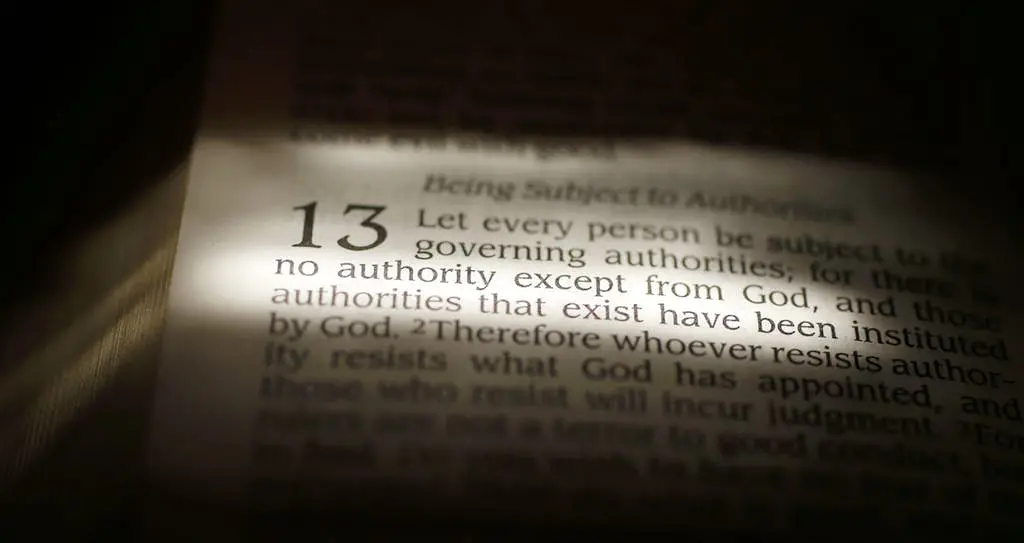
Scripture teaches that God has ordained government for the good of man. Civil authority, according to St. Paul, has been granted the power of the sword to punish evil, thereby protecting the innocent: "For he is the minister of God to thee for good. But if thou do that which is evil, be afraid; for he beareth not the sword in vain: for he is the minister of God, a revenger to execute wrath upon him that doeth evil" (The Epistle to the Romans 13:4 KJV). The present talk of defense cuts flies in the face of our nation’s duty and our proud heritage.

We have had draw downs before – after WWII, after Vietnam, and after the Gulf War, but we have never had to think about draconian reductions while we were in the middle of a war! It is this very point that is deeply disturbing, and recklessly dangerous. The consequences of even the talk of such tinkering with our defenders, even if reasonable heads prevail to stop this absurdity, will have their consequences.

Have we not learned our lesson? Reagan’s military build-up in the 1980s reversed the ill-advised draw downs after Vietnam (just one front in a larger, trans-generational Cold War) and, according to scholars like Paul Kengor of Grove City College and the American Center for Vision and Values, "All of these ventures [the strengthening of defense] had the effect of demonstrating a stronger, resurgent America, not only economically but also militarily. Suddenly, the country that had left Vietnam no longer appeared to lack resolve" (The Crusader: Ronald Reagan and the Fall of Communism by Dr. Paul Kengor, HarperCollins, 2007, 82).

Kengor went on to demonstrate that President Reagan understood that America was still at war. According to this preeminent Reagan scholar, his action in strengthening the military greatly contributed to bringing down the Soviet Union. Why now, when our sacred military members are risking their lives to fight "over there" so we don’t fight "over here," would the president and other congressional leaders think that it is any different? To reduce military strength or even to talk about it as an option is to demoralize our troops while they are literally in the midst of a battle for our way of life.

Some may call it treason. I would call it self-destructive. As a minister of the gospel I would also call it irresponsible and immoral, given that God has called our civil authorities to protect our people against evil. May God have mercy and bless the troops who bravely carry on their mission to defend this nation, even while others who have taken the same oath are allegedly using the military as pawns in a Washington election year. There are times when the Church should speak up. Because our life and liberty is at stake, I think that time is now.

Milton holds to every armchair warrior, red-state fascist, reich-wing nationalist, imperial Christian fallacy known to man.

As I mentioned above, cutting the bloated defense budget is to Milton a deeply disturbing, draconian, recklessly dangerous, self-destructive absurdity. The "cuts" fly "in the face of our nation’s duty and our proud heritage." Never mind that the real defense budget is $1 trillion, that the United States spends more than the rest of the world combined, and that most defense spending is really spending on offense.

Milton idolizes members of the military. They are our "brave troops." They "courageously and proudly wear the uniform of the armed services." God should "bless the troops." U.S. soldiers are never Christian killers, murders, accomplices to murder, criminals, dupes, mercenaries, or part of the president’s personal attack force willing to obey his latest command to bomb, invade, occupy, and otherwise bring death and destruction to any country he deems necessary. They are "our sacred military members."

Milton is likewise deceived about the real mission of the military. He thinks they are "our defenders" who "defend this nation" and protect "this nation from the continuing threats to our very existence as a people." The government provides a military to "defend the Constitution of the United States against all enemies, foreign and domestic." U.S. troops "fight ‘over there’ so we don’t fight ‘over here.’" They are "in the midst of a battle for our way of life." But is this what the U.S. military actually does? Unfortunately, most of what the military does is more offense than defense, more foreign than domestic, and more civilian than martial. I think Milton needs a course in DOD 101.

Milton says that we are "in the middle of a war." The United States is actually in the middle of several wars. But rather than saying we should not cut defense because we are fighting wars, why not examine the wars we are fighting to see if they are just, right, and necessary? Since the undeclared, unconstitutional wars in Iraq and Afghanistan, and Yemen, Pakistan, and everywhere else, are clearly – except to Christian warmongers and imperial Christians – unjust, immoral, and unnecessary, the only sensible solution is to end the wars, not increase the defense budget.

Like other Christian apologists for the state, its military, and its wars that I have written about who appeal to Romans 13 to justify their blind nationalism, their cheerleading for the Republican Party, their childish devotion to the military, their acceptance of national-security state, and their support for perpetual war, Milton seeks to justify a large defense budget by doing the same thing. This, of course, is ludicrous, since the passage has nothing to do with the government providing national defense. But let’s assume for a moment that it does. Fine. How does that justify bloated military budgets, foreign wars, militarism, imperialism, and policing the world? When it comes to the military budget, conservatives adopt the same fallacy as liberals do when it comes to education. To liberals more spending on education means better education; to conservatives more spending on defense means better defense.

And finally, why do conservatives always invoke the name of the criminal, warmongering, budget-busting, deficit-increasing, liberty-destroying, government-expanding, economic and foreign interventionist St. Reagan? Anyone remotely familiar with the Reagan record would not be impressed with Milton’s name-dropping. For the complete and utter evisceration of Reagan, see Murray Rothbard’s "The Reagan Phenomenon," "Ronald Reagan, Warmonger," and "Ronald Reagan: An Autopsy."

What is so bad about theological schizophrenics like Michael Milton is that they have a position of influence over many young people. We can only hope and pray that this is one college administrator that students never get to know.

Originally posted on LewRockwell.com on December 9, 2011.

Tags: , , , , , , , , , ,
Categories : Articles
Comments (2)

Every year, I like to construct a list of some of the best books released in the past year and a few a others that are worth recommending at any time. Of course, this is my opinion, but if you’re looking for a gift for your libertarian loved one this Christmas season then perhaps you’ll give one of these books a go. So without further adieu, the Top 10 Libertarian Books for Christmas 2011!

image1. It is Dangerous to Be Right When the Government is Wrong by Andrew Napolitano – The Judge, host of FreedomWatch on Fox Business, has put together an amazing book that analyzes a host of topics from the standpoint of natural law. I will be reviewing this book on LCC soon but I’m going to say it now – you need to read this book. The data and stories he presents in the book make it easily worth every penny and a well-deserved place on your (or anyone else’s) bookshelf.

2. Libertarianism Today by Jacob Huebert – This book was on the list last year, but it warrants another mention because you can get it at a significantly reduced price by purchasing directly from the publisher. Huebert’s book is definitely a must-read, and is one of the best recent books on hardcore libertarianism in the past few years. LCC writer Laurence Vance has called it, “The best introduction to libertarianism on the market.”

3. Bourbon for Breakfast and It’s a Jetsons World by Jeffrey Tucker – Check out the LCC review of Bourbon for Breakfast, and you’ll see that it is a super read for anyone looking to circumvent statist restrictions upon their lives. Tucker’s followup work tells exciting stories of the little everyday miracles of the free market at work.

image4. Liberty Defined by Ron Paul – Another gold standard in libertarian literature by one of liberty’s greatest defenders. See the LCC review for the full story.

5. Rollback by Thomas Woods – I am a huge fan of Tom Woods and have known him for over 5 years now. His latest book makes an eloquent case for dismantling pretty much everything the government currently does today.

image6. Great Wars and Great Leaders by Ralph Raico – Leaders who take a country to war are often heralded as “great,” but the libertarian perspective dispenses such ideas as folly. War is the health of the state and the enemy of liberty, and Raico’s historical work is great ammunition in the war of ideas that we fight daily.

7. Myth of a Guilty Nation by Albert Jay Nock – This is an old book newly reprinted by the Mises Institute, and I’m excited to see it available again (because I’m a big fan of Nock and haven’t ever read this one). From the Mises.org description: “Nock’s book reminds us of what most everyone has forgotten, namely, that this was sold as a war for freedom and self-determination over imperial ambition. Along with that came some of the most rabid war propaganda ever fabricated until that point in time, all designed to make Germany into a devil nation. Nock’s brave book took on that idea and demonstrated that there was fault enough to go around on all sides. All through the 1920s, a Nockian-style retelling of the facts behind the war led to a dramatic shift in public opinion against World War I.” Awesome!

8. The Bastiat Collection Pocket Edition by Frederic Bastiat – If you haven’t read Bastiat’s The Law, you need to get on that immediately! This book contains all the major works of Bastiat in a very small volume, and makes a great gift.

9. Economics in One Lesson by Henry Hazlitt – Need to learn a little more about economics? Start with the classic by Hazlitt, and never forget the first lesson again…

10. Christian Theology of Public Policy and Bible and Government by John Cobin – I would be remiss to write a book list on LCC and not mention the excellent work of John Cobin, especially in this volume. As Christian libertarians, these are must reads, and don’t forget to check out Cobin’s free Christian Theology of Public Policy Short Course series on LCC!

Check out other Top 10 book lists and book reviews on LCC for more ideas, and remember that every time you shop at Amazon.com through a LibertarianChristians.com link you are supporting the work of LCC! Thanks!

Tags: , , , , ,
Categories : Articles, Book Reviews
Comments (1)

Who is behind LCC?

Norman Horn is the creator and primary writer for LCC. Learn a little bit about him in the About Page. You can write him a note or ask a question at the Contact Page. Follow him on Twitter.

Photobucket

Top Ron Paul Sites - Ranking the best Ron Paul related Freedom and Liberty Websites