
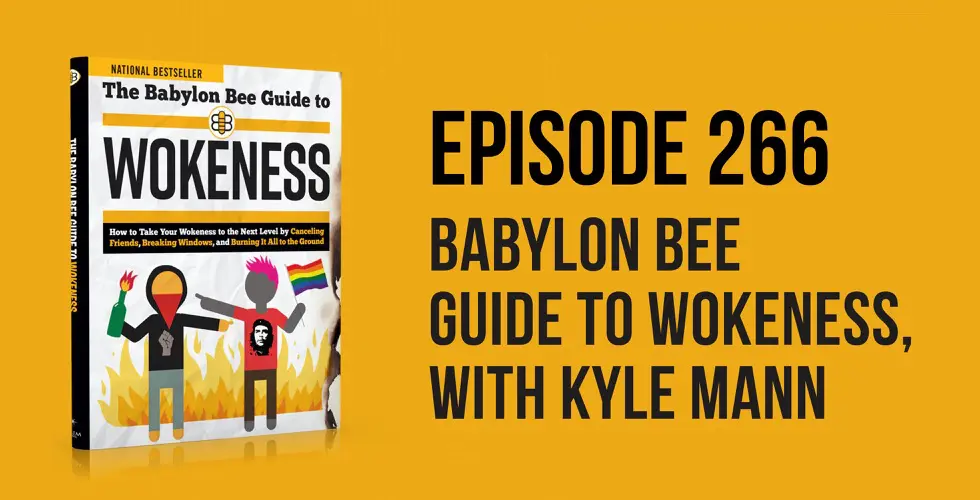
For this week we were joined by Kyle Mann, editor-in-chief and author at The Babylon Bee, to discuss The Babylon Bee Guide to Wokeness. Kyle discussed how The Babylon Bee utilizes comedy ...

In The Antiquities, Josephus mentions that the first human government was built by Nimrod, the mighty hunter from the book of Genesis. This appears to be consistent with Genesis; no ...

I recently met with a candidate for public office in Texas who had a number of questions about how to think about the connections between Christianity and libertarianism. We had ...

My father and I recently finished publishing a book entitled Paradise Destroyed: The Destruction of Rural Living by the Wind Energy Scam. The book reached #1 on Amazon for “New ...
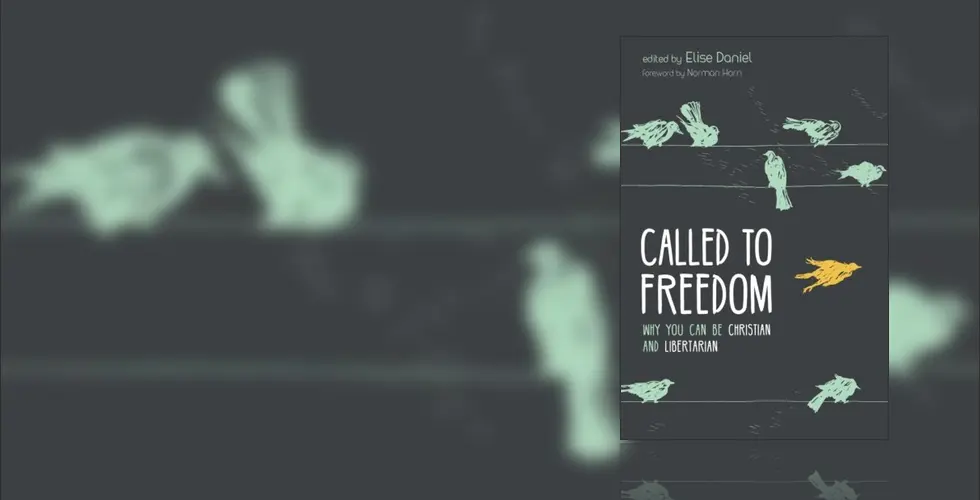
The following is an excerpt from Jason Hughey’s chapter in the new book, Called to Freedom. (edited for format) With a new understanding of Romans 13, First Peter 2, and ...
LCI is pleased to announce that Called to Freedom will be released on February 1st! Called to Freedom is a book written by six libertarian Christians from various backgrounds exploring ...
“Christianity and Politics: The Attempted Seduction of the Bride of Christ” by Christopher R. Petruzzi. Wipf and Stock Resource Publications, 2016. “Politics,” says Christopher Petruzzi, “is the process through which ...
The Libertarian Christian Institute is proud to announce today that it will be the online home and hub for a new book on Christianity and liberty entitled Called to Freedom: ...

If snorting cocaine is against the law, the addict becomes a criminal. The law builds a wall between him and law-abiding citizens. He becomes not a brother we pity, love, ...

Real Dissent: A Libertarian Sets Fire to the Index Card of Allowable Opinion by Thomas E. Woods Jr. (CreateSpace Independent Publishing Platform 2014), 338 pages. In his foreword to one ...

Looking for a great read to give that libertarian in your life this Christmas? Want to delve deep into something interesting over your Christmas vacation? Every year, I make it ...
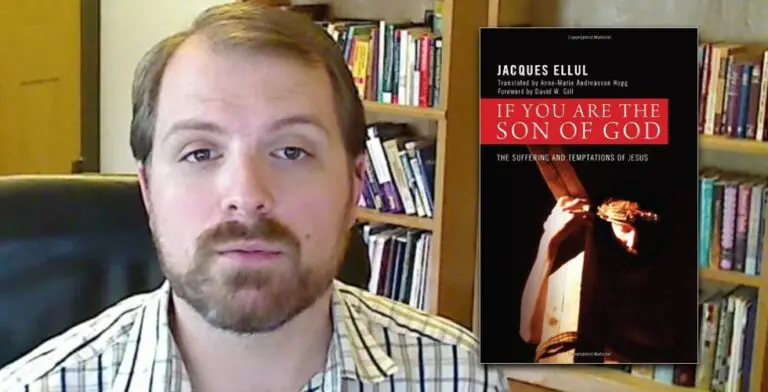
This is a video review of the book “If You Are the Son of God” by Jacques Ellul, French theologian and professor of law. (Published by Wipf and Stock.) Ellul’s ...
I tend to find myself in the minority among friends with the viewpoints I hold as a libertarian and a Christian. I can frustrate my conservative and progressive friends at ...
Book review of The Soul of Atlas by Mark Henderson. 2013 Reason Publishing, 246 pages. http://soulofatlas.com Although libertarians have been known to say that it usually begins with Ayn Rand, ...
Introduction to Laurence M. Vance, War, Empire, and the Military: Essays on the Follies of War and U.S. Foreign Policy (Vance Publications, 2014), 528 pgs. These essays, although organized under ...

Defending the Free Market: The Moral Case for a Free Economy, by Robert Sirico (Regnery Publishing, 2012), 213 pages. Critics of the free market assert that it fails the underprivileged, ...

Adult maturity is partly evidenced by how well we allow our past to influence our vision and hope for the future. No matter how bleak our past experiences might be, ...

Every year, I try to highlight some of the best recent and classic books about Christianity, libertarianism, and the books addressing both at the same time. Last year I was ...

Review of Martin A. Lee, Smoke Signals: A Social History of Marijuana—Medical, Recreational, and Scientific (Scribner, 2012), vii + 519 pgs., hardcover. Although I don’t use marijuana for medical, recreational, ...
I must recommend two important books for Libertarian Christians. The first is Turn Neither to the Right Nor to the Left, by D. Eric Schansberg. This book was published in ...

God created a remarkable world, a world where if you follow good ethics and work hard then the results are win-win for everyone. Whereas aggression always involves pillaging one person ...

Review of Andrew Napolitano, It is Dangerous to be Right When the Government is Wrong: The Case for Personal Freedom (Thomas Nelson, 2011), 320 pp. Hardcover: $24.99 ($16.49 on Amazon.com). ...
Let’s take a stroll today through something other than politics today. I recently read a book by Douglas Sean O’Donnell called The Beginning and End of Wisdom, and I thought ...

Every year, I like to construct a list of some of the best books released in the past year and a few a others that are worth recommending at any ...
I recently read an interesting book called Not a Fan, by Kyle Idleman. I don’t want to do an in-depth book review here, but I think the book warrants being ...
Have you ever wondered what book you ought to give to a person inquiring about libertarianism to you? What do you do? It is actually a somewhat difficult proposition. Great ...

Of all posts on LibertarianChristians.com, the holiday book lists are some of the most perennially popular. 2010 has seen some great books enter the market, and it’s time to highlight ...

Russian writer Leo Tolstoy is considered one of the greatest novelists of all time. War and Peace and Anna Karenina have inspired millions over the last century. Less well-known about ...
Free books are good, right? The Cult of the Presidency is currently available for free in electronic form from the Cato Institute’s website. The author Gene Healy gave the keynote ...
Yesterday on LewRockwell.com, Jeff Riggenbach posted a short essay entitled Was Robert A. Heinlein a Libertarian? It reminded me of how much I enjoyed Heinlein’s incredible novel, The Moon is ...