Archive for rights

Last week, I had the opportunity to be on the InfoWars Nightly News to talk about the TSA’s full body scanners and our efforts in Texas to stop the TSA’s war on our civil liberties. We discussed the health risks, the effectiveness, and the politics surrounding the TSA from national to local. They said we would have 15 minutes, but we ended up having so much fun that we kept going for 23! Hopefully you will enjoy it too…

Make sure you check out the website I helped create at www.StopAustinScanners.org, and start getting ready for the next round against the State!

Tags: , , , ,
Categories : Blog News, Media
Comments (1)

imageReview of Andrew Napolitano, It is Dangerous to be Right When the Government is Wrong: The Case for Personal Freedom (Thomas Nelson, 2011), 320 pp. Hardcover: $24.99 ($16.49 on Amazon.com).

I am long overdue to comment on what I sincerely believe to be one of the best new libertarian works from 2011, Judge Andrew Napolitano’s It is Dangerous to be Right When the Government is Wrong. To a great extent, I am tempted just to stop here and tell everybody to buy the book and read it immediately, but such would make me a very poor reviewer overall. The heroic host of FreedomWatch deserves better than that.

The prime beauty of Napolitano’s work is encapsulated in the Introduction, titled “Where do Our Rights Come From?” Napolitano takes his legal background as a judge and explains the natural law and natural rights (which he says are separate but related concepts) in an incredibly powerful way. He places the natural law and our rights as human beings in contradistinction with the fake “laws” that governments impose. The “legal positivism” philosophy, which says that whatever the state says is law, is denounced as a falsehood. What is more, Christians will clearly see Napolitano’s Christian faith (with a Catholic background) through his discussions of the origins of the natural law.

Napolitano continues in the “chapters” of the book working out this understanding of the eternal law, natural law, and natural rights, approaching a variety of topics including economic freedom and property rights, free speech, freedom of association, self-defense, freedom to travel and immigration, sound money, and doing what you want with your own body. Dealing with these topics is not novel, but what makes Napolitano’s explanation special is the data presented in the book. Example after example is provided that illustrate the principles in enlightening ways, and all the examples are backed up in the notes with websites, books, articles, and various other source materials.

The “Ride on Dr. Feinberg’s Bus” chapter, for instance, was particularly interesting to read. Napolitano poses a hypothetical situation for us to consider, a ride on the bus that becomes annoying and disgusting to the point of absurdity, but that none of the actions, however annoying they may be, can be considered criminal. Without getting too detailed with the specifics, Napolitano then explains why there must be a moral limit upon what kind of actions can be made illegal (hint: only aggressive behavior). Besides colorful examples, the statistics in the book are a terrific resource for future use. Indeed, I have already referenced this book a number of times when writing articles and discussing particular topics (namely, guns and health care) with my non-libertarian friends.

Part of what excites me about the book is that it is clearly targeting people who are questioning the government, but don’t know where to start building their philosophy of government. He says, “If there is any message that I hope to communicate in this book, it is that all of us should be constantly questioning the validity of our officials’ commands… We must stop obeying the unjust laws with which the government enslaves.” Napolitano has gone back to the basics and covers the gamut of personal liberty boldly and convincingly. This is not a new thing to do, but this book is special because it does so in a more accessible way to outsiders than I generally have the pleasure of reading. I cannot imagine someone from the left or right putting down the book and rejecting the fundamental claims about law and rights without understanding that by doing so they spurn all the benefits of Western civilization itself.

I do not know if this will be a book looked upon in a century as a timeless classic. However, this is a book whose time has come. In a day when so many of us do not understand what the basis of law is, Napolitano has provided an accessible book that will remind some, educate all, enlighten our way, and encourage many to take a strong stand against the tyranny of statism.

Interested in learning more? Check out the book at Amazon.com. Remember that you support the work of LibertarianChristians.com every time you make a purchase at Amazon for 24 hours after clicking an LCC link!

Tags: , , , , , , , , ,
Categories : Articles, Book Reviews
Comments (0)

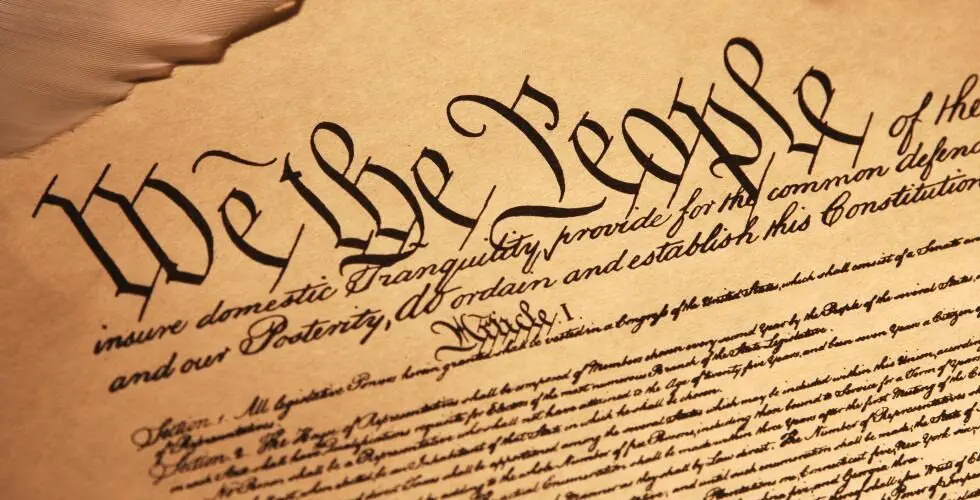
Today is the 220th anniversary of the Bill of Rights being passed. Cato-at-Liberty surveys the current state of these safeguards, and it is not particularly pleasant to consider how pathetic this rogue government has become.

Let’s consider each amendment in turn.

The First Amendment says that “Congress shall make no law… abridging the freedom of speech.” Government officials, however, have insisted that they can gag recipients of “national security letters” and censor broadcast ads in the name of campaign finance reform.

The Second Amendment says the people have the right “to keep and bear arms.” Government officials, however, make it difficult to keep a gun in the home and make it a crime for a citizen to carry a gun for self-protection.

The Third Amendment says soldiers may not be quartered in our homes without the consent of the owners.  This safeguard is one of the few that is in fine shape — so we can pause here for a laugh.

The Fourth Amendment says the people have the right to be secure against unreasonable searches and seizures. Government officials, however, insist that they can conduct commando-style raids on our homes and treat airline travelers like prison inmates by conducting virtual strip searches.

The Fifth Amendment says that private property shall not be taken “for public use without just compensation.” Government officials, however, insist that they can use eminent domain to take away our property and give it to other private parties who covet it.

The Sixth Amendment says that in criminal prosecutions, the person accused is guaranteed a right to trial by jury. Government officials, however, insist that they can punish people who want to have a trial—“throwing the book” at those who refuse to plead guilty—which explains why 95 percent of the criminal cases never go to trial.

The Seventh Amendment guarantees the right to a jury trial in civil cases where the controversy “shall exceed twenty dollars.” Government officials, however, insist that they can impose draconian fines on people without jury trials.

The Eighth Amendment prohibits cruel and unusual punishments. Government officials, however, insist that a life sentence for a nonviolent drug offense is not cruel.

The Ninth Amendment says that the enumeration in the Constitution of certain rights should not be construed to deny or disparage others “retained by the people.” Government officials, however, insist that they will decide for themselves what rights, if any, will be retained by the people.

The Tenth Amendment says that the powers not delegated to the federal government are reserved to the states, or to the people. Government officials, however, insist that they will decide for themselves what powers they possess, and have extended federal control over health care, crime, education, and other matters the Constitution reserves to the states and the people.

Thank goodness we still have Amendment #3! The Cato Institute also posted a little video as well:

Tags: , , , ,
Categories : News
Comments (0)

Anthony asks a series of questions in his submission:

I might consider myself a Libertarian, except I just can’t get over that so many libertarians are atheists and against all religious expression by government. For instance, Libertarians hate Mike Huckabee for some fear of a “theocracy.” How do you address these things about your secular libertarian friends (such as Ayn Rand types)?

This question has multiple levels, and thus I want to wade carefully through the various issues wrapped in it. First off, just because there are plenty of atheist libertarians does not mean that it is a political philosophy only for atheists. On the contrary, I would argue that Christianity has lots in common with libertarianism and very little in common with statism. A philosophy that is essentially founded upon “treat others the way you want to be treated” would naturally see Christianity as favorable. See my Lessons in Liberty article for more.

As for religious expression by governments, Christian libertarians do not want to see government taking on vestments of Christianity whatsoever for two reasons: (1) the State is founded in rebellion to God and it should not be covered in Christian garb to look better than it is. We should always look to expose the State’s evils rather than “baptize” it to gain benefits; and (2) the Church universal needs to be internally protected from the trappings of the State in order to stay pure. The more governments get wrapped up in Christianity, the worse it will be for the Church.

I wouldn’t say that libertarians “hate” Huckabee because they fear theocracy (hate is a strong word anyway). Still, there is much to despise in his politics. Huckabee is a warmonger, pro-big government, pro-drug war, economically illiterate, anti-free market, anti-immigrant, and a supporter of the police state. If he supports these things because he thinks that’s what God wants, then he’s completely off his rocker and that’s worth criticizing in its own right.

I have many non-Christian, libertarian friends. Some of them love Ayn Rand, some don’t. But I have rarely had any issue in sharing my faith or dealing with sensitive topics because we have a common desire to treat others with respect. Here’s the bottom line: liberty brings people together. Libertarians come from all over the belief spectrum, but the commonality of seeking liberty transcends boundaries. As a result, you have many opportunities to live out the gospel to those around you.

********

He concluded with a statement that kind of begs a response:

Also, I can’t get over how so many Libertarians (probably not you guys) are like Barney frank on social issues but Jim DeMint on fiscal issues.

Christian libertarians do not believe that you can solve moral problems through legislation. Insofar as law exists, we seek to reduce its grasp on individual action that is not aggressive in nature. Instead, we want to use the power of social change, leveraged through the Church and local communities, to fix such problems.

Libertarians understand that the government cannot do anything right for an economy. Thus, if the government is to exist at all, it should not involve itself in anything other than the protection of basic property rights. (And many libertarians, myself included, think the State cannot even protect rights without becoming corrupt!) Hence, the government should abolish all income and property taxes and not involve itself in trade whatsoever.

Besides that, Jim DeMint is not a great example of someone being “libertarian” on fiscal issues. If you’re going to look anywhere in Congress, look to Ron Paul!

Have a question you’d like to ask? Submit yours here.

Tags: , , , , , , , , , , , ,
Categories : Articles
Comments (2)
This entry is part 30 of 41 in the series Christian Theology of Public Policy Course

This essay continues the Christian Theology and Public Policy Course by John Cobin, author of the books Bible and Government and Christian Theology of Public Policy. This column is the first segment of a three-part series dealing with application of the Second Amendment for Christians.

The Second Amendment to the American Constitution is familiar to many of us: “A well regulated Militia, being necessary to the security of a free State, the right of the people to keep and bear Arms, shall not be infringed.” Along with the other nine initial amendments, collectively known as the Bill of Rights, the Second Amendment was ratified by ten of the original thirteen States on December 15, 1791. (1)

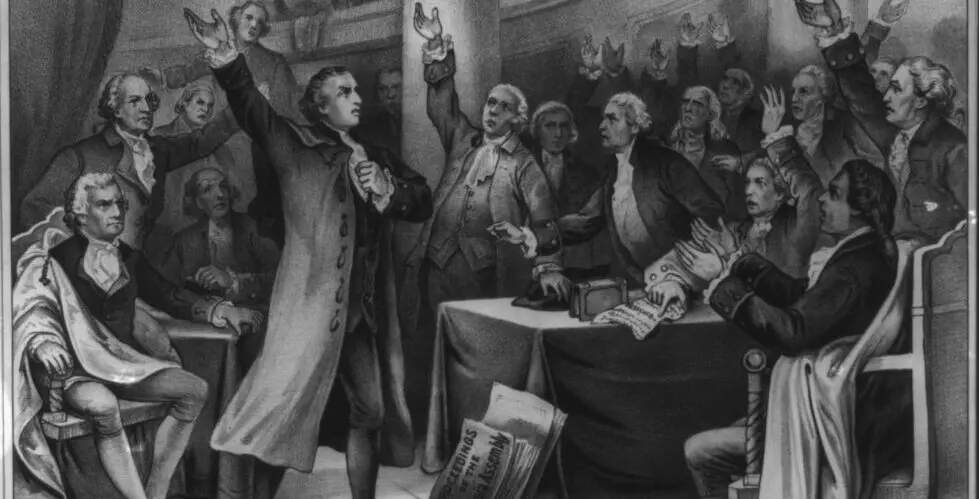
The words “well regulated” mean well-equipped in terms of uniform and armament. The militia’s armament should be fully manned, sighted-in and ready. According to the U.S. Code, the word “Militia” means what is now called the “unorganized militia”, i.e., “all able-bodied males at least 17 years of age and… under 45 years of age… who are not members of the National Guard or the Naval Militia.” (2) During Virginia’s ratification convention in 1788, Founding Father George Mason said: “I ask, who are the militia? They consist now of the whole people, except a few public officers.” (3) Similar statements were made by Founders James Madison and Richard Henry Lee. Mason worried that someday only a privileged class of men would bear arms, resulting in tyranny. Mason also said: “the best and most effectual way to enslave” a nation is “to disarm the people.” (4)

Read More→

Tags: , , , , , ,
Categories : Articles
Comments (2)

Who is behind LCC?

Norman Horn is the creator and primary writer for LCC. Learn a little bit about him in the About Page. You can write him a note or ask a question at the Contact Page. Follow him on Twitter.

Photobucket

×

Need a good read? Check out our bookstore!