
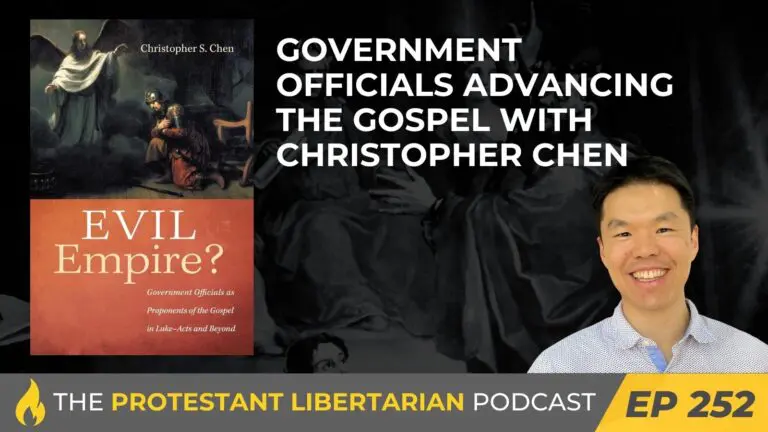
In this episode I talk with Christopher Chen, author of the brand-new book Evil Empire? Government Officials as Proponents of the Gospel in Luke-Acts and Beyond, out now on Wipf and ...
In this episode I talk about my goal for lent of taming my tongue. I discuss the controversy surrounding Lent and why sincere spiritual development should not be a cause ...
In this episode I talk with Gary DeMar, a Biblical scholar, long-time president of American Vision, and host of the Gary DeMar show. Gary discusses eschatology and economics. He explains ...
I had the flu and Streamyard defaulted to my computer microphone, so I apologize for my voice! In this episode I discuss Paul’s comments in Ephesians 1:15-23, particularly 1:20-22, that ...
This episode is a recording of a debate I had with Jacob Winograd in the fall of 2025 about whether history or theology should take priority in Biblical interpretation. I ...
In this episode I explore the Parable of the Lost Sheep in Luke 15:1-7 in which Jesus, directly responding to his critics, explains how his audience would leave ninety-nine sheep ...
In this episode I talk with Cody Cook about his new book Delivered from This Present Evil Age where he argues that Galatians 4:1-7 portrays Christ defeating the spiritual powers which ...
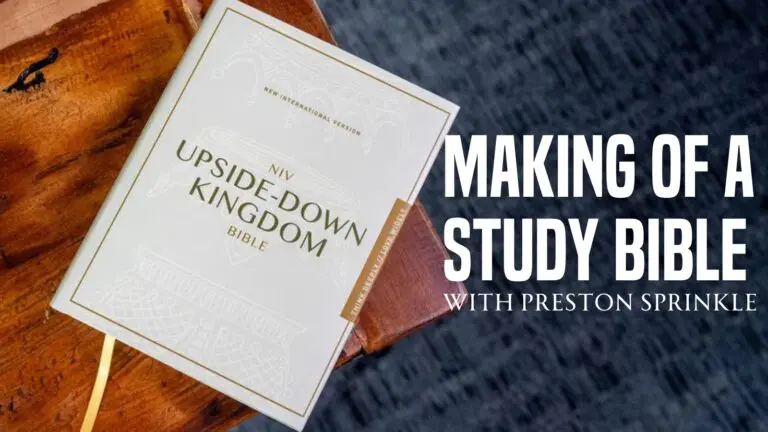
Summary – Inside the Making of a Study Bible, with Preston Sprinkle Host Doug Stuart delves into the fascinating world of study Bibles with returning guest Preston Sprinkle, a New ...
Summary – Should Christian Libertarians Reject Biblical Inerrancy? A reading of Kerry Baldwin’s article on biblical inerrancy, which discusses a blog post by Pete Enns in which he says why ...
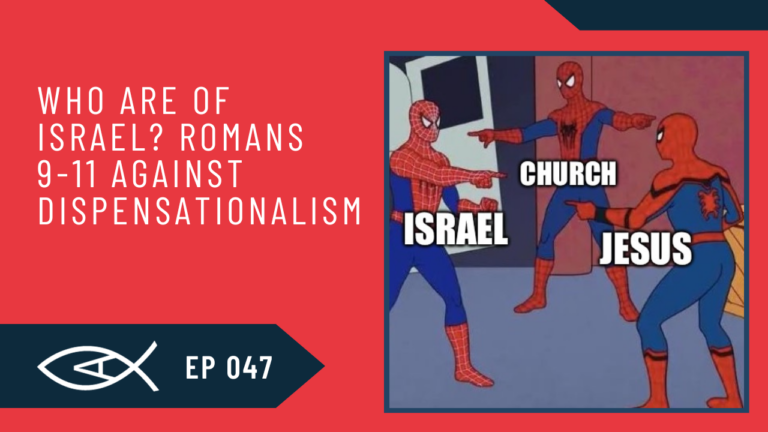
Summary – Who is the True Israel? Correcting the Dispensationalist Reading of Romans 9-11 Dispensationalist theology pushes many incorrect and dangerous readings of Scripture, which has many far-reaching and ...

The foundation of individualism and personal freedom is found in both the Old and New Testaments of the Bible. God shows His people that He relates to each person individually ...
Christianity has to deal with a lot of misconceptions. From the idea that Christianity was created by Paul to the idea that Jesus was a cynic, owing to its prestige ...

A more baseless assumption, one more in direct conflict with God’s teaching, was never made by man, than the idea that when the civil authority commands the Christian to do ...

Deuteronomy is a puzzling book. It’s a marvelous ‘farewell sermon’ by Moses before Joshua takes up command, but the literary history challenges any historian or scholar who ventures to ask ...

This guest post is by Rev. Donald Ehrke. He is a Libertarian, a former GOP campaign manager, and ordained minister living in Alexandria, Virginia. Many thanks to Donald for his ...
Does Romans 13 mean that we, as Christians, should just submit to the state? Or is there perhaps a better, more nuanced way to understand Romans 13, and therefore what ...

Calling them to Himself, Jesus said to them, “You know that those who are recognized as rulers of the Gentiles domineer over them; and their people in high position exercise ...
One of the more overlooked ways in which Jesus brought God’s ethical ideal into full bloom — or as Matthew 5:17 puts it, one way he “fulfilled” the Old Testament ...

As I have previously written, the early Christian virtue of patience (and therefore non-violence) and the libertarian Non-Aggression Principle are in agreement: the world cannot be fundamentally changed for the ...

Welcome back to Weekend Insights, your LCI "President's Corner" of miscellaneous articles, events, books, vids, and whatever else I'm thinking about...
"There is not a word of intimation in the Sacred Scriptures that indicate that it is the duty of any Christians to support, maintain, or defend any institution or organization ...
This article continues a series of weekly posts originally authored by David Lipscomb, an important figure in the Churches of Christ in the 1800s. Learn more about Lipscomb’s background here ...
In this entry, Lipscomb continues his thesis that ordinances of God are not all intended to be carried out by his set-apart people, the Church, using the examples of heaven ...
A common objection to the idea that the state is founded in rebellion against God is the language of the Bible describing various kings and leaders as "God's servants" or ...
Lipscomb approaches the issue with a new tact this time around, and brings up Romans 13 in the process. He suggests that if Romans 13 is the justifying scripture for ...
This article continues a series of weekly posts originally authored by David Lipscomb, an important figure in the Churches of Christ in the 1800s. Learn more about Lipscomb’s background here ...
Notable in this piece is the way in which Lipscomb and his co-authors argue for their firm non-violent stance. They are to "submit quietly" to the government save where submission ...

Does society always and in every case break down to atomistic individuals?
Having stridently argued for the position that the kingdoms of the world are not of God through both Old and New Testaments, Lipscomb now seeks to differentiate the particular spirit ...
We wish to call attention to the biblical use of the term Babylon. It is given in Scripture as the name of the first, and in many respects, the head ...