Welcome

Welcome to LibertarianChristians.com! If you are new here, you may want to see the About Page for a welcome message and more information about the site. Check out the posts on the right and the Top Posts page to get started! Don't forget to subscribe for free with RSS or Email.

Archive for church

Here is the first installment of Q&A Week, where we are exploring reader questions submitted to the Christian Libertarian FAQ. Cylons70 (awesome name, btw) has been wondering about churches that hold Christian libertarian positions…

I currently go to a non-denominational church (which is actually a denomination in itself).  I was wondering if there is any church that specifically supports libertarian Christian beliefs?

As far as I know, there is no particular denomination that has Christian libertarian positions explicit in their doctrinal statement. However, the common thread of non-violence and anti-statism has been discussed in numerous theological traditions, from Baptists, to Lutherans, all the way to Churches of Christ (the tradition I grew up in). I would actually say that arguably the Churches of Christ and Anabaptist denominations have some of the strongest histories of libertarian leanings. For example, historically the Churches of Christ have held remarkably excellent anti-war positions, especially around the Civil War. Tolbert Fanning, David Lipscomb, and Alexander Campbell were major leaders in the Stone-Campbell Restorationist movements during that time and made great contributions to the anti-war movement. You can even see some of their writings in Tom Wood’s book, We Who Dared to Say No to War.

Have a question? Submit yours here.

Tags: , ,
Categories : Articles
Comments (10)
Jun
09

Signs of the Times

Posted by: | (0)

The Sunday before Memorial Day is not one of my favorites. The "patriotic" things that go on in churches in celebration or acknowledgment of Memorial Day are downright sickening.

Churches encourage their veterans to wear their military uniforms. Special recognition is given to those who "served." Prayers are offered on behalf of the troops, not that they would cease fighting foreign wars, but for God to keep them out of harm’s way and protect them. Mention is made of the troops defending our freedoms.

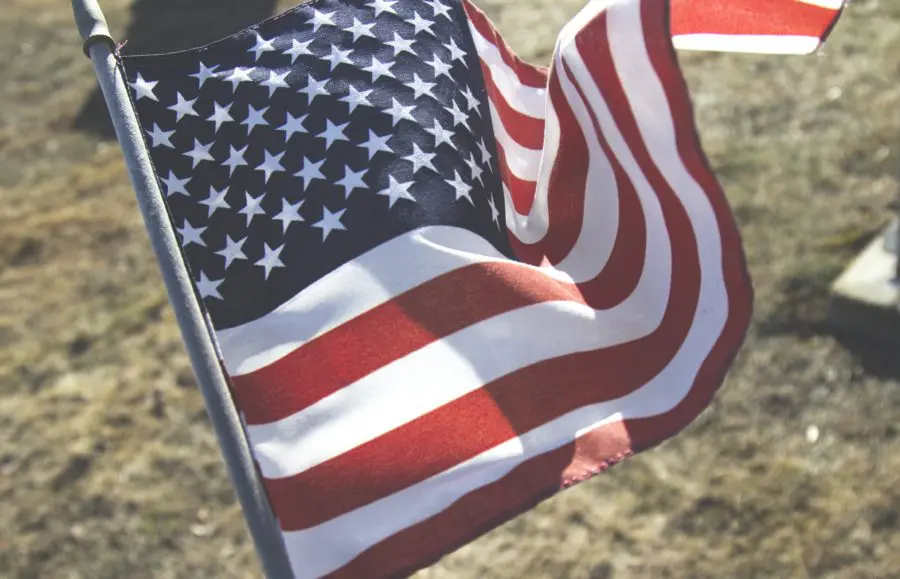
Churches decorate their grounds and the inside of their buildings with U.S. flags. Sometimes it is a few large flags hanging from the ceiling or adorning the walls. Sometimes it is many small flags stuck in the ground near the church entrance. Sometimes it is both. Some congregations are asked to recite the pledge of allegiance.

Churches sing hymns of worship to the state instead of hymns of worship about the person of Christ and his work. Songs like "My Country, ‘Tis of Thee," "America the Beautiful," "We Salute You, Land of Liberty," and "This Is My Country." Some churches go even farther and sing "God Bless the U.S.A." or "God Bless America." Too many churches sing the blasphemous "Battle Hymn of the Republic."

I know these practices are widespread because of the scores of people that have e-mailed me in disgust about what occurred in their churches on the Sunday before Memorial Day.

In most cases it is not even necessary to visit a church on the Sunday preceding Memorial Day to know what goes on inside. Just look at the sign outside of the church. Instead of a verse of Scripture or an announcement of an upcoming event, you are more likely to see some patriotic slogan, often with a Christian theme.

I have personally seen two signs this year that I find particularly offensive, not only to my Christian faith, but to reality:

Pray for the Troops,
God be with them.

and,

The American soldier and Jesus Christ,
one gives his life for your freedom,
the other for your soul.

Yes, we should pray for the troops. The Bible tells us in 1 Timothy 2:1 that "supplications, prayers, intercessions, and giving of thanks, be made for all men." But what should we pray? That God would bless the troops while they injure, maim, kill, and destroy property where they have no business being in the first place? That God would be with them while they wage unjust and immoral foreign wars? Since when does wearing a military uniform excuse killing someone you don’t know in his own territory that was no threat to any American until the U.S. military invaded and occupied his country? How about instead praying that the troops come home where they belong or that Christian families stop supplying cannon fodder to the military?

That Christ gave his life for our souls is indisputable, but do American soldiers give their lives for our freedoms? You know, the freedoms we have steadily lost since the troops starting defending our freedoms after 9/11? Has there been in American history any foreign war, military action, CIA covert action, or intervention of any kind in any country that was for the purpose of defending our freedoms mentioned in the Bill of Rights? Of course not. Not one Iraqi or Afghan killed by U.S. forces was ever a threat to our freedoms. The troops don’t defend our freedoms, and neither do they fight "over there" so we don’t have to fight "over here." And I can’t think of anything more blasphemous than mentioning Jesus Christ, the Lord, the Son of God, the Prince of Peace in the same breath as a U.S. soldier who unjustly bombs, maims, kills, and then dies in vain and for a lie.

It is time for Christians to slay the golden calf of the military. Christians should stop joining the military. They should stop encouraging their young men to enlist. They should stop being military chaplains and medics. American churches must be demilitarized.

It is a terrible blight on evangelical Christianity that our churches have sent more soldiers to the Middle East than missionaries. If Christians are so concerned about the threat of Islamofascism, then what better way to confront it than with the Gospel of Christ?

Originally posted on LewRockwell.com on May 30th, 2011.

Tags: , , , , , , , , , ,
Categories : Articles
Comments (0)

It’s been a while since I’ve posted, but it is for a good reason. I’ve been carefully writing this article and I really hope you benefit from it. If you are so moved, please share it with someone you care about today.

Featured on LewRockwell.com on September 11, 2010.

“If my people, who are called by my name, will humble themselves and pray and seek my face and turn from their wicked ways, then will I hear from heaven and will forgive their sin and will heal their land.”
2 Chronicles 7:14

People regularly email me with questions about how to communicate with other Christians about liberty and peace. The greatest conundrum the Christian libertarian has, it seems, is persuading other Christians to stop supporting the immoral wars that governments perpetrate across the globe. It is particularly difficult in the United States, where “supporting the troops” is essentially part of the new orthodoxy in most evangelical Protestant churches. You can publicly criticize a minister that he preaches too long and someone will support you, but say one word criticizing the military (or even the police) and you become anathema.

It is not as though we cannot defend our position adequately; the truth is on our side. We can easily bring forth historical data, ethics, and solid theology to make our case that war is wrong. This is good and right! We must never cease reasoning with those who disagree with us, and we should do so with gentleness and respect (1 Peter 3:15). However, we must admit that a large part of the problem is not merely failure to reason, but also a failure to show Christian compassion toward others. Churches all over forget that war really is hell, and neglect the suffering war causes. This is especially reflected in our public prayers.

In the past, even the Southern Baptists took the Word of God seriously and prayed for those affected by war. But when was the last time you heard a church pray for anyone in the Middle East, for instance, other than soldiers? When was the last time you heard a church pray for an end to war?

Recently, I was moved to step out and try something I have never heard of done before: ask the leaders of my congregation to take the lead in praying for those suffering in war. (In the Church of Christ tradition, the elders are the spiritual leaders of the congregation.) After consulting with some of my close friends, I attended the June 2010 elders’ meeting and presented the following letter to them to address the “Prayer for the Church” that we offer every Sunday morning worship service.

*********************

To the Elders of the University Avenue Church of Christ,

We have noticed an unusual trend over the past few months during our prayers for the church in Sunday morning worship. On multiple occasions, we have heard people pray for men and women in the military, that they receive “special measures of protection” as they fight to “protect our freedoms” and “serve our country.” While we understand the concerns of church members who have friends and family in the armed forces, and while we sincerely hope for their safe return immediately, we find that these kinds of prayers are neglectful of another group – those victims who suffer wrongfully from this war, to whom we are indeed responsible in part for their suffering. Regardless of one’s opinion of these wars, we think that all can agree upon inspection that this practice can and should change to be more inclusive.

For instance, we never hear prayers for our fellow Christians who live in Iraq and Afghanistan. Since the US invasion in 2003, Christians who were tolerated in the past have been repeatedly persecuted and frequently even killed by indiscriminate warfare or surging extremist groups, and nearly half of the Christian population of 800,000 in Iraq has either fled the country or died. In March 2010 alone, over 4,000 Christians were displaced from their homes following unrest in the northern city of Mosul. Many more have confined themselves to their homes for their own safety.

Moreover, we rarely, if ever, hear prayers for the innocent people in Iraq that die on a daily basis, either from indiscriminate killing by our own military or civil unrest that results from a country torn apart by war. The lowest estimates of non-combatant deaths in Iraq number greater than 100,000. Unfortunately, over time our sensibilities and attitudes toward this war – which is now the longest prolonged conflict in American history – have become desensitized and lackadaisical, and thus we often forget these innocent people.

We appeal to the elders to lead the way toward recognizing this issue with two simple proposals. First, we propose to include in the bulletin prayer requests under “Family Members in the Military” a mention of the innocent and oppressed in Iraq and Afghanistan, especially our Iraqi and Afghan brothers and sisters in Christ, and for an end to these wars. Second, we propose that the elders take the lead in consistently mentioning the same in prayer with the congregation on Sunday mornings. If the prayers of the righteous are powerful and effective, then surely instituting this practice will do good both for these victims and for our own spirits.

We support this appeal with Scripture in two ways. First, if you consider these people as we do, that they are innocent victims and have been wronged by their own leaders, by extremists, and by our own military, then may we pray to God as Jesus taught his disciples: to be “delivered from evil.” If we can pray this for ourselves, surely we can do so for others. But second, if you still consider these people our enemies, then may we do as Jesus said in Matthew 5: “Love your enemies and pray for those who persecute you, that you may be sons of your Father in heaven.” May this be the beginning of understanding what Jesus said moments before, “Do not resist an evil person. If someone strikes you on the right cheek, turn to him the other also.”

Changing our practice to include praying for the oppressed is not a political statement. In fact, this is not a political issue in the least; on the contrary it is a moral and theological issue. If we are to pray “Thy will be done on earth as it is in heaven,” then we should take seriously that Jesus came and died to proclaim peace on earth and to liberate the oppressed. We may expect that “wars and rumors of wars” will always exist, but this does not require a condoning or defeatist attitude of such events. Rather, this understanding should make us more sensitive and more compassionate toward those who suffer.

To conclude, war is arguably the most destructive human activity ever devised, and it is an intensely serious moral and theological issue because of its finality for those involved either directly as soldiers or indirectly as innocents. It is right to earnestly pray for our family members participating in war, but let us not become callous to the suffering of others, especially those to whom we are indirectly responsible for their suffering. Therefore, we should let our congregational prayers reflect our concern for them.

In Christ,

Norman Horn [Others at my church signed this letter as well, names withheld for privacy.]

Sources:
http://www.spiegel.de/international/world/0,1518,587345,00.html
http://www.un.org/apps/news/story.asp?NewsID=33940&Cr=iraq&Cr1
http://www.iraqbodycount.org/

*********************

The response of the elders was, to my surprise, extraordinarily positive. We discussed some of the ramifications of them taking this position. Only one had any concern for it being “too political.” In response, I emphasized that the effects of war are apolitical and intensely real, and therefore to ignore what’s going on is potentially even more political than standing up for what is right.

The next Sunday morning service, during the “Prayer for the Church,” the elder assigned to the task prayed for peace and for the innocent affected by war. This has continued for many weeks on end, with both elders and non-elders doing the same. It isn’t a perfect record at this point, but something is changing.

Amen!

Now, I have to admit that I have the ear of the eldership already. I am a part-time minister in this congregation, and thus they could have been generally more receptive of my proposal because it came from me. It could be that if you tried the exact course of action I did, it might not work out so well. But I still contend that anyone could work with their church in an analogous manner to change it even a little toward peace. Here are some ideas that might help you:

1) Start by setting the example yourself. When you are asked to pray in public for the congregation and its concerns, include those oppressed by war with any prayer offered for family and friends in the military. Furthermore, make sure that you are praying for peace in your private life.

2) If and when you engage your congregation more directly, initiate it by making a request that requires no justification at all. Don’t be afraid to just ask! Send one of your church leaders a very simple request, something like this: “When we pray for soldiers in Iraq, could we also pray for the Iraqis who are suffering, especially our Christian brothers and sisters there, and that God would bless our enemies and bring them peace.” You don’t even have to justify such a request. That’s straight out of Scripture, right?

3) Find others to make the same request together. Talk to some of your elders/leaders together. Again, keep it simple, but up the ante a little bit each time.

4) Keep it apolitical. You are not trying to “make people into libertarians” or anything of the sort. This message is first and foremost about the people affected by conflict. Our concern is for them, not for our egos or political views.

5) If at first you don’t succeed, try again. You may not get a good hearing initially, but be patient. Gently keep pushing back. If it becomes necessary, use the letter above as a model to give to your church leaders. Keep in mind, I really think this should be a “letter of last resort” to be used if your leaders refuse to listen to simpler reason. I carefully constructed this with feedback from multiple sources, so that it could easily show the self-evident principles involved. It gives no quarter and I don’t apologize for that, but know your audience and appeal to their sensibilities.

Of course, some in your church will respond negatively to this kind of request. They may ask how you can ask a church to pray for this war, for instance, when there are millions of other things for which we could pray. What about apartheid in South Africa, earthquakes in Haiti, or persecuted Christians in China? Could not the list go on forever if we wanted?

Those critics have a point, but our response should be that there is a fundamental difference between, say, praying for apartheid in South Africa – where we are aware of no national influence (and in my church’s case, have none of our church members as missionaries there) – and these wars. The difference is that this country, the United States, claims responsibility for their country now, and hence we are already involved. It is not “our fault” that Haiti had an earthquake or that Christians in China are being persecuted (though we may pray for them anyway), but it is in part our fault that the United States has torn apart the Middle East. Moreover, churches continue to condone and support such aggression with little thought either to the consequences for the Arab peoples or the internal subconscious changes that this has on our own churches. And what better way to change our own hearts than through the power of prayer? And what better way to start that process than through the leadership of the church?

Imagine what would happen if churches across the United States (and internationally!) were to stop praying for the military alone and to begin including those oppressed by war in their public prayers as well. Don’t you think that God will help make our hearts ever more attuned to the oppressed?

If the Bible says that the prayers of the righteous are effective, and if we believe that prayer affects us as much or more than prayer affects God, then let us never cease to pray for and support those who suffer from the horror of war and let us encourage others to do the same.

Think about some ways that you can be a peaceful voice for peace in your church. Maybe emulating the story above is one way you can make a difference. I truly believe this simple idea can change hearts and minds across the world if, with God’s help, we are brave enough to try.

“Blessed are the peacemakers, for they will be called sons of God.”
Matthew 5:9.

A modified version of this text will become a permanent page at LCC as an open letter to all American churches.

Tags: , , , , , , , , , ,
Categories : Articles
Comments (34)

My apologies for being late with part 2 of “War, Foreign Policy, and the Church,” but life happens, you know? This is the exciting conclusion to one of Laurence Vance’s most seminal works. Enjoy!


Right click here to download the entire mp3 audio file.

For those with podcast software, there is a special Podcast RSS Feed set up just for you.

If you are using iTunes, click on the following button to subscribe directly:

Tags: , , , , ,
Categories : Podcasts
Comments (0)

As promised, the weekly podcast is here! In this selection from Christianity and War by Laurence Vance, we cover a lot of ground. So much so, in fact, that I am splitting this essay into two parts. Part 2 will be up next week.


Right click here to download the entire audio file. [~21 minutes, mp3]

For those with podcast software, there is a special Podcast RSS Feed set up just for you.

If you are using iTunes, click on the following button to subscribe directly:

Tags: , , , , ,
Categories : Podcasts
Comments (0)

Who is behind LCC?

Norman Horn is the creator and primary writer for LCC. Learn a little bit about him in the About Page. You can write him a note or ask a question at the Contact Page. Follow him on Twitter.

Photobucket

Top Ron Paul Sites - Ranking the best Ron Paul related Freedom and Liberty Websites