Watching the anti-ICE protests in Minneapolis and other major cities, it is striking how enraged and utterly unrestrained the protesters appear. So many target ICE agents with shouted profanities, obscene gestures, loud whistles, spit, and even violence against ICE vehicles and the agents themselves. Regardless of the merits of whatever their arguments, such hooliganism is unlikely to persuade viewers to embrace their cause.
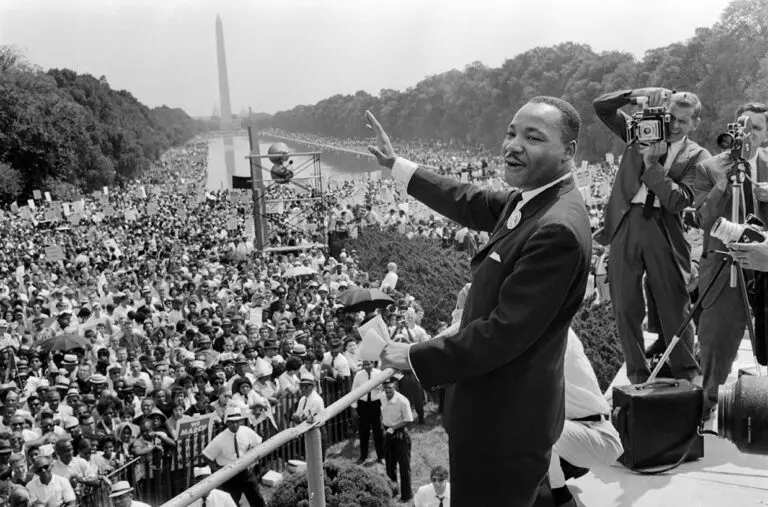
This is in complete contrast with almost all the civil rights marchers of the 1950s and 1960s. When our nation was still saturated with racism and racial segregation laws, the civil rights protesters dared to attempt the seemingly impossible: overturn centuries of ugly attitudes and oppressive laws. Yet, in little more than a decade, every Jim Crow statute came tumbling down, liberating America to enter a new era of dramatically more racial equality and less racism.
It was not just the civil rights movement’s Judeo-Christian themes of love and brotherhood that helped convince Americans to reform, but the inspiring example of the civil rights demonstrators who conducted themselves with such dignity and remarkable restraint, even in the face of sometimes horrific violence against them.
This was not a coincidence but the consequence of the noble example provided by the Rev. Martin Luther King, Jr. and the rigorous training required of his supporters. In his workshops, wannabe marchers were assaulted to test whether they could emulate Christ’s example of turning the other cheek in the face of violence. Demonstrators also had to be well dressed and groomed, and at all times conduct themselves with the utmost decorum, especially when facing hostile bigots.
Each marcher had to respect the legal authorities and the rights of all others, behaving in as Christ-like a manner as possible. Indeed, Rev. King proclaimed that “Christ gave me the message. Gandhi gave me the method,” alluding to the Hindu nationalist leader whose peaceful protest marches and boycotts helped India achieve independence from the British Empire in 1947.
As many Britons were moved by Gandhi’s principled efforts, the non-violent civil rights marchers here soon helped create a new American consensus that Jim Crow was morally wrong. Even many segregationists acknowledged how extraordinarily well the Rev. King and other demonstrators comported themselves, and despite sometimes confronting lethal danger. As the Atlanta pastor predicted, “We will soon wear you down by our capacity to suffer. So in winning the victory we will not only win freedom for ourselves, but we will so appeal to your heart and conscience that you will be changed also.” Most segregationists did repent of their former ways.
It is no happenstance that almost the entire 1950s/’60s civil rights movement was led by Christian ministers: the Rev. King, the Rev. Ralph David Abernathy, the Rev. Andrew Young, the Rev. Hosea Williams, the Rev. Fred Shuttlesworth, the Rev. James Bevel, the Rev. James Lawson, the Rev. Joseph Lowery, the Rev. Jesse Jackson, and many other preachers of the gospel. Every one of them brought a deep religious commitment to redeem a nation and to do so guided by Biblical principles. As Rev. King understood, “Darkness cannot drive out darkness: Only light can do that. Hate cannot drive out hate: Only love can do that.”
But too many anti-ICE “protesters” fail to prove they are motivated by the Christian virtues of love, doing unto others as we want them to do unto us, or humility. Whereas the Rev. King and his supporters found inspiration, organization, and sustenance in the Christian Church, prominent anti-ICE demonstrators have chosen instead to disrupt a peaceful Christian worship service.
If anti-ICE demonstrators really want to change hearts and minds about immigration, they should emulate the triumphant tactics of the Rev. King and Mohandas Gandhi. But the violent hysteria of so many anti-ICE agitators calls into question whether they even want a peaceful dialogue. They reveal how much less Judeo-Christian our culture has become since the 1960s.
With all the sordid revelations that have come out since his tragic martyrdom, the Rev. King was certainly no saint – and never claimed to be. Like all of us, he was a sinner. But not even his biggest critics can deny that his public persona was ever anything less than completely peaceful, poised, eager to engage in respectful debate with his fiercest foes, and willing to go to prison or even give his life for equal rights.
Wherever we stand on immigration or any other issues, we could all learn a lot from the remarkably self-restrained and strictly non-violent way that the Rev. King and other devout Christian ministers led the civil rights movement. They provide a role model not just in how to engage in political discourse responsibly, but successfully.






;?>/smartquizbuilder/includes/images/sqb-registration-img.jpg)