Cross-posted at the Values & Capitalism Project
A great many people believe that changing the law is the solution to social problems. This is a fiction.
If written law were some kind of unbreakable magic spell, the United States would not look as it now does. Nearly all of what the government does today is not by any stretch of the imagination “constitutional.” Written laws and documents do not hold the power to control individual behavior or government behavior.
It is true that when people believe the law to be important, they will obey it. But when they believe it to be unimportant they will just as easily disregard it. In the end it is people’s beliefs, not the law that determines behavior.
Perhaps we are seduced into the “Myth of the Rule of Law” because it is so hard to see what’s really regulating behavior and generating social order. The “Invisible Hand” that Adam Smith described as channeling self-interest in the marketplace to serve the diverse needs and wants of its participants is also at work in the marketplace of ideas, social norms and morality. The core beliefs we hold and the norms that emerge from centuries of social interaction are what restrain or fail to restrain behavior.
This is not merely academic. It is dangerous to persist in the belief that the law is the ultimate check on human behavior for two distinct reasons: First, law does not ultimately change the behavior of its intended targets; second, because it does change the behavior of others.
The first problem renders social reform efforts ineffective. The vast majority of attempts to restrain government, help the poor, make people healthier, more charitable, more equal, less intolerant, more responsible with natural resources, or better educated are really just attempts to change what’s written on pieces of government paper. A different combination of words in the Federal Register one day to the next cannot change human hearts one day to the next.
A powerful example is the brief experiment with alcohol prohibition in the United States. Many in the temperance movement genuinely wanted to prevent drunkenness, alcoholism and the irresponsible and even violent action that sometimes accompanies. They focused their attention mainly on what they incorrectly thought to be the source of power over human behavior—the law. They were successful in changing the law, but failed to sufficiently change hearts. A large number of people still wanted to consume alcohol because they did not believe it was immoral to do so. Because they believed in it, they did it despite the law. The main effect of making the activity illegal was to make the production and distribution of alcohol a violent business, where it had previously been much like any other beverage. There were not gang wars over the soda fountain.
Contrast the legal strategy with the strategy of an organization like Alcoholics Anonymous. AA aims for the heart. They work to change individual lives and behavior by developing a non-judgmental network of support and accountability. AA has been able to change countless lives and free people from the bondage of alcohol addiction. The law could never do that, and we should not ask it to.
I mentioned a second problem with believing the law to be the source of social order: It has a negative effect on unintended parties. This can also be illustrated by the prohibition example. Not only did the law fail to change the behavior of most drinkers, it succeeded in changing the behavior of criminals and government officials, leading to more corruption and violence. It also allowed those who wanted to lessen the damage done by alcohol addiction to feel like they’d “done something about it,” when in fact they’d not helped those that needed help at all.
The change in the average citizen’s moral sense is probably the gravest danger of belief in the power of law. It weakens our moral sense and lulls us into the belief that legality is a substitute for morality. We cease evaluating actions based on their merits as against the moral law and begin evaluating them against state-made law. We shirk responsibility to offer genuine aid because the law will do it, and at the same time we pronounce judgment on actions that are perfectly moral, just because they are illegal.
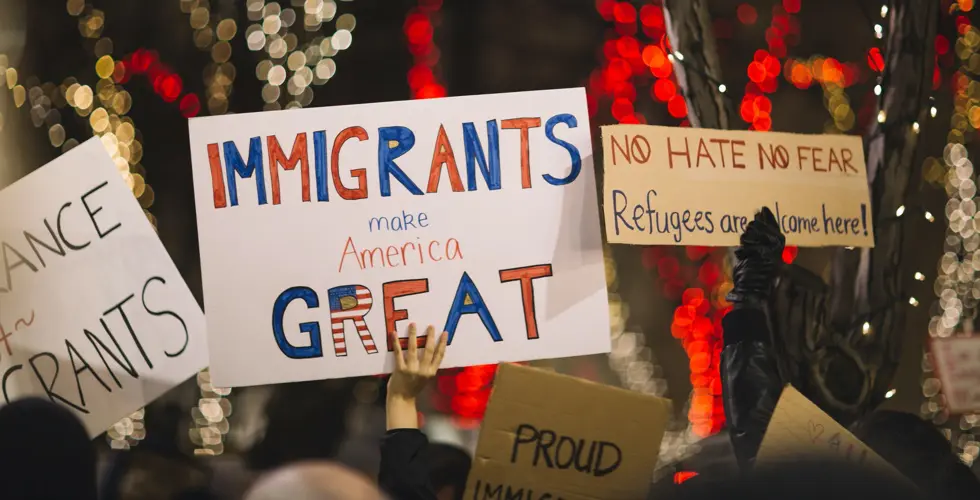
The issue of illegal immigration is illustrative. If we examine the idea without cloaking it in legal/illegal terms, we begin to see a different picture:
A friend of mine is desperately poor and wants to earn a better living for his family. He applies for a job with the local grocer. The grocer is impressed with his work ethic and is happy to offer him a job. This job means my friend can move his family out of their impoverished condition, afford a reasonable apartment and begin saving so his children and grandchildren can have a much better life. There is no trespass or harm committed in this story by any of the parties involved.
Would it be moral to hire armed men to stop my friend on the way to his first day on the job and physically remove his whole family and send them back to their old neighborhood and old life? Would you do this even if you knew it meant you were ensuring him a life of grinding poverty and very possibly death?
It is clearly immoral to interfere with another individual in this way, in particular when such interference condemns them to a much harsher life. But that is precisely what most Americans advocate when they cry for enforcement of immigration laws. The only thing that makes otherwise moral people advocate such immoral behavior is the word “illegal”—in other words a belief in the power of law.
People believe that breaking state-made law is in and of itself an immoral act that justifies the use of violence in retaliation. This absurd notion does not hold up under the slightest scrutiny, even for those who most strongly believe it. I have yet to find an American who says that those harboring Jews during the Holocaust were acting immorally and deserved punishment, or that the individuals who assisted escaped slaves along the Underground Railroad were deserving of incarceration for breaking the law.
Helping peaceful people who are destitute and persecuted is noble, and when done in defiance of the law can even be courageous. It is only a belief in the supremacy of man-made law over moral law that prevents most Americans from viewing as heroic those who assist immigrants hounded by armed border agents. I submit that looking out for the poor is better than locking them up when they have done nothing but seek a better life.
When we remove our awe for legislation we discover that genuine social change is hampered by a belief in the power of law. We also discover that good people will tolerate or even condone immoral acts when they believe that what is legal is more important than what is right. It is lazy to let the law be our agent of change and dangerous to let it be our moral compass.






;?>/smartquizbuilder/includes/images/sqb-registration-img.jpg)