Archive for natural law
What “rights” do Christians have?
Posted by: |This essay continues the Christian Theology and Public Policy Course by John Cobin, author of the books Bible and Government and Christian Theology of Public Policy.
Do Christians have rights? Is it proper for them to assert their rights as Americans? If so, to what extent should they be asserted? The Bible teaches that Christians are not to claim their rights against each other, but rather to be defrauded if necessary (1 Corinthians 6:7-8; 1 Thessalonians 4:6). It is part and parcel of being a Christian to prefer others and to esteem others better than themselves (Romans 12:10; Philippians 2:3-4). They are even called upon to suffer abuse from unbelievers when they can bear testimony of Christ to them and promote peace (Matthew 5:38-42; Romans 12:17-21). The Christian life is, in reality, one of cross-bearing and suffering (Mark 8:34; Philippians 1:29). Therefore, in a sense, Christians have no rights—or at least they are commanded to not exercise them in most circumstances—for the sake of God’s glory, the love of God’s people, or for the purpose of bearing testimony to God’s grace in them.
Nevertheless, if Christians are called to live in civil society and participate in its trade and institutions, then they must adhere to social customs. The Bible gives every indication that Christians are to work, buy, sell, give of their earnings, hold property, pass on an inheritance, and enter into commercial agreements with others. Thus, Christians need to both assert and comply with social customs for economic cooperation. Those customs include establishing and maintaining political and personal rights and liberties, assigning duties to government to protect rights and obligations on each other to respect them.
Tags: Bible, liberty, natural law, rights, theology
[Excerpted from An Austrian Perspective on the History of Economic Thought, vol. 1, Economic Thought Before Adam Smith (1995). An MP3 audio file of this article, read by Jeff Riggenbach, is available for download.]

Not only were the physiocrats generally consistent advocates of laissez-faire, but they also supported the operation of a free market and the natural rights of person and property.
John Locke and the Levellers in England had transformed the rather vague and holistic notions of natural law into the clear-cut, firmly individualistic concepts of the natural rights of every individual human being. But the physiocrats were the first to apply natural-rights and property-rights concepts fully to the free-market economy. In a sense, they completed the work of Locke and brought full Lockeanism to economics.
Quesnay and the other physiocrats were also inspired by the typically 18th-century-Enlightenment version of natural law, where the individual’s rights of person and property were deeply embedded in a set of natural laws that had been worked out by the creator and were clearly discoverable in the light of human reason. In a profound sense, then, 18th-century natural-rights theory was a refined variant of medieval and postmedieval Scholastic natural law. The rights were now clearly individualistic and not societal or pertaining to the state; and the set of natural laws was discoverable by human reason.
The 17th-century Dutch Protestant, and in essence Protestant Scholastic, Hugo Grotius, deeply influenced by the late Spanish Scholastics, developed a natural-law theory that he boldly declared was truly independent of the question of whether God had created them. The seeds of this thought were in St. Thomas Aquinas and in later Catholic Scholastics, but never had it been formulated as clearly and as starkly as by Grotius.
Or, to put it in terms that had fascinated political philosophers since Plato: did God love the good because it was in fact good, or is something good because God loves it? The former has always been the answer of those who believe in objective truth and objective ethics, that is, that something might be good or bad in accordance with the objective laws of nature and reality. The latter has been the answer of fideists who believe that no objective rights or ethics exist, and that only the purely arbitrary will of God, as expressed in revelation, can make things good or bad for mankind.
Grotius’s was the definitive statement of the objectivist, rationalist position, since natural laws for him are discoverable by human reason, and the 18th-century Enlightenment was essentially the spinning out of the Grotian framework. To Grotius the Enlightenment added Newton and his vision of the world as a set of harmonious, precisely if not mechanically interacting natural laws.
And while Grotius and Newton were fervent Christians, as was almost everyone in their epoch, the 18th century, starting with their premises, easily fell into deism, in which God, the great “clock-maker,” or creator of this universe of natural laws, then disappeared from the scene and allowed his creation to work itself out.
From the standpoint of political philosophy, however, it mattered little whether Quesnay and the others (Du Pont was of Huguenot background) were Catholics or deists: for given their world outlook, their attitude toward natural law and natural rights could be the same in either case.
Mercier de la Rivière pointed out in his L’Ordre naturel that the general plan of God’s creation had provided natural laws for the government of all things, and that man could surely not be any exception to that rule. Man needed only to know through his reason the conditions that would lead to his greatest happiness and then follow that path. All ills of mankind follow from ignorance or disobedience of such laws.
In human nature, the right of self-preservation implies the right to property, and any individual property in man’s products from the soil requires property in the land itself. But the right to property would be nothing without the freedom of using it, and so liberty is derived from the right to property. People flourish as social animals, and through trade and exchange of property they maximize the happiness of all.
Furthermore, since the faculties of human beings are by nature diverse and unequal, an inequality of condition arises naturally from an equal right to liberty of every man. In this way, property rights and free markets, concluded Mercier, are a social order that is natural, evident, simple, immutable, and conducive to the happiness of all.
Or, as Quesnay declared in his Le Droit naturel (Natural Law), “Every man has a natural right to the free exercise of his faculties provided he does not employ them to the injury of himself or others. This right to liberty implies as a corollary the right to property,” and the only function of the government is to defend that right.[1]
Many rulers of Europe were either entranced or intrigued by this fashionable new doctrine of physiocracy, and endeavored to find out about it from its major theorists. The dauphin of France once complained to Quesnay of the difficulty of being a king, and the physician replied that it was really quite simple. “What then,” asked the dauphin, “would you do if you were king?” “Nothing,” was the straightforward, stark, and magnificently libertarian answer of Dr. Quesnay. “But then who would govern?” sputtered the dauphin. “The law,” that is, the natural law, was Quesnay’s accurate but no doubt unsatisfying reply.
A similar reply was certainly unsatisfactory to Catherine the Great, czarina of all the Russias, who sent for Mercier de la Rivière, jurist and at one time intendant (governor) of Martinique, to instruct her on how to govern. Pressed as to what the “law” should be grounded on, Mercier answered the empress, “On one [thing] alone, Madame, the nature of things and of man.”
“But how, then, can a king know what laws to give to a people?” the czarina continued. To which Mercier replied sharply, “To give or make laws, Madame, is a task which God has left to no one. Ah! What is man, to think himself capable of dictating laws to beings whom he knows not?” The science of government, Mercier added, is to study and recognize the “laws which God has so evidently engraven in the very organization of man, when He gave him existence.” Mercier added the pertinent warning: “To seek to go beyond this would be a great misfortune and a destructive undertaking.”
The czarina was polite but was definitely not amused. “Monsieur,” she replied curtly, “I am very pleased to have heard you. I wish you good day.”
Murray N. Rothbard (1926–1995) was dean of the Austrian School. He was an economist, economic historian, and libertarian political philosopher. See Murray N. Rothbard’s article archives at the Mises Institute.
This article is excerpted from An Austrian Perspective on the History of Economic Thought, vol. 1, Economic Thought Before Adam Smith (1995). An MP3 audio file of this article, read by Jeff Riggenbach, is available for download.
Tags: ethics, history, natural law, property rights, theology
Intellectual Property and Libertarianism
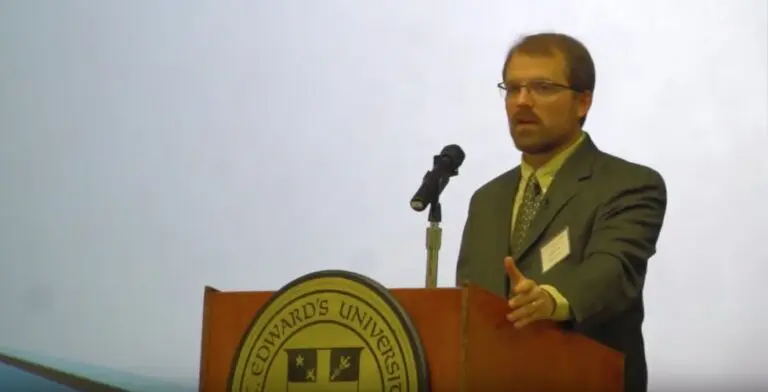
Posted by: |Stephan Kinsella’s presentation at Mises University this past July is an excellent introduction to intellectual property, and to rights theory in general. LVMI recently posted the talk to their YouTube channel, and it is well worth watching when you have some time this weekend. Don’t be intimidated by the length that YouTube indicates, because if you want you can skip the Q&A which is nearly half of the talk. If anything, listen to the first half hour; you won’t regret it!
Tags: economics, intellectual property, natural law, rights
Free Market Law
Posted by: |Following up yesterday’s very popular podcast, I want to direct your weekend reading to three excellent articles by my good friend Daniel Krawisz from the Libertarian Longhorns. He is well into the process of writing an entire book on natural law, ethics, and the free market provision of law, and I am very impressed by the work he has done so far. I hope you’ll take some time to check them out. Obviously, they are not peer-reviewed publications yet, but Daniel has given us some great things to consider in this series and he is very kind to share these words for our benefit. I sincerely hope that his book makes a great impact upon libertarians in the future. Here are the article links with some quotes…
Libertarians sometimes try to derive solutions from the basic axiom of libertarian law requiring consent between both parties in every human interaction, but this cannot be the correct method. When there is a dispute over rights, there is automatically something non-consensual going on; to use the axiom of consent yet hypothesize a situation that already violates it is a contradiction and hence can lead nowhere. All we can say is that given some dispute, something must happen so that everybody agrees on who owns what; of what that something may be the axiom of consent says nothing other than to constrain it in the same way it constrains all human interactions. However, with a little imagination possibilities occur readily. First it is necessary to find an arbiter for the dispute and for both parties to agree to abide by its ruling. This arbiter would have to be some third party, because if it didn’t, then there would be no dispute in the first place. Unlike our government monopoly system, anybody may offer arbitration services simply by advertising such services. These services would likely charge by the ruling, and they would have a strong incentive to be seen as fair, unbiased, and efficient.
Part 2: The Foundations of Rights and the Capitalism of Law
Theories of the state assert that there can be no establishment of rights without the existence of such an organization, though rights may still exist in a purely theoretical sense. The libertarian theory of justice addresses the more general case where there is no state. There are certain rules for the justification of rights that distinguish themselves over all others in that they are neither arbitrary nor patently absurd, and such that if there is no agreement on these rules then there can be no agreement at all.
Part 3: The Violation of Rights
The axiom of law is often called the nonaggression axiom, and stated as, “it is wrong to initiate aggression.” I prefer to call it the axiom of consent and state it as, “everything should be consensual.” Neither of these statements says anything about the proper response to aggression. They neither permit, nor prohibit, any form of self-defense or punishment. From the way the axiom was derived before, we can also see that the proper response to aggression is an open question: the axiom is the absolute minimum required to have any system of law in the first place, and no theory of punishment is strictly necessary. Settlers who first make contact with one another must assent to the legitimacy of consensual exchange between any of them, but as long as they continue to interact peacefully with one another, they have no need to agree upon the proper responses to the violations of the law. Principles of self-defense and punishment, therefore, are not an a priori part of law, but must instead develop as needed within a system of free market law.
And by the way, Daniel in Part 3 slams Rothbard, Kinsella, and Rod Long. That takes some guts. Please give him some insightful comments (or compliments) and encourage his work. I know he will appreciate it!
Tags: economics, law, natural law, The State