Welcome

Welcome to LibertarianChristians.com! If you are new here, you may want to see the About Page for a welcome message and more information about the site. Check out the posts on the right and the Top Posts page to get started! Don't forget to subscribe for free with RSS or Email.

Archive for war

imageI have said many times that I am not a pacifist, but that I have genuine respect for those who are. I also believe it is important to understand the arguments for pacifism from a Christian perspective. Today I found out that from now until Sunday you can get the Kindle edition of Christian Pacifism: Fruit of the Narrow Way (30th Anniversary Edition) for free on Amazon.com. I have not read the book yet, but I have heard good things about it, and who can pass up a free book like this?

My friend Aaron Taylor made me aware of this find. He found this description of the book:

Originally published by Friends United Press, copyright 1981, Christian Pacifism: Fruit of the Narrow Way, by Michael [C] Snow [Earlham School of Religion, ‘81], is now in an “ebook” edition.

In the new Preface, the author writes, “May we all continue to seek first His Kingdom… I pray that this new release…will be a help to pilgrims on that path.”

The original book finally came off the press in January of 1982. It was featured as the selection of the month for the Quaker Book Club in March. The cover art, by graphic artist Susanna Combs, was also featured in a poster and on the cover of Quaker Life for the July-August issue of that year.

In the review in The Friend (UK), Eva Pinthus wrote, “There are few Friends, and even fewer books, that can help evangelical Christians to become convinced of the truth of the Friends’ peace testimony…. Thus we welcome Michael Snow’s rather brief but challenging book.”

Though the original book is currently out-of-print, it has remained readily available through online used book vendors. And a WorldCat library search via the internet shows that it is still available at over 50, mostly university and seminary libraries.

I hope you’ll find this book beneficial. Check it out at Amazon.com.

Tags: , , ,
Categories : Random Thoughts
Comments (0)

I am a man of peace; but when I speak, they are for war. – Psalm 120:7

As he approached Jerusalem and saw the city, he wept over it and said, “If you, even you, had only known on this day what would bring you peace–but now it is hidden from your eyes.” – Luke 19:41-42

All men desire peace, but very few desire those things that make for peace. – Thomas a Kempis

I recently heard praise among churchgoers for the movie, “Act of Valor”, a movie about Navy SEAL’s funded in large part by the Navy itself. (And, judging by the previews, it’s basically a military recruitment film.)  There is even a Bible study that coincides with the movie and is based on the SEAL code of honor.  I was unexpectedly overcome with grief when a Christian excitedly described this to me at church.

I couldn’t stop thinking about the terrible contrast I had just experienced.  The sermon that very morning was on this verse from the Beatitudes in the book of Matthew:

Blessed are the peacemakers, for they will be called sons of God.”

Blessed are the peacemakers.  And yet here Christians had high praise for a code of conduct espoused by an outfit whose entire purpose is to kill ruthlessly and efficiently.  And not merely to kill, but specifically to kill whoever they are commanded to kill by the political powers in the United States without question.  The very first tenet in the SEAL code of conduct is “Loyalty to Country” which means, in practical terms, obeying the orders of your superiors who are supposed to represent “the country”, however ill-defined the term.

Not only does obedience to the first tenet render obedience to any of the rest impossible, it is unfathomable to me how a Christian could find this a suitable basis for a Bible study intended to make men into better Christians.  The first tenet of this code means quite plainly to forsake your own conscience, do not question the morality of your orders, do not seek to understand why you are supposed to be at war with whomever you are told to be at war with, do not investigate whether or not your targets are a genuine threat or deserving of death, but simply pull the trigger.

The Evangelical Church in America today looks very little like a body of Christ followers and more like a body of state and military followers.  American flags grace many a pulpit.  Veterans Day celebrations are common.  Prayers for the success of military ventures are not unheard of.  Calls by politicians and pundits for the use of violence in almost any country for almost any reason will almost always gain the unwavering support of the entire Evangelical community.  Anything – including torture, assassinations, and “collateral damage” – can be excused and even praised if it is done “for the country” and under the stars and stripes.

How did this happen?  Can you imagine Jesus, or Peter or John with Kevlar vests and M-16’s kicking in doors, screaming ,“double-tapping” people in the head before yelling, “All clear!”’ and high-fiving each other?  Can you imagine them dropping an atomic bomb on Hiroshima or Nagasaki?  Can you imagine Jesus instructing his followers to study a code of conduct that begins first and foremost with, “Be loyal to the Roman government”?

Not only did Christ and the giants of the Christian faith refuse to aggress against others, no matter how sinful or evil, they even refused to use violence in self-defense and instead chose martyrdom.  When Peter tried to defend Jesus with the sword by cutting off the ear of a soldier, Jesus rebuked him and healed the man’s ear.

Jesus did not instruct the disciples to go to the wilderness and train for a few months so they could plan a stealth nighttime assassination of the guards who crucified Him or any who opposed the Way.  He told them to forgive.  To Baptize.  To turn the other cheek.  To submit even to death for the sake of the gospel, rather than resort to violence.  That is a radical message and they lived it.

And yet the Church finds herself cheering for the military and honoring them without questioning what they are doing, who they are killing, why they are doing it, or if it’s right.  Worship of America and the myth of its righteousness have taken the place of any sense of individual moral responsibility on the part of soldiers or those who support them.

I left church with an immense weight on my soul.  I wept.  I wept because I knew exactly the sentiment expressed by most of the churchgoers that morning.  I used to share it.  I wept as I remembered my bloodlust after 9/11.  I wanted the United States military to kill people.  I wanted bombs to drop and guns to fire.  I wanted somebody to get it, good and hard.  I wanted death.  I wanted war.  I did not want peace.  I felt no love, only hate.

This impulse is the most human of all impulses.  It is also the very impulse Christ taught us to overcome and demonstrated how to do so by His own example.  Even when others hate, love.

I wept as I saw in my minds eye the blood on the hands of nearly every Christian in this country.  How many self-proclaimed followers of Christ have cheered on “the boys in uniform” during every conflict we’ve ever had, including wars of aggression, just because they’re “our countrymen” fighting for “our side”?

What are “the things that make for peace”?  The belief that right and wrong trump nationality and patriotism.  The belief that killing is only ever permissible as a last resort and in self-defense.  An understanding that Congressional or Presidential approval of an action does not make it moral.  That obeying orders is not a virtue unless the orders are virtuous, in which case they should be obeyed because they are right, not because they are orders.  That voluntarily agreeing to kill whomever you are told to kill is not honorable.  That love is better than vengeance.

Before you support any military action, conduct a brief mental experiment: imagine not the US Military, but you as an individual embarking on the mission in question.  In the end it is only individuals who can act and bear moral responsibility for their actions.  Imagine standing before God and saying, “I was only following orders”.

How many churches cheered for war against Iraq?  Yet can you imagine a pastor standing before his church and saying, “For the next six months we are all going to train in explosives and guns, and we are taking a church trip to Iraq to kill bad people and make the world a safer place.”  Who would support it?  In moral terms, it is no different to support taking money from taxpayers to pay soldiers to do the same.  In fact, the latter is in some ways more nefarious and less honest.

Most would argue that there is a difference between unjust violence and just violence – indeed there is.  Some argue there is a difference between just war and unjust war – perhaps there is.  But never in my years of observing church support for state military action have I witnessed a single discussion of whether the action was just or right.  There have been a few discussions of whether it was “Constitutional”, but never whether it was moral.  The morality of war is assumed by the mere fact that the war is waged by the United States Government.

Until the Church in America stops blindly supporting violence done in the name of patriotism, our hands are bloody and our witness is tainted.  We say we are for peace, but we want war.  We say we pray to the Prince of Peace, but we ask him to bless the violence committed by soldiers.  We say “the law is written on our hearts” yet we ignore our hearts and only follow the laws of governments and call what they call right good, and what they call wrong bad.

In our ignorance, we support violence.  We can cry out, “Father forgive us, for we know not what we do.”  But after our eyes our opened and we begin to examine the morality of acts of violence, we will be held accountable for what we know.  I pray we will be willing to oppose violence, even when doing so makes us “unpatriotic” or “un-American”; even when doing so may lead to our own persecution.

“He who surrenders himself without reservation to the temporal claims of a nation, or a party, or a class is rendering to Caesar that which, of all things, most emphatically belongs to God himself” — C. S. Lewis.

Tags: , , , , , , ,
Categories : Articles
Comments (11)

"We don’t need to pay all this money to keep troops all over the country, 130 countries, 900 bases. But also, just think, bringing all the troops home rather rapidly, they would be spending their money here at home and not in Germany and Japan and South Korea, tremendous boost to the economy." 

- Ron Paul, February 7, 2012

In a post on February 9th at the Washington Post’s The Fact Checker blog, which claims to give "the truth behind the rhetoric," Glenn Kessler writes about "Ron Paul’s Strange Claim about Bases and Troops Overseas":

This comment by GOP presidential aspirant Ron Paul after Tuesday night’s caucuses caught the ear of our editor. Paul’s phrasing could have left the impression that he thinks there are 900 bases in 130 countries, but normally he makes it clear he is talking about two different things.

For instance, in the GOP debate Sept. 12, Paul said: "We’re under great threat, because we occupy so many countries. We’re in 130 countries. We have 900 bases around the world."

We will lay aside Paul’s loose definition of "occupy" – which denotes taking away a country’s sovereignty. You could also quibble with the concept of a "base," but we’ll accept that he’s talking about any military facility.

Are there any facts to back up these eye-popping figures?

I never read anything by Kessler until this piece on Ron Paul. The Fact Checker blog says that he "has covered foreign policy, economic policy, the White House, Congress, politics, airline safety and Wall Street."

In giving us the facts to evaluate the truth of Dr. Paul’s assertions, Kessler refers, but not by name, to two Department of Defense documents: the annual "Base Structure Report" dated September 30, 2011, and the quarterly "Active Duty Military Personnel Strengths by Regional Area and by Country," most recently issued on September 30, 2011.

Regarding the number of foreign bases, Kessler correctly notes that "the DOD list shows a list of 611 military facilities around the world (not counting war zones)." However, he discounts that figure because "only 20 are listed as ‘large sites,’ which means a replacement value of more than $1.74 billion." He also notes that most (549) of the DOD foreign sites are listed as being small sites.

Regarding the numbers and locations of U.S. troops in foreign countries, Kessler correctly notes that the "Personal Strengths" document lists "53,766 military personnel in Germany, 39,222 in Japan, 10,801 in Italy and 9,382 in the United Kingdom. That makes sense." "But wait," he says, "most of the countries on the list, in fact, have puny military representation." He points out that the U.S. has only nine troops in Mali, eight in Barbados, seven in Laos, six in Lithuania, five in Lebanon, four in Moldova, three in Mongolia, two in Suriname and one in Gabon." Then he says that he counts "153 countries with U.S. military personnel, actually higher than the 130 cited by Paul." But he dismisses both numbers by saying that "the list essentially tracks with places where the United States has a substantial diplomatic presence. (The United States has diplomatic relations with about 190 countries.)." He charges Paul with "counting Marine guards and military attaches as part of a vast expanse of U.S. military power around the globe." And after all, "this document indicates that only 11 countries actually house more than 1,000 U.S. military personnel."

Kessler concludes that "Paul’s statistics barely pass the laugh test. He has managed to turn small contingents of Marine guards into occupying armies and waste dumps into military bases. A more accurate way to treat this data would be to say that the United States has 20 major bases around the world, not counting the war in Afghanistan, with major concentrations of troops in 11 countries."

As one who is very familiar with both of the aforementioned DOD documents and has written about these things long before Ron Paul even ran for the Republican presidential nomination the first time, I can say with confidence that it is Glenn Kessler and the Washington Post that need some fact checking.

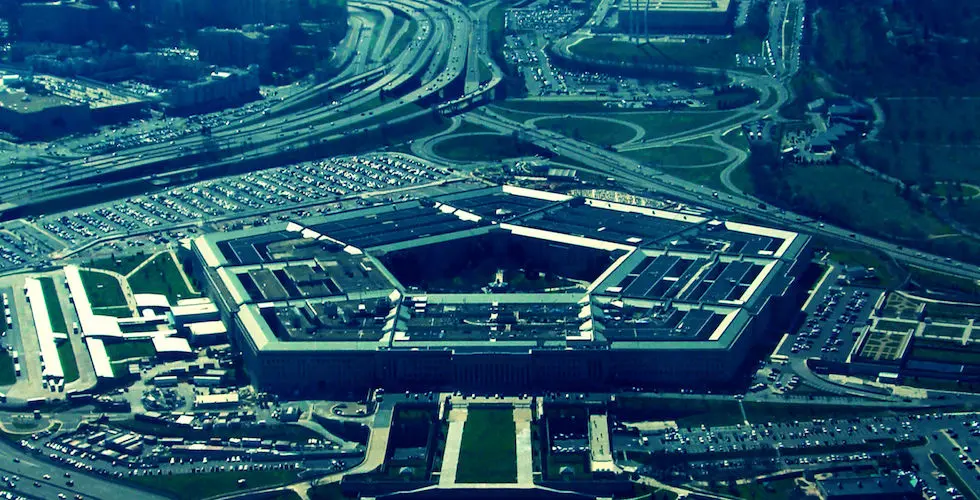
First of all, according to the Base Structure Report, the Defense Department "manages a global real property portfolio consisting of more than 542,000 facilities (buildings, structures, and linear structures) located on nearly 5,000 sites worldwide covering more than 28 million acres." Officially, as Kessler reports, there are 611 of these facilities in 39 foreign countries (excluding war zones). But why dismiss sites that are not "large sites"? Even small sites can have a replacement value of up to $929 million. True, some of the sites are not technically bases, but what about all the foreign bases that are not on the official list?

I recently wrote in "The Real Reason Guantánamo Should Be Closed":

The late Chalmers Johnson, author of Blowback, The Sorrows of Empire, and Nemesis, and one of the foremost authorities on the subject, always maintained that the official Defense Department figures regarding overseas military bases were too low because they “omit espionage bases, those located in war zones, including Iraq and Afghanistan, and miscellaneous facilities in places considered too sensitive to discuss or which the Pentagon for its own reasons chooses to exclude — e.g., Israel, Kosovo, or Jordan.” Johnson estimated the number to be closer to 1,000. We know now that he was right about the Defense Department’s figures, for Nick Turse, author of The Complex: How the Military Invades Our Everyday Lives, has recently confirmed that Johnson’s figure of 1,000 foreign bases is actually too low. The number is really closer to 1,100.

Nick Turse’s work painstaking work on the number of foreign U.S. military bases can be seen here, here, and here. Although Kessler acknowledges the existence of "106 U.S. military facilities in Afghanistan," Turse has reason to believe that the number is much greater and concludes that the military doesn’t even know the true number:

Last January, Colonel Wayne Shanks, a spokesman for the U.S.-led International Security Assistance Force (ISAF), told me that there were nearly 400 U.S. and coalition bases in Afghanistan, including camps, forward operating bases, and combat outposts. He expected that number to increase by 12 or more, he added, over the course of 2010.

In September, I contacted ISAF’s Joint Command Public Affairs Office to follow up. To my surprise, I was told that "there are approximately 350 forward operating bases with two major military installations, Bagram and Kandahar airfields." Perplexed by the loss of 50 bases instead of a gain of 12, I contacted Gary Younger, a Public Affairs Officer with the International Security Assistance Force. "There are less than 10 NATO bases in Afghanistan," he wrote in an October 2010 email. "There are over 250 U.S. bases in Afghanistan."

By then, it seemed, the U.S. had lost up to 150 bases and I was thoroughly confused. When I contacted the military to sort out the discrepancies and listed the numbers I had been given – from Shanks’ 400 base tally to the count of around 250 by Younger – I was handed off again and again until I landed with Sergeant First Class Eric Brown at ISAF Joint Command’s Public Affairs. "The number of bases in Afghanistan is roughly 411," Brown wrote in a November email, "which is a figure comprised of large base[s], all the way down to the Combat Out Post-level." Even this, he cautioned, wasn’t actually a full list, because "temporary positions occupied by platoon-sized elements or less" were not counted.

Along the way to this "final" tally, I was offered a number of explanations – from different methods of accounting to the failure of units in the field to provide accurate information – for the conflicting numbers I had been given. After months of exchanging emails and seeing the numbers swing wildly, ending up with roughly the same count in November as I began with in January suggests that the U.S. command isn’t keeping careful track of the number of bases in Afghanistan. Apparently, the military simply does not know how many bases it has in its primary theater of operations.

Turse specifically mentions the countries of Qatar, Pakistan, and Kuwait. Qatar is not listed on the Base Structure Report, but contains Al-Udeid Air Base, a billion-dollar facility where the U.S. Air Force secretly oversees its on-going unmanned drone wars. Pakistan is also not listed on the Base Structure Report, but U.S. drone aircraft, operating under the auspices of both the CIA and the Air Force take off from one or more bases in that country. And then there are the other sites like the "covert forward operating base run by the U.S. Joint Special Operations Command (JSOC) in the Pakistani port city of Karachi," and "one or more airfields run by employees of the private security contractor Blackwater (now renamed Xe Services)." And Kuwait, which has one nameless site on the Base Structure Report, has a number of U.S. military facilities.

Suppose that each of the 39 "official" countries with U.S. military bases decided to build the same number of military bases in the United States that the United States maintained in its country? The DOD claims 194 "sites" in Germany. Would the United States government object if Germany insisted on occupying 194 "sites" in the United States? How about just 94? Would the U.S. military not object because they were just "sites" and not technically bases?

Secondly, Kessler is wrong about U.S. troops being in 153 countries. The United States actually has troops in 148 countries and 11 territories. The last time I gave a complete list of all the countries and territories where the United States had troops was in my article of February 11, 2010, titled "Same Empire, Different Emperor." If you add to the list there the countries of Antigua, Congo (Brazzaville), and Suriname, and subtract from the list the countries of Eritrea, Iran, and Somalia, you will have an updated list. The current eleven territories where U.S. are stationed are: American Samoa, Diego Garcia, Gibralter, Greenland, Guam, Hong Kong, Northern Mariana Islands, Puerto Rico, St. Helena, U.S. Virgin Islands, and Wake Island.

But why does Kessler use the arbitrary number of 1,000 in saying: "This document indicates that only 11 countries actually house more than 1,000 U.S. military personnel." Does this mean that it is okay if the United States has military personnel in a country that number 1,000 or less? And why, after giving the figures of "53,766 military personnel in Germany, 39,222 in Japan, 10,801 in Italy and 9,382 in the United Kingdom," does Kessler remark: "That makes sense"? What makes any sense about the United States stationing all of these troops in Germany, Japan, Italy, and the UK when World War II ended in 1945? What makes any sense about the United States stationing 723 troops in Portugal, 1,205 in Belgium, 163 in Singapore, and 335 in Djibouti? How many Americans have ever even heard of Djibouti? What makes any sense about the United States stationing troops in 75 percent of the world’s countries? Kessler makes much of the low figures of "nine troops in Mali, eight in Barbados, seven in Laos, six in Lithuania, five in Lebanon, four in Moldova, three in Mongolia, two in Suriname and one in Gabon." But what makes any sense about any U.S. troops being in those countries? And what makes any sense about the United States sending twenty-two of its military personnel to Ecuador, fourteen to Guatemala, seven to Mozambique, and six to Togo? What makes any sense about U.S. troops being stationed anywhere overseas?

Suppose that each of the 148 countries with a contingent of U.S. military personnel decided to send an equal number of their troops to the United States? Would the United States government and its military tolerate 1,491 troops from Turkey, 2,142 from Bahrain, and 354 from Honduras since those are the numbers of troops the United States has in those countries?

And third, Kessler is just plain wrong in dismissing the U.S. troop presence in foreign countries as "places where the United States has a substantial diplomatic presence" or "Marine guards and military attaches." I did a major study of this back in October 2004 called "Guarding the Empire." It has been online ever since, but rather than doing a little research, Kessler was content to just accuse Dr. Paul of turning "small contingents of Marine guards into occupying armies."

In my article I showed beyond any doubt that the U.S. troop presence in foreign countries cannot be blamed on Marines guarding embassies. Read the article. I can’t tell you how many people have written me after I wrote something negative about the U.S. empire of troops and bases that encircles the globe and dismissed my research as a waste of time since, so they said, most of the U.S. troops stationed abroad were just Marine embassy guards. That is simply not true. I did the research and provided a link to the research, but they were just too lazy to click on the link. Don’t be lazy; read "Guarding the Empire." Yes, I know it was written in 2004. Yes, I know that some of the figures have now changed. Yes, I know that some of the links no longer work. But my conclusions still stand:

  • The United States has an embassy in some countries, but does not have any troops.
  • The United States has an embassy in some countries along with Army, Navy, and/or Air Force troops, but there are no Marines listed as being in the country.
  • The United States has an embassy in some countries with troops including Marines, but not the minimum number of six Marines necessary for embassy security guard duty.
  • The United States has Marines in some countries, but no embassy to guard.

And if the United States has "diplomatic relations with about 190 countries," then how can Kessler say that the list of 148 countries with U.S. troops "essentially tracks with places where the United States has a substantial diplomatic presence"? That is a difference of 42 countries.

Kessler never gets to the real issue. The real issue has nothing to do with the exact number of foreign bases the United States has or the exact number of countries the United States has troops in or the exact number of troops the United States has stationed abroad or the exact number of foreign sites that are really bases.

The real issue is why the United States has troops and military bases in foreign countries in the first place. Especially since the United States doesn’t afford other countries the same privilege.

When I first wrote about U.S. troop presence around the globe in March 2004 in "The U.S. Global Empire," I documented that the U.S. had troops in 135 countries and 14 territories. Both numbers have only changed slightly since then. There was no change in U.S. foreign policy from Bush to Clinton to Bush to Obama. Just like there would have been no change in U.S. foreign policy if John Kerry or John McCain had been elected. Both parties are committed to a foreign policy of aggression, intervention, and meddling. Both parties are committed to a foreign policy of policing the world. Both parties are committed to a foreign policy of bombing and war. Both parties are committed to a foreign policy of empire.

The Washington Post ought to be writing about Ron Paul’s sane claim about bases and troops overseas.

Originally posted on LewRockwell.com on February 13, 2012.

Tags: , , , ,
Categories : Articles
Comments (0)

Recapping the interesting and significant news of this past week.

Tom Woods posted a fun article this week concerning 26 Things Non-Paul Voters are Basically Saying.

Sadly, Judge Andrew Napolitano’s FreedomWatch show on FoxBusiness is being canceled. Not cool, Fox.

An LCC reader sent me an interesting interview from the BBC with Alexandre Christoyannopoulos asking if Jesus was an anarchist.

The Onion satirizes that Iran is concerned that the U.S. is on the verge of obtaining its 8500th nuclear weapon. Oh noez!

If you’re a V for Vendetta fan, you might find this article interesting about the culture connection between V and the hacker group Anonymous.

I find technology trends quite interesting, and of course one of the hottest trends right now is tablet computing. Dan Moren writes about using his iPad as his only work computer for a three days.

You ought to give a Fed Valentine this week.

If you are like me, you sort of threw up in your mouth during Clint Eastwood’s Super Bowl commercial. Reason.tv responds with this:

Did you visit LCC this week? Here’s what you missed if not:

Have some relevant news and links you want to share? Post in the comments below. I read every comment and respond more often than not. Let me know what you’re thinking!

Tags: , , , , , , , ,
Categories : News
Comments (1)

It has been ten years now since the first “terrorists” arrived at the U.S. military prison at Guantánamo Bay, Cuba. Of the 779 people who have been detained at Guantánamo over the years, 171 still remain.

Of those 171 prisoners, 46 are “indefinite detainees” who will neither be charged nor released, 89 are eligible for release or transfer but are still held in the prison camps, 6 face death-penalty trials that may begin this year, 4 are convicted war criminals, and 1 is serving a life sentence.

Although Secretary of Defense Donald Rumsfeld called the detainees at Guantánamo “among the most dangerous, best-trained, vicious killers on the face of the earth” and insisted that all of them “were captured on a battlefield,” the majority had to be released when it turned out, after months or years of confinement, abuse, or torture, that most were hapless innocents sold by warlords as terrorists to the U.S. military in order to collect a bounty. An analysis by Seton Hall Law School professor Mark Denbeaux — based on the government’s own data — found that only one of the 516 Combatant Status Review Tribunal unclassified summaries of the evidence alleged that a detainee had been captured by the Unites States on a battlefield.

George W. Bush’s assurances in a 2006 White House speech that “we have in place a rigorous process to ensure those held at Guantánamo Bay belong at Guantánamo” and that detainees “are in our custody so that they cannot murder our people” were simply ruses for indefinite detention.

Read More→

Tags: , , , ,
Categories : Articles
Comments (4)

Who is behind LCC?

Norman Horn is the creator and primary writer for LCC. Learn a little bit about him in the About Page. You can write him a note or ask a question at the Contact Page. Follow him on Twitter.

Photobucket

Top Ron Paul Sites - Ranking the best Ron Paul related Freedom and Liberty Websites