Archive for statism

I have not done a news post in some time, so I have a lot of links piled up for you today. I think you will find many of them of interest for both general purposes and particularly Christian libertarian purposes as well.

The Bionic Mosquito has a very interesting article up regarding libertarians and abortion. He is definitely adding to the debate and it is worth checking out.

Gerard Casey says that religion and politics needs to file for divorce. The power couple has fallen!

David Gordon reviews a new book on religious toleration and freedom of conscience.

Gene Healy hopes that Sandy Hook will not be seen as a 9-11 for schools. Some people really think that a gun ban would help, but apparently it doesn’t work in China. It’s a sick world, folks. Jeff Tucker asks why schools shouldn’t be allowed to secure themselves.

Jeff also has a superb article describing how the state will ultimately end.

From the You-Have-To-Be-Kidding-Me Department… The US Air Force is apparently now using Rev. Martin Luther King, Jr. as a means of justifying nuclear warfare. Yes. Really.

Should Christians be interested in wealth creation, or just marginal charity? Perhaps we should try to understand economics better.

My new favorite comic… (Thank you XKCD!)

And it says a lot about you that when your friends jump off a bridge en masse, your first thought is apparently 'my friends are all foolish and I won't be like them' and not 'are my friends ok?'.

Have something you want to share with everyone? Let us know in the comments. I read every comment and respond to as many as I can!

Tags: , , , , ,
Categories : News
Comments (10)

Disney World in central Florida recently opened a large expansion and renovation of its Fantasyland area. Kids can ride Dumbo the Flying Elephant, the Mad Tea Party, the Many Adventures of Winnie the Pooh, and Peter Pan’s Flight. Although adults can ride too, the difference is that they know these things are all fantasy – or at least they are supposed to.

Some American adults have not only ridden the rides at Fantasyland, they live in Fantasyland. Their conception of what the U.S. military accomplished in Iraq and Afghanistan belongs in a ride in Fantasyland. It is wishful thinking. It is pure fantasy.

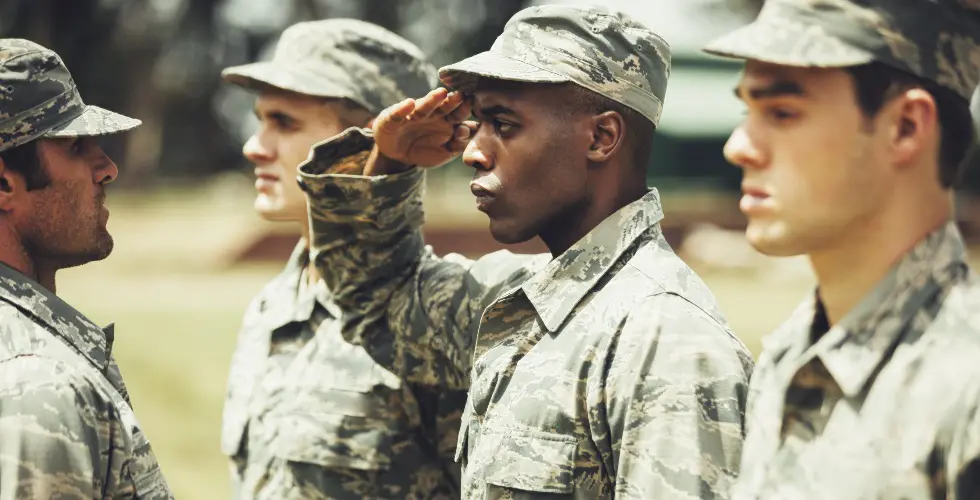
It is bad enough when civilian American adults live their lives in Fantasyland; it is even worse when soldiers do.

I recently responded to a former soldier who had written to me concerning my article, "Marines, Why Do You Do This To Your Families?" I quoted this paragraph from his letter:

So was it worth it? Ask the women who now have fundamental human rights for the first time. Ask the children who can now attend school and get an education (schools that groups of insurgents haven’t hidden a cache of weapons and explosives underneath). Ask the farmer who can now grow crops to feed his family, and his village, rather than poppy fields to create opium to line Al Qaeda’s pocket (because if he didn’t, they would systematically kill his family until he complied). Ask the people of Iraq who no longer have to worry about Saddam Hussein’s regime of terror.

For the sake of argument, I did not dispute the soldier’s claims. Instead, I pointed out that for many, many others besides these women, children, farmers, and Iraqis, the U.S. invasion and occupation of Iraq and Afghanistan was not worth it at all. I did the same thing in my article about the end of the Iraq War, "Was It Worth It?":

Okay, suppose it’s all true – and then some. Suppose it’s even better than anyone could have imagined. What if Iraq is now a model democracy for the rest of the world? What if Iraq now has a constitution that rivals our own? What if there is now no more sectarian violence in Iraq? What if Iraq now has a free market? What if Iraq is now an American ally? What if Iraq is now a friend of Israel? What if Iraqis now have freedom of speech and freedom of religion? What if Iraq now respects the rights of women and minorities? What if all Iraqi children are now in school? What if Baghdad is really the best city on earth instead of the worst?

Would it now be worth the life of your son? Can you look your son in the face and tell him that you would have sacrificed him to bring about these changes in Iraq? And if your son had the misfortune of dying in Iraq, how do you think he would feel if he could now hear you say that his death was worth it?

So, this time, let’s take an interactive ride through the Fantasyland that some soldiers (and their supporters) live in.

In the soldiers’ Fantasyland, they see women who now have fundamental human rights for the first time. In reality things are otherwise. According to "Women in Afghanistan: A Human Rights Tragedy a Decade after September 11," published by the Revolutionary Association of the Women of Afghanistan (RAWA):

Over a decade after the September 11, 2001, attacks in the United States and the military campaign in Afghanistan, there is some good news, but still much bad news pertaining to women in Afghanistan. The patterns of politics, military operations, religious fanaticism, patriarchal structures and practices, and insurgent violence continue to threaten girls and women in the most insidious ways. Although women’s rights and freedoms in Afghanistan have finally entered the radar of the international community’s consciousness, they still linger in the margins in many respects. Overall, the situation for girls and women in Afghanistan remains bleak.

The situation for Afghan girls and women remains deplorable, despite concerted efforts to improve their freedoms, rights, and quality of life. In a June 2011 global survey, Afghanistan was named as the "world’s most dangerous country in which to be born a woman.

In the soldiers’ Fantasyland, they see children who can now attend school and get an education. In reality things are otherwise. According to a recent NPR story:

In Afghanistan, girls are required by law to go to school. However, many of them never do. Death threats, acid attacks and bombings by Taliban militants and other extremists lead many parents who support female education to keep their daughters at home. Sometimes, it’s the families themselves who stand in the way. School officials in conservative communities say relatives are often more interested in marrying off their daughters or sisters than in helping them get an education.

According to the UN’s Inter-Agency Information and Analysis Unit, in Iraq "one in three girls aged 12-14 is not enrolled in school, while one in ten of the same age group has never attended school, according to the Iraq Knowledge Network Survey. Traditional cultural and social factors often remain obstacles to improvements in girls’ access to education."

In the soldiers’ Fantasyland, they see farmers who can now grow crops to feed their families and their villages rather than poppy fields to create opium. In reality things are otherwise. Heroin production by Afghan farmers rose between 2001 and 2011 from just 185 tons to 5,800 tons. It increased by 61 per cent last year alone. But that’s not the worst of it:

Some 15 per cent of Afghanistan’s Gross National Product now comes from drug-related exports.

The UN says there are now 17 provinces in Afghanistan affected by poppy cultivation, up from 14 a year ago. Experts say the Taliban’s involvement in the drugs trade ranges from direct assistance – such as providing farmers with seed, fertiliser and cash advances – to distribution and protection.

Ironically, the Taliban had overseen a significant fall in heroin production in the months before the invasion. Their leader Mullah Mohammed Omar – collaborating with the UN – had decreed that growing poppies was un-Islamic, resulting in one of the world’s most successful anti-drug campaigns. As a result of this ban, opium poppy cultivation was reduced by 91 per cent from the previous year’s estimate of 82,172 hectares. The ban was so effective that Helmand Province, which had accounted for more than half of this production, recorded no poppy cultivation during the 2001 season. However, with the overthrow of the Taliban opium fields returned, despite the destruction of crops by coalition forces and initiatives to persuade farmers to switch to other produce.

In the soldiers’ Fantasyland, they see Iraqis who no longer have to worry about Saddam Hussein’s regime of terror. In reality things are otherwise. Iraqis now have to worry about a despotic Islamic state under Sharia law instead of the secular government that existed under former U.S. subcontractor Saddam Hussein. Article 2 of the Iraqi constitution reads:

Islam is the official religion of the State and it is a foundation source of legislation.

No law may be enacted that contradicts the established provisions of Islam.

And then there are the first three articles of the constitution of the Islamic Republic of Afghanistan:

Afghanistan shall be an Islamic Republic, independent, unitary and indivisible state.

The sacred religion of Islam is the religion of the Islamic Republic of Afghanistan.

No law shall contravene the tenets and provisions of the holy religion of Islam in Afghanistan.

Iraq and Afghanistan were invaded and occupied by U.S. troops who killed hundreds of thousands and died by the thousands to install militant Islamist governments with new constitutions that formally enshrine Sharia Law.

U.S. soldiers (and their supporters) are living in Fantasyland if they think that their actions did any "real and permanent good" in Iraq and Afghanistan.

The question, then, is why do so many U.S. soldiers (and their supporters) continue to live in Fantasyland? It is time that they begin to face reality. The wars in Iraq and Afghanistan are not just wars; they are monstrous evils. U.S. soldiers were not and are not defending anyone’s freedoms, keeping Americans safe from terrorists, fighting "over there" so we don’t have to fight "over here," or defending the country in any way. U.S. soldiers are attackers, invaders, trespassers, occupiers, aggressors, and, yes, killers.

It is time to leave Fantasyland. As Jacob Hornberger, president of the Future of Freedom Foundation puts it: "After 10 years of invasion, occupation, torture, killings, incarcerations, renditions, assassinations, death, destruction, anger, hatred, and the constant threat of terrorist retaliation, it’s time to admit that the military invasion of Afghanistan, like that of Iraq, was horribly wrong."

Originally posted on LewRockwell.com on January 14, 2013.

Tags: , , , , ,
Categories : Articles
Comments (2)

Recapping the interesting and significant news and articles of the past week.

Bob Murphy reconciles anarcho-capitalism with Christianity.

Doug Newman asks if Christians should ever vote for the lesser of two evils.

Carl Gobelman explores the idea of “Church and state.”

“Give unto Caesar”? David Hathaway sheds some light on the topic.

Patheos.com posted an absolutely absurd article claiming that good Christians always send their kids to public schools. The response from readers… not so good.

The Feds seized millions of dollars of gold coins from a family’s inheritance on the basis that the government originally confiscated said coins under Roosevelt in the 1930s. The incident raises a lot of questions about the status of tangible property while living in these United States.

Dan McCarthy of The American Conservative Magazine reviews Bill Clinton’s DNC address.

Have you been to LCC recently? If not, here are a few posts you may have missed:

Have something you want to share? Please let us know in the comments. I read every comment and respond to most of them. Thanks for your support!

Tags: , , , , ,
Categories : News
Comments (1)

Robert Wenzel at the Economic Policy Journal has put together an excellent list of articles that can help anyone interested in libertarianism become proficient in the basics in just 30 days. Having read almost all of these essays in the past, I can attest to the quality of these articles and their capacity for informing someone about the essentials of liberty. I would probably add two more essays to the list, though. First, Rothbard’s seminal work The Anatomy of the State is what I like to call a “mental detox” from the perils of ingrained statism in our minds. I would additionally recommend Rothbard’s article Society Without a State as another essential piece.

Here is Robert’s description of his list, followed by links to every article he recommends:

The list below will not make anyone a scholar in libertarianism or an expert in Austrian Economics, it is designed to introduce to the busy individual the essence of libertarianism. There are 30 articles listed below. If one reads one article, slowly and carefully, per day, by the end of 30 days one should have a very strong grasp of libertarian principles and a basic understanding of Austrian economics. The list contains articles on a variety of topics, but does not cover all possible libertarian topics. More than anything it provides an overview of libertarianism and how libertarians think about issues of the day. The completion of the 30 days of reading should not be considered an ending point but rather the start of the beginning of more detailed study.

Day 1: The Task Confronting Libertarians by Henry Hazlitt
Day 2:  The Fascist Threat by Llewellyn H. Rockwell, Jr.
Day 3:  Free Economy and Social Order by Wilhelm Röpke
Day 4:  The Peculiar and Unique Position of Economics by Ludwig von Mises
Day 5:  What Soviet Medicine Teaches Us by Yuri Maltsev
Day 6:  Economic Depressions: Their Causes and Cures by Murray Rothbard
Day 7:  Is Greater Productivity a Danger? by David Gordon
Day 8:  Taxation Methods Evaluated by Murray Rothbard
Day 9:  Hitler Was a Keynesian by Llewellyn H. Rockwell, Jr.
Day 10:  Seeing the Unseen by Llewellyn H. Rockwell, Jr.
Day 11:  The Watermelon Summit by Thomas J. DiLorenzo
Day 12:  Equality and Inequality by Ludwig von Mises
Day 13:  How to Think Like an Economist by Murray Rothbard
Day 14:  The Health Plan’s Devilish Principles by Murray Rothbard
Day 15:  Vices Are Not Crimes by Murray Rothbard (Read Lysander Spooner’s original essay here.)
Day 16:  Repudiate the National Debt by Murray Rothbard
Day 17:  The Fallacy of the ‘Public Sector’ by Murray Rothbard
Day 18:  The Road to Totalitarianism by Henry Hazlitt
Day 19:  The Many Collapses of Keynesianism by Llewellyn H. Rockwell, Jr.
Day 20:  The Crippling Nature of Minimum Wage Laws by Murray Rothbard
Day 21:  Who Owns Water by Murray Rothbard
Day 22:  Defending the Slumlord by Walter Block
Day 23:  The Freedom of Association by Llewellyn H. Rockwell, Jr
Day 24:  How to Help the Poor and Oppressed by Walter Block
Day 25:  Everything You Love You Owe to Capitalism by Llewellyn H. Rockwell, Jr.
Day 26:  Is There a Right To Unionize? by Walter Block
Day 27: What If Public Schools Were Abolished? by Llewellyn H. Rockwell, Jr.
Day 28:  Why Austrian? an interview with Robert Higgs
Day 29:  Economics and Moral Courage by Llewellyn H. Rockwell, Jr.
Day 30:  Do You Hate the State? by Murray Rothbard

Tags: , , , , , , , , , ,
Categories : Articles
Comments (2)
Jun
28

Who is to blame?

Posted by: | (13)

This guest post is by Cam Rea, frequent reader of LCC and member of the Christian Libertarian Facebook Group.

Many Christians on Facebook, TV, and in various churches will say that the reason for the decline of this country (i.e., These United States) is that God is punishing the nation. They point to abortions and homosexuality among other issues. They argue that we have become a lawless society, turning our back on God, and are now suffering for doing so. But is this really the case? Is this really a valid argument? I urge others to read 1 Samuel 8:10-18:

So Samuel told all the words of the Lord to the people who asked him for a king. And he said, “This will be the behavior of the king who will reign over you: He will take your sons and appoint them for his own chariots and to be his horsemen, and some will run before his chariots. He will appoint captains over his thousands and captains over his fifties, will set some to plow his ground and reap his harvest, and some to make his weapons of war and equipment for his chariots. He will take your daughters to be perfumers, cooks, and bakers. And he will take the best of your fields, your vineyards, and your olive groves, and give them to his servants. He will take a tenth of your grain and your vintage, and give it to his officers and servants. And he will take your male servants, your female servants, your finest young men, and your donkeys, and put them to his work. He will take a tenth of your sheep. And you will be his servants. And you will cry out in that day because of your king whom you have chosen for yourselves, and the Lord will not hear you in that day.

Here is the question. If God is truly punishing the United States for its sins, then why does God seem to disapprove of the State so strongly? The passage above suggests that God hates State established borders (although not individual borders established by the property owner, who inherited or bought the land on which they live on). If the State can draw the borders, it makes the idea of owning property illegitimate, for the State now holds a monopoly on not only the land but also the very people within its confines. Within these confines, the State needs a symbol and a force to back that symbol (leader), especially the kind that involves a military force supported by taxing its very citizens to protect and suppress.

Therefore, if one’s argument is that God is punishing this nation, or any nation for that matter, one must be in error. God could care less about nationalized borders when he was against it from the very get go. It’s not God that is punishing us, but rather the individual who places his or her faith into the government to solve all our problems, whether religious or secular. I would think if the Christians and Jews were against all these sinful acts that many protest the government to do something about, they would protest violence as being the greatest sin of all.

Unfortunately, many think that people who live very different lifestyles from their own places believers in danger. This makes very little sense. If you are a good Christian, Jew, or whatever, what is your worry? It is unfortunate that many believers in God have looked to the State to be their deliverer on all goods and services, rather than looking to the God who made them from the beginning.

Tags: , , , , , ,
Categories : Articles
Comments (13)

Who is behind LCC?

Norman Horn is the creator and primary writer for LCC. Learn a little bit about him in the About Page. You can write him a note or ask a question at the Contact Page. Follow him on Twitter.

Photobucket

×

Need a good read? Check out our bookstore!