Archive for Romans 13
The differing schools of public policy theology
Posted by: |This essay continues the Christian Theology and Public Policy Course by John Cobin, author of the books Bible and Government and Christian Theology of Public Policy. It is the fourth installment of a seven part series dealing with Christians and rebellion against the civil authority, originally titled “Christian Views on Rebellion.”
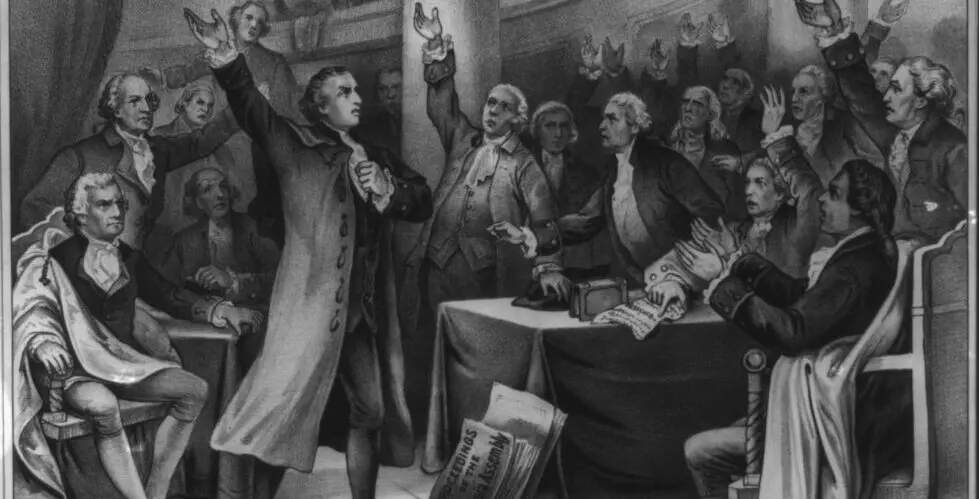
Our Christian forefathers who lived during the 1770s were revolutionaries. Preachers and theologians of the day actively advocated rebellion against the civil authority and Christians complied— participating in the social and political upheaval. We should consider that the position of Christians in England might have been different. Did English preachers condemn the activities of the colonists in their sermons? No doubt many would have remarked that the American colonists who were rebelling against their king were (sinfully) violating Romans 13:1-7 and 1 Peter 2:13-17. Tory pastors in America—Anglican or otherwise—also thought that the rebels (patriots) were in sin. Since the king had a divine right to rule, Christians must therefore maintain their allegiance to him. However, these loyalist Anglicans lost their influence in America, being assailed intellectually and otherwise—primarily by Baptists, Presbyterians, German Reformed, Dutch Reformed, French Huguenots, Lutherans, and Congregationalists.
Furthermore, during the War for American Independence, to whom should these divine right Tories have been loyal: a colonial government body or King George III? Looking back, one would be tempted to say ‘to the colonial government’ because we know the outcome of the war. But the outcome was hardly clear to Nathan Hale or to King George III. It was not clear to General Benedict Arnold either. He was considered both a patriot and a traitor by both sides during the war. Clearly, colonial victories in upstate New York were achieved by this brilliant general, who later proved helpful to the British.
On May 10, 1775, Arnold and Ethan Allen led 200 Green Mountain Boys to capture Fort Ticonderoga on Lake Champlain, confiscating 50 cannon, 2,300 pounds of lead and a barrel of flints for muskets from the king in order to supply the militia in Boston. He led tremendous military campaigns in New York and Quebec. Yet he was mocked by the Continental Congress, and on September 21, 1780, he offered to exchange West Point for 20,000 pounds and a commission as major general in the British army. Now here’s the tough question: “Was Arnold in sin when he joined the Americans, when he joined the 6 British, or on both occasions?” He obeyed the civil authority of King George III but disobeyed American authorities. If the Apostles Paul and Peter were Arnold’s contemporaries, to whom would they tell him to “submit” and to “honor”? Given his duplicity and bad character, was Arnold a Christian? Could he have been righteous in following his conscience at both junctures? A Christian’s judgment about how Tories or Arnolds should be treated, or about how one should respond to revolutionary movements in general, will depend on his presuppositions regarding the nature of the state and what is entailed in appropriate Christian response to public policy. Christians can be orthodox and Evangelical with respect to the fundamentals of the faith and the doctrine of salvation and still disagree widely in their public policy theology. This doctrinal divergence was manifest between the Christian patriots and the Christian Tories, and it is still seen in modern American Christianity.
There are two historical schools of Evangelical thought regarding the nature of the state and public policy: (A) the Integrated Authority School and (B) the Competing Kingdom School. The former school views the state as (at least) a potential ally of the family and church in establishing or advancing God’s kingdom in the world. The state’s role may be as small as simply restraining what God thinks is evil or as large as actively clearing the way for the establishment of true religion in a nation. Some integrated authority adherents believe that a strong nexus between church and state is necessary for a godly society, where the church preaches to the state regarding what it should enforce and the state upholds the biblical standard it receives via the power of the sword. The latter school views the state, encompassed in the biblical terminology as “the kingdoms of this world”, running a course that is antithetical to God’s. Whether driven by its own cultural norms or Satan himself, the state competes against God. Nevertheless, God holds the ultimate reigns on the state and uses it to accomplish certain ends in this world, such as bringing terrestrial judgment upon sinners or sanctifying His church through state persecutions. Perhaps paradoxically, some competing kingdom adherents also view the state as restraining civil evil at times.
Both of these schools have two branches (or sub-classifications) which make up a total of four Christian perspectives of public policy. The two branches of the integrated authority school are (1) the theonomy view or Christian Reconstructionism and (2) the revitalized or reshaped divine right of kings view. These views may be condensed to simply the terms theonomy and divine right. The two branches of the competing kingdom school are (1) the Anabaptist (strict separationist) or pacifist view and (2) the liberty of conscience view.
Professor Mark Noll’s work Christians and the American Revolution (1977) is especially helpful in forming a historical perspective on these positions. I would also recommend my book Bible and Government: Public Policy from a Christian Perspective (2003). The instigators of the American “Revolution” were largely theonomic Presbyterians and Congregationalists, along with liberty of conscience Baptists. These groups took an active role in transforming their world, albeit for very distinct reasons. In my next two columns, I will examine these four views in greater detail.
Originally published in The Times Examiner on April 13, 2005.
Tags: American Revolution, Bible, government, history, revolution, Romans 13, statism, theology
Were the American revolutionaries wrong to revolt?
Posted by: |This essay continues the Christian Theology and Public Policy Course by John Cobin, author of the books Bible and Government and Christian Theology of Public Policy. It is the third installment of a seven part series dealing with Christians and rebellion against the civil authority, originally titled “Christian Views on Rebellion.”
According to a public policy theology popular among modern Evangelicals, the American Founders sinned greatly by rebelling against their earthly sovereign King George III. Why? Let’s consider a few of the “sins” committed by the American Founders and their associates. On June 9, 1772, the British revenue cutter Gaspee ran aground near Providence, Rhode Island. The hated and feared anti-smuggler Lt. Dudingston was put ashore along with his crew, and on the next morning the Gaspee was burned by a group of patriots led by Abraham Whipple. Rhode Island chief justice Stephen Hopkins refused to bring the men to justice. Even though the Crown offered a reward for the names of the culprits, no one would turn in Whipple and his men. There was overwhelming public (and Christian) support for the revolutionary action.
Similarly, on October 12, 2000 the USS Cole was bombed by several Arabs who thought that they were fighting for the right cause, killing seventeen American servicemen. But should the Arab insurgents be deemed criminals or patriots for their cause? Our tendency is to justify the American insurgents and condemn the Arabian ones, although in the abstract there is not that much difference between the actions of the two bands. Would our view change if the USS Cole had been attacked by Christians in New Zealand instead? The usual American response is that anyone who attacks American interests is wrong. What about the Christian response—irrespective of nationality or politics? For whatever reason, it seems that there is an underlying (moot) assumption that what is against America must also be against Christianity. Indeed, it seems that American Christians in 2005 have a more confused public policy theology than their predecessors did some 230 years earlier.
By January 1773, dozens of “Committees of Correspondence”—political communication conduits that spread news that fostered the revolutionary movement—had been formed in Massachusetts and other places, including Virginia and the Carolinas. These groups actively utilized lively political meetings and printed materials to incite a spirit of rebellion against the king. British governors viewed their actions as treason. But were these colonial Englishmen really criminals and rebellious sinners against the king and God, or were they courageous and righteous believers defending themselves against a tyrant and thus glorifying God in the process? If Christians have the means and power to rebel against evil, then why shouldn’t they do so—to the glory of God? On December 16, 1773, the British ships Dartmouth, Eleanor, and Beaver (laden with tea belonging to the East India Tea Company) were anchored in Boston harbor. They were boarded by about 150 patriots (a.k.a. rebels) disguised as Mohawk Indians. Recalcitrant local merchants were unwilling to accept the cargo since they did not want to pay the import duty imposed on the tea. Congregationalist Christian John Hancock, Boston’s richest resident, reportedly led the raiding party that emptied 342 chests of tax-tainted tea (worth 18,000 pounds sterling) into the sea. The raiders did not destroy any other property on the ships. Were these British subjects—mainly Christian men who knew what the Bible said about submission to the king—sinning by committing crimes of destroying private property and disobeying the civil authority? If a Boston Tea Party was justifiable Christian action in 1773, why would it not be today?
On September 5, 1774, the first Continental Congress was firmly established, being comprised largely of professing Christians. Since the assembly had no basis in English law, and could have been held as illegal by the king, its very existence was an act of revolution. May a Christian in good conscience be part of a movement that is considered “revolutionary” and “treasonous” by the civil authority? On December 14, 1774, Continental Congressman and attorney John Sullivan led the first military action by 400 Colonial Minutemen against the British in Portsmouth. Without casualties, they captured Fort William and Mary, seizing the military hardware that the militia would use in future military actions.
In January 1775, King George III made clear that he considered such activities rebellious: “The new England governments are in a state of rebellion. Blows must decide whether they are to be subject to this country or independent.” Parliament responded by ordering troops against the largely Christian residents of Massachusetts. Later, on August 23, 1775, the king issued “A Proclamation for Suppressing Rebellion and Sedition” whereby he accused the colonists of proceeding “to open and avowed rebellion, by arraying themselves in a hostile manner, to withstand the execution of the law, and traitorously preparing, ordering and levying war against us.” Do Christians have a right to defend themselves against a king that the Sovereign Lord has placed over them? What about Christians rising up with arms against George W. Bush and his cronies? Is there a difference? Does the existence of democratic processes debilitate just revolt?
On April 19, 1775, Christians fought against the British in church courtyards in Lexington, and on the road to Concord, Massachusetts. In this overt rebellion against civil authority, 49 (mostly Christian) patriots were killed and another 46 were wounded or missing, while 73 British troops were killed and another 200 were wounded or missing. On June 17, 1775, the Battle of Bunker Hill took place. British forces attacked Patriots on Breed’s Hill overlooking the sea approach to Boston Harbor. Nearly half of the British troops (1,054 of 2,400) were killed or wounded. American Colonel William Prescott told his troops: “Don’t fire till you see the whites of their eyes!” Is it proper for Christians to take aggressive action against legitimate civil authority? What would we think of a group of Christians led by a modern day Prescott pointing at a group of ATF agents about to assail them? Does anyone remember the government-led massacres in Ruby Ridge, Idaho in 1992 and in Waco, Texas in 1993? May Christians fight back against the oppressive state? Is martyrdom the only righteous option in the face of state cruelty?
On September 22, 1776, a few months after America declared independence—and despite not being recognized by Britain as an independent nation—Capt. Nathan Hale said “I only regret that I have but one life to lose for my country.” At the age of 21, he was about to be executed by the British for espionage. Hale was a devout Christian in the Puritan tradition. The king considered him a rebel regardless of whether or not Hale considered his allegiance changed on account of the Declaration of Independence. Did that Declaration free Hale and other Christians from their duty to obey the previous civil authority? Even though that authority did not recognize the new nation’s independence? Who should a Christian obey when two sovereigns are vying for recognition over him as citizen? These questions may be difficult to answer but serious Christians must strive to do so. Revolution is never legal.
If Christians really want to change the world they will probably have to break the law at some point. Those who want to be patriots and hope to promote liberty within the political process are living in a fantasy world. States do not yield power voluntarily. Citizens must take rulers to Runnymede in order to have any hope of securing greater liberty. The American Founders realized this truth and pursued it with unflinching vigor. We enjoy the benefits of their labors and sacrifices. Let’s be bold in likewise defending those liberties just as our valiant forefathers did, putting aside the torpid Tory mindset that would torpedo our freedoms.
Originally published in The Times Examiner on April 6, 2005.
Tags: American Revolution, Bible, government, history, revolution, Romans 13, statism, theology
This essay continues the Christian Theology and Public Policy Course by John Cobin, author of the books Bible and Government and Christian Theology of Public Policy. It is the second installment of a seven part series dealing with Christians and rebellion against the civil authority, originally titled “Christian Views on Rebellion.”
The Bible indicates that being a revolutionary can bring temporal trouble. “My son, fear the Lord and the king; do not associate with those given to change [via revolution]; for their calamity will rise suddenly, and who knows the ruin those two can bring?” (Proverbs 24:21-22). When the Jewish religious leaders were “furious” with the Apostles for preaching the Gospel, Gamaliel reminded his Council about the failed revolutionary attempts of Theudas and Judas of Galilee (and their men)—most of whom were executed by the civil authorities (Acts 5:33-39). Not all revolutionary attempts fail of course, but the probability of success is low and the likelihood of imprisonment or death for treason is high. As Gamaliel said, if a revolutionary movement “is of God” it will stand; otherwise it will fail. And the general counsel of the Bible is that if one wants to preserve his life he had better think twice about being a revolutionary.
The Founding Fathers knew what they were getting into in opposing the world’s most powerful empire. Their commitment was summed up in the closing language of the Declaration of Independence: “And for the support of this Declaration with a firm reliance on the protection of divine providence, we mutually pledge to each other our lives, our fortunes, and our sacred honor.” The Founders who read Proverbs 24:21 evidently viewed it as mere practical advice about avoiding temporal consequences rather than as a general directive to be obeyed in all cases. And their resulting successful revolt was extraordinary, being aided by many symbiotic cultural dynamics of the time. Still, Proverbs 24:21-22 and Acts 5:33-39 provide a constant reminder to Christians to beware of participating in revolution. Indeed, what was practical for the Founders might not be prudent for us today. Moreover, the Bible indicates that the motive for submitting to civil authority is to glorify God, to avoid worldly distractions that detract from the church’s main mission, and that Christians may lead “a quiet and peaceable life” (1 Timothy 2:2). At least in the short term, revolution would seem to be counter-productive to evangelism and building the church.
In order to meet such biblical objectives, Christians may have to be practical or expedient when confronted by the civil authority. The Bible counsels that when eating with a ruler, “put a knife to your throat if you are a man given to appetite” (Proverbs 23:2). Jesus told Peter to fetch a coin from the mouth of a fish—not because he had been worried about His unpaid tax liability but because He did not want to “offend” the civil authorities (Matthew 17:27). Jesus knew that the tax had not been paid and yet had apparently expressed no concern about breaking the rules. Perhaps this event formed part of the rationale that led the Pharisees to accuse Jesus of “forbidding to pay taxes to Caesar” (Luke 23:2). At any rate, avoiding confrontation in general is important for a Christian. This ideal is the driving force behind the Apostle Peter’s wide admonition: “Honor all people. Love the brotherhood. Fear God. Honor the king” (1 Peter 2:17). The American Founders sought to avoid confrontation with King George III, and only after what Thomas Jefferson called a “long train of abuses and usurpations” did they choose to “rebel” against him. Would the Apostles have rebelled against Rome at some point too? Surely, Nero was every bit as evil and defiant as King George III, and yet the Apostles did not rebel against Nero. Perhaps they would have done so—at least if they had the arms and soldiers to pull it off (cf. Luke 14:31). The War for American Independence was fought over a fundamental issue of authority: specifically, the place where “the consent of the governed” rested and who was entitled to rule. In 1775, there was widespread doubt about the legitimacy of centralized power exercised from London.
Apparently the Christians in the 1770s believed that civil disobedience and armed revolution were justified and prudent so long as a good or godly reason could be found for such revolt and as long as the insurgents were backed with sufficient firepower to have a decent shot at success. The Scripture is silent (or at least not conclusive) on whether Christians can revolt against the state when they have the means to do so. We do not know what Paul and Peter would have done or taught if pro-Christian forces were able to muster sufficient resources to defy Nero. Yet the Scriptures seem to indicate that Christians have a right of self-defense (Luke 22:36), which could be taken as the right of defense against both criminals and state plunderers like King George III—or George W. Bush for that matter. Or should we simply believe that apostolic teaching regarding submission to (and honoring of) civil rulers prohibits Christians from ever defending themselves against them? Must Christians never attack civil rulers—no matter how tyrannical the state becomes or how much it plunders its citizenry? I don’t think so.
The Tory preacher’s view, “Rebellion against authority is rebellion against God”, is wrong while the Founders’ actions were right. King George III was an overbearing thief and a depriver of civil liberties. Since the colonists had the power to resist, they were rightly exhorted to do so—especially considering the implications of 1 Corinthians 7:21-24. For some of us, no further justification is needed to attack a wayward, tyrannical, and predatory state beyond the fact that is plundering us or depriving us of our liberties. Like a robber or other criminal, the state can be opposed when it is prudent and possible to do so.
Other willing Christian insurgents, however, need further validation. For instance, many preachers and theologians in the 1770s proclaimed that Romans 13:1-7 and 1 Peter 2:13-17 were only binding insofar as government honors its “moral and religious” obligations. Otherwise, the duty of submission was nullified. Indeed, rulers had no authority from God to do mischief; it was blasphemous to call tyrants and oppressors the ministers of God. And each individual was left to decide when a ruler crossed the line. In the final analysis, using either of these methods to justify civil disobedience leads to the conclusion that state tyranny can be properly resisted by Christians. Indeed, Christians are remiss who do not oppose tyrants.
Originally published in The Times Examiner on March 30, 2005.
Tags: American Revolution, Bible, government, history, revolution, Romans 13, statism, theology
Can starting a revolution be a good thing?
Posted by: |This essay continues the Christian Theology and Public Policy Course essays by John Cobin, author of the books Bible and Government and Christian Theology of Public Policy. It is the first installment of a seven part series dealing with Christians and rebellion against the civil authority, originally titled “Christian Views on Rebellion.”
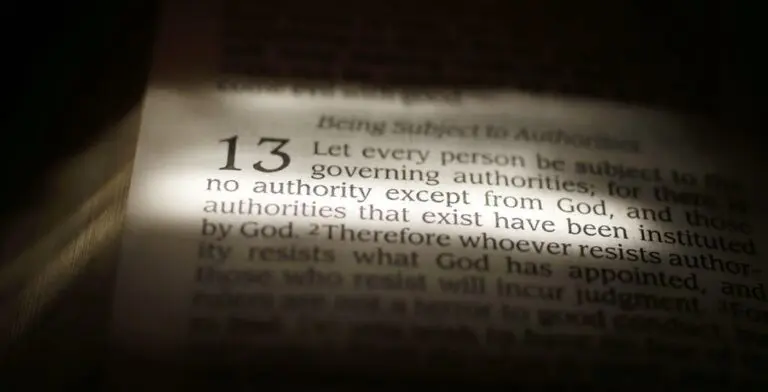
A preacher recently proclaimed: “Rebellion against authority is rebellion against God.” Another pastor once told me: “If it’s illegal, it’s sinful.” (He must be thankful for much grace to cover his sins of disobedience to the state—in light of all the legislation he inadvertently violates.) And a recent caller to my radio show said something like: “Once a proposal becomes the law a Christian must obey it,” implying that disobedience is sin. These Tory principles are widely-held by American Christians. But is such sentiment correct? Is resistance to tyrants, which they call “rebellion”, necessarily sinful? Rebellion against God is certainly always wrong. It is condemned in Scripture as being analogous to “witchcraft” (1 Samuel 15:23). Having a rebellious attitude or to “despise authority” is likewise unacceptable Christian practice (2 Peter 2:10; Jude 1:8). The Bible teaches that Christians are to “be subject to the governing authorities” which are “appointed by God” (Romans 13:1) and to submit “to every ordinance of man for the Lord’s sake”—both in the case of kings and lower magistrates or governors (1 Peter 2:13). Nevertheless, the civil ruler submission doctrine is surely qualified. No Christian theologian has ever held that the New Testament requires absolute submission to every civil government decree. Even the Apostles disobeyed civil authority when they believed obedience to it would cause disobedience to God. They resisted tyranny by obeying God and were thus wrongly considered “rebels”.
No Bible-believing Christian should consider the commands in Romans 13:1-7, 1 Peter 2:13-17, and Titus 3:1 to be absolute. Indeed, taking into account the “whole counsel of God”, it is clear that God’s people have not and should not submit themselves to “every ordinance of man” (1 Peter 2:13) in an absolute sense. The Egyptian midwives defied Pharaoh’s decree to murder infants (Exodus 1:15-21). Ehud acted against public policy by deceiving the king’s ministers and then slew the king (Judges 3:1526). Daniel, Shadrach, Meshach, and Abed-Nego refused to comply with public policies that mandated religious rituals contrary to proper worship (Daniel 3:8-18; 6:6-10). The wise men from the East disobeyed Herod’s direct order to disclose Jesus’ whereabouts (Matthew 2:7-12). Peter and John forthrightly disobeyed the “ordinance of man” that mandated that they desist from preaching (Acts 5:28-29). Judging from these biblical premises, therefore, the foremost doctrinal issue for a Christian theology of public policy is apparently not whether Christians may ever disobey state decrees, but rather when civil disobedience by Christians becomes mandatory—or, further, when obedience becomes optional or discretionary for a Christian who must be free to act within the parameters of his conscience. Indeed, the core question boils down to when (or at what point) civil disobedience is justified, and what test must be applied to determine when such rebellion is righteous. Remember, civil disobedience and rebellion to the state are synonymous terms, the former being the patriot’s perspective and the latter the tyrant’s. At many points over the course of history, rebellion has been widely held to be a good thing and has thus been proclaimed by church leaders. Their message has been simple and straightforward: to disobey tyrants is to obey God. So it was at the founding of the United States of America.
In the 1770s, American Christians viewed British public policies as grounds for armed resistance. The colonists not only believed that they had a right to resist British “tyranny,” they also held that submission (or not rebelling) would have been sinful. Thus, preachers incited revolution. The arguments advanced by preachers of the day in support of this sentiment were manifold:
(1) Parliament had set itself up in an idolatrous manner by claiming sovereignty “in all cases whatsoever” over the colonies (and it was blasphemy to think that mere human beings could ever have such authority); indeed, Reformed colonists wanted to preserve their identity as a covenant people, and Parliament’s claims represented both tyranny and idolatry, because honoring the claims of the king would be tantamount to forsaking God who says to “have no other gods” before Him;
(2) the vibrant church in the “wilderness” of America represented the “New Israel”, while the King and his cronies represented a satanic onslaught aimed at harming God’s chosen people, thus giving Christians a rationale for self-defense against the civil authority;
(3) Christians have a right to be free from tyranny (citing Galatians 5:1) along with the means to redress grievances regarding unfulfilled expectations in (or violations of) colonial charters and basic human rights; and, more implicitly,
(4) the abuses of life and property which emanated from King George III and Parliament, including their undertaking legal plunder of the colonies, justified self-defense. The civil authority could be resisted in the same way that a homeowner resists a robber or a businessman withstands a thug.
This series of articles highlights the actions of the American Founders—Christian ones in particular—in endeavoring to showcase the various historical Christian theologies of public policy. While many of us believe that the Founders were right in “rebelling”, many other Christians disagree. Thus, I think it is worthwhile to discuss the interaction (and intersection) of faith and civil disobedience, especially in light of the rising onslaught of modern public policies against Christians.
Originally published in The Times Examiner on March 23, 2005.
Tags: American Revolution, Bible, government, history, revolution, Romans 13, statism, theology
This essay continues the Christian Theology and Public Policy Course essays by John Cobin, author of the books Bible and Government and Christian Theology of Public Policy.
May a state legalize crime or actions that God says are wicked? Does God give the state permission to break His laws by virtue of the fact that it is the appointed civil authority—elected or otherwise?
As I have documented in Bible and Government: Public Policy from a Christian Perspective (Alertness Books, 2003), the insidious nature of the state with its public policies is manifest in over 90% of the occurrences of the motif in the Bible (outside of the Old Testament theocracy). The Apostles lived under Nero, who was certainly one of the most evil rulers in history, along with local draconian rulers like Herod. They had no delusions about the nature of the state which often persecuted them.
Moreover, since the closing of the canon, the menacing nature of public policy and states has continued to be manifest. As the Bible instructs us: “If you see the oppression of the poor, and the violent perversion of justice and righteousness in a province, do not marvel at the matter; for high official watches over high official, and higher officials are over them” (Ecclesiastes 5:8).
Tags: christian libertarian, christian libertarianism, government, history, Romans 13, statism, statolatry, theology, theonomy