Archive for politics
Politics is so disillusioning
Posted by: |Preaching to the choir, croc…
Too fun not to share immediately… Let’s hope for a decent Super Tuesday! (Original site link)
Tags: elections, politicians, politics
"We don’t need to pay all this money to keep troops all over the country, 130 countries, 900 bases. But also, just think, bringing all the troops home rather rapidly, they would be spending their money here at home and not in Germany and Japan and South Korea, tremendous boost to the economy."
- Ron Paul, February 7, 2012
In a post on February 9th at the Washington Post’s The Fact Checker blog, which claims to give "the truth behind the rhetoric," Glenn Kessler writes about "Ron Paul’s Strange Claim about Bases and Troops Overseas":
This comment by GOP presidential aspirant Ron Paul after Tuesday night’s caucuses caught the ear of our editor. Paul’s phrasing could have left the impression that he thinks there are 900 bases in 130 countries, but normally he makes it clear he is talking about two different things.
For instance, in the GOP debate Sept. 12, Paul said: "We’re under great threat, because we occupy so many countries. We’re in 130 countries. We have 900 bases around the world."
We will lay aside Paul’s loose definition of "occupy" – which denotes taking away a country’s sovereignty. You could also quibble with the concept of a "base," but we’ll accept that he’s talking about any military facility.
Are there any facts to back up these eye-popping figures?
I never read anything by Kessler until this piece on Ron Paul. The Fact Checker blog says that he "has covered foreign policy, economic policy, the White House, Congress, politics, airline safety and Wall Street."
In giving us the facts to evaluate the truth of Dr. Paul’s assertions, Kessler refers, but not by name, to two Department of Defense documents: the annual "Base Structure Report" dated September 30, 2011, and the quarterly "Active Duty Military Personnel Strengths by Regional Area and by Country," most recently issued on September 30, 2011.
Regarding the number of foreign bases, Kessler correctly notes that "the DOD list shows a list of 611 military facilities around the world (not counting war zones)." However, he discounts that figure because "only 20 are listed as ‘large sites,’ which means a replacement value of more than $1.74 billion." He also notes that most (549) of the DOD foreign sites are listed as being small sites.
Regarding the numbers and locations of U.S. troops in foreign countries, Kessler correctly notes that the "Personal Strengths" document lists "53,766 military personnel in Germany, 39,222 in Japan, 10,801 in Italy and 9,382 in the United Kingdom. That makes sense." "But wait," he says, "most of the countries on the list, in fact, have puny military representation." He points out that the U.S. has only nine troops in Mali, eight in Barbados, seven in Laos, six in Lithuania, five in Lebanon, four in Moldova, three in Mongolia, two in Suriname and one in Gabon." Then he says that he counts "153 countries with U.S. military personnel, actually higher than the 130 cited by Paul." But he dismisses both numbers by saying that "the list essentially tracks with places where the United States has a substantial diplomatic presence. (The United States has diplomatic relations with about 190 countries.)." He charges Paul with "counting Marine guards and military attaches as part of a vast expanse of U.S. military power around the globe." And after all, "this document indicates that only 11 countries actually house more than 1,000 U.S. military personnel."
Kessler concludes that "Paul’s statistics barely pass the laugh test. He has managed to turn small contingents of Marine guards into occupying armies and waste dumps into military bases. A more accurate way to treat this data would be to say that the United States has 20 major bases around the world, not counting the war in Afghanistan, with major concentrations of troops in 11 countries."
As one who is very familiar with both of the aforementioned DOD documents and has written about these things long before Ron Paul even ran for the Republican presidential nomination the first time, I can say with confidence that it is Glenn Kessler and the Washington Post that need some fact checking.
First of all, according to the Base Structure Report, the Defense Department "manages a global real property portfolio consisting of more than 542,000 facilities (buildings, structures, and linear structures) located on nearly 5,000 sites worldwide covering more than 28 million acres." Officially, as Kessler reports, there are 611 of these facilities in 39 foreign countries (excluding war zones). But why dismiss sites that are not "large sites"? Even small sites can have a replacement value of up to $929 million. True, some of the sites are not technically bases, but what about all the foreign bases that are not on the official list?
I recently wrote in "The Real Reason Guantánamo Should Be Closed":
The late Chalmers Johnson, author of Blowback, The Sorrows of Empire, and Nemesis, and one of the foremost authorities on the subject, always maintained that the official Defense Department figures regarding overseas military bases were too low because they “omit espionage bases, those located in war zones, including Iraq and Afghanistan, and miscellaneous facilities in places considered too sensitive to discuss or which the Pentagon for its own reasons chooses to exclude — e.g., Israel, Kosovo, or Jordan.” Johnson estimated the number to be closer to 1,000. We know now that he was right about the Defense Department’s figures, for Nick Turse, author of The Complex: How the Military Invades Our Everyday Lives, has recently confirmed that Johnson’s figure of 1,000 foreign bases is actually too low. The number is really closer to 1,100.
Nick Turse’s work painstaking work on the number of foreign U.S. military bases can be seen here, here, and here. Although Kessler acknowledges the existence of "106 U.S. military facilities in Afghanistan," Turse has reason to believe that the number is much greater and concludes that the military doesn’t even know the true number:
Last January, Colonel Wayne Shanks, a spokesman for the U.S.-led International Security Assistance Force (ISAF), told me that there were nearly 400 U.S. and coalition bases in Afghanistan, including camps, forward operating bases, and combat outposts. He expected that number to increase by 12 or more, he added, over the course of 2010.
In September, I contacted ISAF’s Joint Command Public Affairs Office to follow up. To my surprise, I was told that "there are approximately 350 forward operating bases with two major military installations, Bagram and Kandahar airfields." Perplexed by the loss of 50 bases instead of a gain of 12, I contacted Gary Younger, a Public Affairs Officer with the International Security Assistance Force. "There are less than 10 NATO bases in Afghanistan," he wrote in an October 2010 email. "There are over 250 U.S. bases in Afghanistan."
By then, it seemed, the U.S. had lost up to 150 bases and I was thoroughly confused. When I contacted the military to sort out the discrepancies and listed the numbers I had been given – from Shanks’ 400 base tally to the count of around 250 by Younger – I was handed off again and again until I landed with Sergeant First Class Eric Brown at ISAF Joint Command’s Public Affairs. "The number of bases in Afghanistan is roughly 411," Brown wrote in a November email, "which is a figure comprised of large base[s], all the way down to the Combat Out Post-level." Even this, he cautioned, wasn’t actually a full list, because "temporary positions occupied by platoon-sized elements or less" were not counted.
Along the way to this "final" tally, I was offered a number of explanations – from different methods of accounting to the failure of units in the field to provide accurate information – for the conflicting numbers I had been given. After months of exchanging emails and seeing the numbers swing wildly, ending up with roughly the same count in November as I began with in January suggests that the U.S. command isn’t keeping careful track of the number of bases in Afghanistan. Apparently, the military simply does not know how many bases it has in its primary theater of operations.
Turse specifically mentions the countries of Qatar, Pakistan, and Kuwait. Qatar is not listed on the Base Structure Report, but contains Al-Udeid Air Base, a billion-dollar facility where the U.S. Air Force secretly oversees its on-going unmanned drone wars. Pakistan is also not listed on the Base Structure Report, but U.S. drone aircraft, operating under the auspices of both the CIA and the Air Force take off from one or more bases in that country. And then there are the other sites like the "covert forward operating base run by the U.S. Joint Special Operations Command (JSOC) in the Pakistani port city of Karachi," and "one or more airfields run by employees of the private security contractor Blackwater (now renamed Xe Services)." And Kuwait, which has one nameless site on the Base Structure Report, has a number of U.S. military facilities.
Suppose that each of the 39 "official" countries with U.S. military bases decided to build the same number of military bases in the United States that the United States maintained in its country? The DOD claims 194 "sites" in Germany. Would the United States government object if Germany insisted on occupying 194 "sites" in the United States? How about just 94? Would the U.S. military not object because they were just "sites" and not technically bases?
Secondly, Kessler is wrong about U.S. troops being in 153 countries. The United States actually has troops in 148 countries and 11 territories. The last time I gave a complete list of all the countries and territories where the United States had troops was in my article of February 11, 2010, titled "Same Empire, Different Emperor." If you add to the list there the countries of Antigua, Congo (Brazzaville), and Suriname, and subtract from the list the countries of Eritrea, Iran, and Somalia, you will have an updated list. The current eleven territories where U.S. are stationed are: American Samoa, Diego Garcia, Gibralter, Greenland, Guam, Hong Kong, Northern Mariana Islands, Puerto Rico, St. Helena, U.S. Virgin Islands, and Wake Island.
But why does Kessler use the arbitrary number of 1,000 in saying: "This document indicates that only 11 countries actually house more than 1,000 U.S. military personnel." Does this mean that it is okay if the United States has military personnel in a country that number 1,000 or less? And why, after giving the figures of "53,766 military personnel in Germany, 39,222 in Japan, 10,801 in Italy and 9,382 in the United Kingdom," does Kessler remark: "That makes sense"? What makes any sense about the United States stationing all of these troops in Germany, Japan, Italy, and the UK when World War II ended in 1945? What makes any sense about the United States stationing 723 troops in Portugal, 1,205 in Belgium, 163 in Singapore, and 335 in Djibouti? How many Americans have ever even heard of Djibouti? What makes any sense about the United States stationing troops in 75 percent of the world’s countries? Kessler makes much of the low figures of "nine troops in Mali, eight in Barbados, seven in Laos, six in Lithuania, five in Lebanon, four in Moldova, three in Mongolia, two in Suriname and one in Gabon." But what makes any sense about any U.S. troops being in those countries? And what makes any sense about the United States sending twenty-two of its military personnel to Ecuador, fourteen to Guatemala, seven to Mozambique, and six to Togo? What makes any sense about U.S. troops being stationed anywhere overseas?
Suppose that each of the 148 countries with a contingent of U.S. military personnel decided to send an equal number of their troops to the United States? Would the United States government and its military tolerate 1,491 troops from Turkey, 2,142 from Bahrain, and 354 from Honduras since those are the numbers of troops the United States has in those countries?
And third, Kessler is just plain wrong in dismissing the U.S. troop presence in foreign countries as "places where the United States has a substantial diplomatic presence" or "Marine guards and military attaches." I did a major study of this back in October 2004 called "Guarding the Empire." It has been online ever since, but rather than doing a little research, Kessler was content to just accuse Dr. Paul of turning "small contingents of Marine guards into occupying armies."
In my article I showed beyond any doubt that the U.S. troop presence in foreign countries cannot be blamed on Marines guarding embassies. Read the article. I can’t tell you how many people have written me after I wrote something negative about the U.S. empire of troops and bases that encircles the globe and dismissed my research as a waste of time since, so they said, most of the U.S. troops stationed abroad were just Marine embassy guards. That is simply not true. I did the research and provided a link to the research, but they were just too lazy to click on the link. Don’t be lazy; read "Guarding the Empire." Yes, I know it was written in 2004. Yes, I know that some of the figures have now changed. Yes, I know that some of the links no longer work. But my conclusions still stand:
- The United States has an embassy in some countries, but does not have any troops.
- The United States has an embassy in some countries along with Army, Navy, and/or Air Force troops, but there are no Marines listed as being in the country.
- The United States has an embassy in some countries with troops including Marines, but not the minimum number of six Marines necessary for embassy security guard duty.
- The United States has Marines in some countries, but no embassy to guard.
And if the United States has "diplomatic relations with about 190 countries," then how can Kessler say that the list of 148 countries with U.S. troops "essentially tracks with places where the United States has a substantial diplomatic presence"? That is a difference of 42 countries.
Kessler never gets to the real issue. The real issue has nothing to do with the exact number of foreign bases the United States has or the exact number of countries the United States has troops in or the exact number of troops the United States has stationed abroad or the exact number of foreign sites that are really bases.
The real issue is why the United States has troops and military bases in foreign countries in the first place. Especially since the United States doesn’t afford other countries the same privilege.
When I first wrote about U.S. troop presence around the globe in March 2004 in "The U.S. Global Empire," I documented that the U.S. had troops in 135 countries and 14 territories. Both numbers have only changed slightly since then. There was no change in U.S. foreign policy from Bush to Clinton to Bush to Obama. Just like there would have been no change in U.S. foreign policy if John Kerry or John McCain had been elected. Both parties are committed to a foreign policy of aggression, intervention, and meddling. Both parties are committed to a foreign policy of policing the world. Both parties are committed to a foreign policy of bombing and war. Both parties are committed to a foreign policy of empire.
The Washington Post ought to be writing about Ron Paul’s sane claim about bases and troops overseas.
Originally posted on LewRockwell.com on February 13, 2012.
Tags: history, militarism, politics, Ron Paul, war
News of the Week, January 15-21, 2012
Posted by: |Today we restart the traditional News of the Week posts, where we highlight a few significant, interesting, and amusing stories each week.
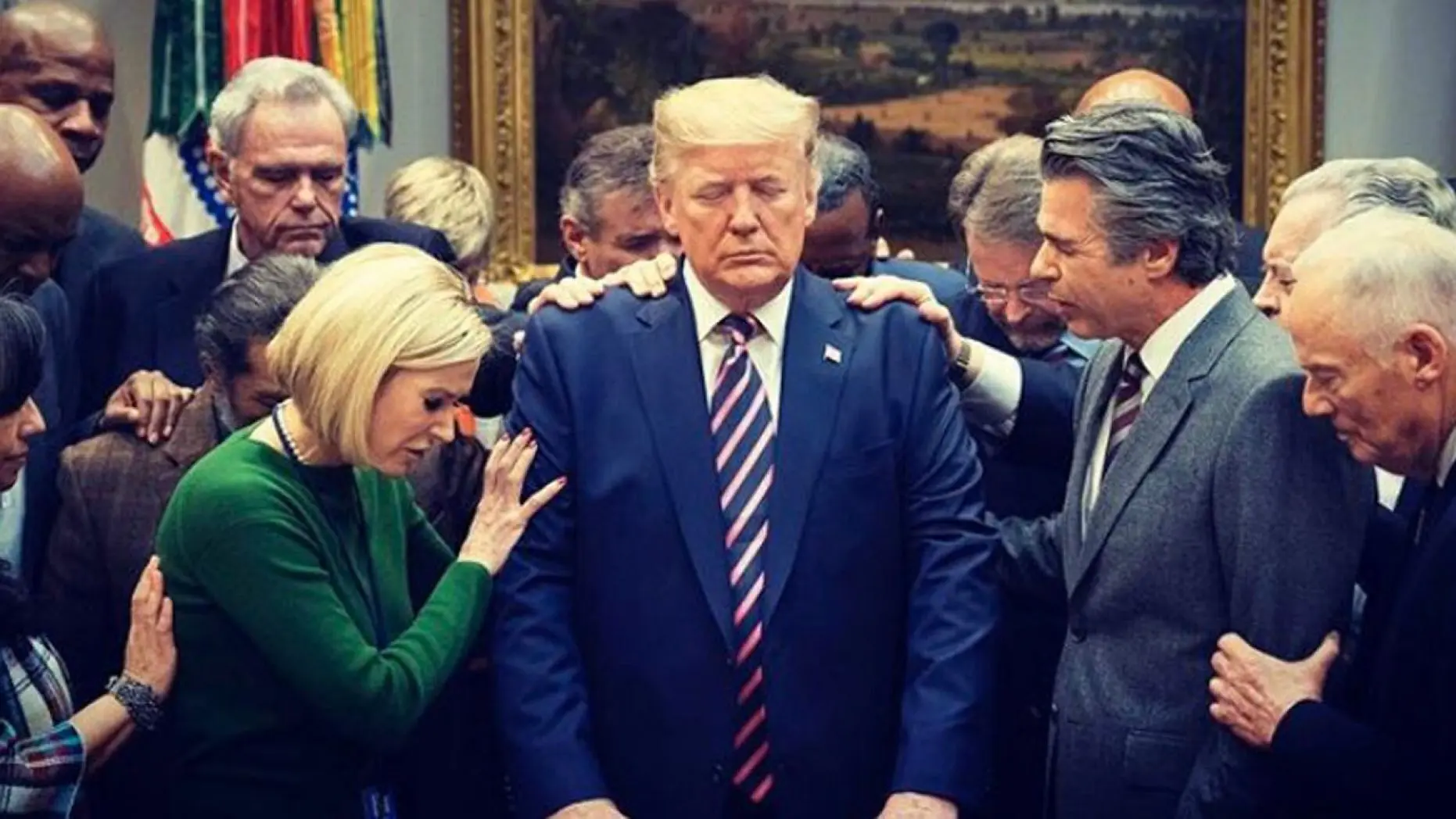
David Neff at Christianity Today wonders if an evangelical meeting to anoint a presidential candidate is a bad idea.
Three articles at Antiwar.com caught my attention this week: Who Wants War With Iran?, Blood On Whose Hands, and Another Reason Not to Go to War So Often.
William Grigg writes about the current crop of presidential candidates who think state murder is a “moral enterprise.”
I mentioned this article yesterday but I would like to highlight again Anthony Gregory’s piece on LRC about why the left’s excuses for not supporting Ron Paul are ridiculous.
Doug Bandow writes in the Huffington Post about that perennial question, Who Would Jesus Vote For? Should we even ask?
Ron Paul Schools Santorum:
I heard about Word Dynamo from my colleagues at UT, and I have to say it is super fun. If you enjoy wordsmith-ing around, you’ll love this site.
If you have interesting news you would like to share, make sure to post in the comments below!
Tags: elections, News of the Week, politicians, politics, Ron Paul, war
Weighing Political Planks and the Obama Dilemma
Posted by: |
I have heard it said numerous times in the past month alone, by Christians nonetheless, that the important thing about the next election is “getting rid of Obama.” Such sentiment, to me, is relatively nonsensical. What good is it to get rid of someone from public office if the replacement is just the same or worse?
Tags: elections, Obama, politicians, politics, Ron Paul
A few days after the Washington Post published my article on Christianity, libertarianism, and Ron Paul, one Dana Loesch, a former talk-show radio host and leader in the St. Louis, Missouri Tea Party, wrote a response piece on BigJournalism.com. Although I am flattered by the coverage, unfortunately the content itself is less than impressive.
She begins by discussing money and quoting my article:
Libertarians talk a lot about economics, and rightfully so. Money is central to a healthy economy. Christians are also concerned about money; in fact God talks frequently about money in the Bible. [Horn]
Actually, money is mentioned more in the Bible than anything else. I’ve written previously of this here. Scriptures tell us that money is a tool with which evil can control man. The Bible obviously doesn’t give political doctrine specific to the Fed, but rather as Christians we are taught to use our access to money as a way of evangelism through deed. This is something libertarianism leaves out, the God part. Are libertarians conservatives without God? That’s a question friends and I have discussed.
Yes, money is mentioned in the Bible a lot. Nonetheless, money is is not “a tool with which evil can control man.” “Evil” does not “control” man. Man has sinful desires, and he chooses to follow after those desires and commit evil actions. This is an important distinction, lest we become metaphysical dualists. Sin is indeed personified sometimes in the Bible, but it is clearly absurd to take such personification too far. As James 1:14-15 tells us, “But each person is tempted when they are dragged away by their own evil desire and enticed. Then, after desire has conceived, it gives birth to sin; and sin, when it is full-grown, gives birth to death.”
The language of James likens our sinful state to a struggle going on inside us, and it fits very well with what Paul says in Romans 7. Still, never do Paul or James imply that some ethereal “evil” controls the Christian. On the contrary, Romans 6:6-7 says, “For we know that our old self was crucified with him so that the body ruled by sin might be done away with, that we should no longer be slaves to sin – because anyone who has died has been set free from sin.”
Money is indeed a tool, and man can use it do great good, or great evil, or anything in between. I would argue that money has a far greater potential for good than for evil, as is evidenced by the market ecosystem that produces such amazing things as, for instance, computers and the internet, or Bibles and theology books.
Now, although Loesch is right that there is no specific doctrine for the Federal Reserve, Loesch’s statements above are completely non-responsive to the actual substance of my argument: (1) that we need sound money in order to have genuine prosperity and to avoid the business cycle, and (2) sound money, as opposed to state fiat, is the proper moral and Biblical position. Stranger still, she somehow transitions from talking about money – and ignoring the Biblical point about money I was trying to make – to declaring that libertarians leave out “the God part.”
This statement is rather silly and also, quite frankly, rather insulting. It is clearly meant to stand in contrast to Christian “conservatives,” whom I suppose categorically make sure God is in every one of their doctrines, including big government national security and war, big government social security, big government education, and big government health care so long as it’s sponsored by Republicans like Bush or Romney.
More importantly, Loesch misses the point of the article. Libertarianism is a political philosophy that expounds upon natural law, and whose critical ethic is the non-aggression principle. Though not all libertarians believe in God (just as not all conservatives believe either), a vast number admit from the outset that natural law comes from a higher authority. It is transcendent to man, and no man is exceptional to it. The Christian libertarian takes the particular position that natural law was created by the God of the Bible, and that natural law will always stand in concordance with Biblical revelation. This stands in stark contrast to the typical conservative stance that is perfectly fine with giving special moral privilege to American leaders for various purposes regardless of what natural law or the Bible says.
Loesch moves on to war and peace, quoting my article once again:
It is truly unfortunate that modern American churches seem to think the state’s means of “spreading democracy” through aggressive war is more important than spreading the peaceful message of the Gospel of Christ. Jesus came to bring “peace on earth, good will to men,” and by extension the Christian’s goal ought to be the same. [Horn]
This passage presupposes that every conflict in which the United States has ever engaged is due to the United States’s frat boy aggression and need to sow its seed of democracy by force.
No, it does not make such a presupposition, but it does imply that I think the litany of recent wars is completely evil. Such an implication would be correct, in fact. Reader, if you are curious about the effects of American interventionism over time, perhaps you should peruse this article on the Middle East. George W. Bush eventually even admitted that the point of the Second Iraq War was to bring democracy to the Middle East, after the lies about WMDs and such were fully abandoned and they needed a new excuse to continue the violence.
Lest you think I spoke too quickly about the American churches at large – and I mean this in the general sense rather than every church everywhere in America – how many Christians noticed when the Department of State released its report saying that there are no more churches in Afghanistan? How many who did notice thought that this just might be related to American interventionism in Afghanistan for the past 10 years? Christians are typically fine with praying for their military members (I get that), but rarely, if ever, do you hear prayers on the behalf of the innocent people whom their military members directly affect. Where are their priorities?
One year after the Civil War was over, Church of Christ luminary David Lipscomb said: “Why is it that we see men willing to sacrifice property, the comforts of home, the sweets of the domestic and family relationship, undergo privations and sorrows, suffer hunger, and cold, and nakedness, and want for long and weary years, and freely give up life itself at the bidding of earthly rulers and for the sake of corrupt and perishing human kingdoms, while so few are willing to undergo the slightest inconvenience or suffer the least self-denial for the heavenly and eternal kingdom?” Yes, why is it?
Furthermore, it’s odd to me that a follower of limited government would advocate for a state-endorsed religion as a way of nation building, supplanting the previous logical fallacy.
How Loesch discerned from my writings that I support some sort of state-endorsed religious means of nation-building I will never know. Libertarians don’t endorse nation-building by governments at all. If anything, we are interested in spreading our values via peaceful interaction, never through force. Quite a “Christian” thought, I might add.
This author quotes Paul more than the Bible, which tells me everything I need to know about this piece. Ron Paul is not God.
This is potentially the worst accusation in Loesch’s post. Honestly, I do not feel as though I even have to answer it, because the quality of the statement is so poor and the accusation so ridiculous that it should be obvious how wrong it is. I will, however, make one note. When the Washington Post asked me to write an article for them, they requested 600 to 800 words on why some Christians embrace libertarianism and how Ron Paul fits into that. I cannot cover all topics nor can I quote everything I might want. I gave it a good shot, and even so my article ended up being just over 850 words. Loesch, you need to stop reading into my article too much, and trying to make me say things I have never said.
What is truly unfortunate is that by making the universal straw man that “modern American churches seem to think,” i.e. all churches, the author betrays a (conscious or subconscious) prejudice against churches based on his own presupposition.
Whoops, Loesch continues her uncharitable and fallacious reading! She completely misses the mark here, and if she had done her homework she would have probably realized that I love the church and, as I mentioned, even work part-time for one. In fact, I have frequently chided Christians who think that they can just get along without the fellowship of other Christians or who criticize all organized religion. Also, I love how she can read into my subconscious. That’s just outstanding.
Horn misses a huge part of Christ’s work, exemplified in Matthew 10:34:
Do not suppose that I have come to bring peace to the earth. I did not come to bring peace, but a sword.
Generally, you need to do something called “exegesis” to understand the meaning of a passage like this. You cannot just proof-text Matthew 10:34 to refute the peace-loving nature of Jesus and that pesky “blessed are the peacemakers” passage. Or perhaps you should also call your mother, father, and siblings regularly just to say you have turned against them? (See the next verse.) Moreover, how does one extend this idea that Jesus knew conflict was coming spiritually between people into something akin to “peace between nations is a bad thing”?
I get that Horn wants to promote his stylized version of Biblical interpretation, but he should realize that Ron Paul’s words carry no weight compared to Christ’s, and he perhaps should study the Word of God more than Paul’s words, especially those newsletters.
Again, this statement is so off-center it is barely worthy of response. Besides the blatant insult regarding the newsletters, again she accuses me of elevating Ron Paul to god-status. Loesch, did you not realize I have a theology graduate degree from a reputable, theologically-conservative seminary? Of course not, because you didn’t do your homework. I don’t do “stylized interpretation,” Dana, I do scholarship. If you want to argue with me like scholars do then go right ahead if you can, but leave the needlessly incendiary comments at home.
There’s also this third graph:
Thus, Christian libertarians think that government power should be limited, sound money and truly free markets should return, aggressive war must cease and civil liberties must be preserved.
Scratch “libertarian” from this, it’s something every Christian I know believes, but how does Horn think our rights are secured? By lying prostrate before our enemies when they attack?
“Occasionally the tree of Liberty must be watered with the blood of Patriots and Tyrants.”
― Thomas JeffersonDoes that make our Founding Fathers that misused and abused term: “neocons?”
I highly doubt that every Christian Loesch knows truly believes in these principles. I doubt even Loesch agrees with the principle of sound money based on her earlier remarks. Besides, I would guess that the conservatives she knows thinks “limited” government means whatever Republicans want to do, like initiate unconstitutional wars, bailout entire industries, control education of children, and sponsor massive government healthcare programs. I would highly suspect she also knows plenty of Christian warmongers, who think all the aggressive wars of recent years are justifiable, and plenty of Christians who think personal lives ought to be regulated by the government in multitudinous ways. Unlike “conservatives,” libertarians actually care about limiting all government power, not just the power of Democrats.
Then, once again, she completely misrepresents what I said in my article. Never did I argue against using self-defense, but suddenly Loesch apparently thinks I am a complete pacifist (or something similar) who will not defend the rights of others. How ridiculous! If she is perhaps more innocently just indicating I did not say enough, well, there are editorial limits to what you can do with 800 words.
I disagree with the hyphenated way that Horn presents his religious discipline: Christian is Christian. There is no “libertarian Christian,” such division is expressly protested throughout the Gospel, especially in Paul’s address to the Ephesians which addresses division in the body of Christ. There is no need to self-segregate and doing so shows a lack of knowledge in the face of Christ who Himself and through his disciples preached unity.
We now arrive at what seems to be central point of the article. It relates to the title of the post as well, which is: “A Bad Way to Argue for Libertarian-Christianity.” Apparently, what seems to offend Loesch the most is that I would dare argue at all that Christianity and libertarianism are compatible. Doing so, she says, is hyphenating the faith. First off, this is a complete misreading of my article. Never did I say I was arguing for some “libertarian-form-of-Christianity.” Never have I done this on LibertarianChristians.com. On the contrary, any reader of this site can see through the long history of writing that I have always argued for being Christian first, such as this short blog post.
My goal is to get Christians to reconsider their political philosophy, because as far as I can see the modern American church (general sense) tends to elevate statism above principle. Learning better principles tends to lead Christians to embrace a more libertarian political philosophy; it’s a perfectly natural result. It is not, as C.S. Lewis warned us, injecting a “Christianity and…” problem into our theology, it is a consistent way of viewing natural law and behaving accordingly.
Statism is not only a miserable failure, but also fraught with moral hazard and prone to commit atrocities beyond imagination. Instead, let us heed the words of Frederic Bastiat: “And now that the legislators and do-gooders have so futilely inflicted so many systems upon society, may they finally end where they should have begun: May they reject all systems, and try liberty; for liberty is an acknowledgment of faith in God and His works.”
To conclude, I return to the beginning of Loesch’s article:
Can a Christian be a libertarian? A column with some questionable logic that prevents the piece from being truly thought-provoking. A few things: …
Does anyone else find it funny that the only complete sentence in the first paragraph is the title of my original article? More importantly, how is it that Loesch accuses my article of “questionable logic” when her own work is fraught with mischaracterizations, insults, and straw-man arguments? If this is representative of the quality of her BigJournalism site, then count me out.
Tags: Bible, christian libertarian, christian libertarianism, ethics, politics, Ron Paul, theology, war