Archive for law
The Supreme Court and Obamacare
Posted by: |
The new term of the Supreme Court has just begun. All eyes are on the court, as it is expected to hear for the first time a case against Obamacare.
The Patient Protection and Affordable Care Act (PPACA), more popularly known as Obamacare, passed the Senate on Christmas Eve of 2009, passed the House on March 21, 2010, and was signed into law by President Obama on March 23, 2010. It was one of the most controversial and partisan pieces of legislation in history, with no Republican in either house of Congress voting in favor of the 2407-page bill (H.R. 3590 [PDF
]).
The onerous provisions of the PPACA include an expansion of Medicaid eligibility, the prohibition of annual and lifetime coverage caps, the elimination of co-payments and deductibles for selected health-insurance benefits, guaranteed issue of insurance policies without regard to preexisting conditions, federal subsidies for the purchase of health insurance, employer mandates, more arcane insurance regulations, an increase in the Medicare tax on the “rich,” and a tax on indoor tanning services. Perhaps the most egregious part of Obamacare is the “individual mandate” that every American not covered by Medicaid, Medicare, or health insurance must purchase health insurance or pay a penalty.
Tags: economics, health, law, legislation, libertarianism, Obama, politics, Supreme Court, universal health care
I’m just going to let Kathryn Muratore at the LRC blog spell this one out for us…
The details on this story are very sparse, and the phrasing of the reports are very upsetting. A woman, Andrea Abbott, was traveling with her teenage daughter (exact age unknown) from Nashville to Baltimore. When it came time to go through the naked scanner, she refused for both her and her daughter. The woman’s "stearn [sic] voice" and "attitude" was an affront to the TSA thug named Sabrina Birge. Birge apparently has the equivalent of an advanced degree in physics and has had access to study the scanners which no other scientist has been given, because she informed Abbott that the millimeter-wave scanner is "10,000 times safer than your cell phone." Either that, or Birge believes everything her superiors tell her despite ample evidence that they lie and don’t protect the health of their own employees.
The heroic Abbott stood fast, stating, "I still don’t want someone to see our bodies naked.” This of course meant that a pat-down would be issued for both her and her daughter, which Abbott refused to consent to. From her own words, she clearly believes the pat-downs to be molestation and she wanted to protect her daughter.
This is where the details get fuzzy because, all of a sudden, Abbott did an about-face and "allowed" the pat-down of her daughter. It seems much more likely that she was threatened and bullied to the point where she was worn down. Knowing that something very wrong was happening, Abbott decided she should record the events and pulled out her cell-phone to do so. The TSA then — illegally, to my knowledge — ordered her to put her cell phone away, so there is unfortunately no video of this injustice. For obvious reasons, this upset Abbott and her "yelling" prompted the brave TSA guys-and-gals-in-blue to feel so threatened that they had her arrested.
No word yet on whether Southwest Airlines refunded her ticket or posted her bail, but, based on their poor track record, I’m inclined to think that Southwest did not show any support for this poor mother. The media has decided to paint this woman as unstable and plaster an unflattering arrest photo on the stories. In reality, all mothers (and fathers) should be this upset when anyone wants to take naked photos or molest their daughter (or son). There is nothing absurd or unstable about that and, if we were to hear of a private criminal requesting this of Abbott and learned that she did not fight back, we would question her character and indict her as a bad mom.
[H/T Boycott Flying]
Update: I wasn’t paying attention this morning, but the rest of the TSA’s statement about the scanner is actually hilarious now that I think about it. Birge said, "No, it’s not an X-ray. It is 10,000 times safer than your cell phone and uses the same type of radio waves as a sonogram." Millimeter-wave scanners do use radio waves, which is a type of electromagnetic radiation. In contrast, a sonogram is a picture created from an instrument that uses sound waves. Of course, I don’t expect a TSA goon to know the difference, but the fact that she lectured the mere ungrateful, disobedient, citizen on the safety of the scanners using this falsehood is telling. Thanks to Bill Faust for bringing this to my attention.
Is it just me or has the world gone completely insane? Or, was it already?
Tags: government, law, police, pure evil, TSA
Sinful Behavior, Government Force, and the Church
Posted by: |A post I wrote about two years ago for the Western Standard:
———————————-
My wife and I were visiting a new place for Sunday morning service this week and I couldn’t help but be disturbed yet again at the tendency of Christians to mistake political for spiritual accomplishments.
The pastor told a story about a small church that is located in a “rough” neighborhood. Some parishioners were on the corner outside the church praying for the area when they ran into some drug dealers (I’m not sure how the churchgoers knew them to be drug dealers). The dealers told the prayers, “This is our corner” and the interceding churchmen replied, “No, this corner belongs to Jesus”. The pastor said one of the drug dealers was visibly moved and walked away saying, “this isn’t right what we’re doing. I’m going home”. The rest of the drug dealers stood their ground, so the church members retreated back into the church. So far, an interesting story.
Then, the pastor told us, the police showed up and arrested the remaining drug dealers on the street corner. Everyone listening to the story started clapping and shouting “amen”. The pastor used the story to illustrate the effectiveness of prayer, and the transforming power of the church located in the rough neighborhood.
This was all rather unsettling to me and my wife and as we discussed on our way home. Combined with the abysmal performance of the Detroit Lions, it put a bit of a damper on my day.
The part of the story where one drug dealer felt some kind of conviction and went home was interesting. The faith and words of the Christians on the corner apparently got him thinking deeply about his life. But what about those arrested by police? What victory is there for the church in that? There was no mention of any violent acts by these men. There wasn’t even mention of a violation of property rights (it was never clear if the corner was part of church property). There was only an assumption that these men were somehow “bad” and therefore their arrest was somehow “good” for the neighborhood, and ostensibly the Kingdom of God.
But how did this event advance the Kingdom of God? Is not the point of the Kingdom to transform lives? Is not the point to demonstrate the power of Christ to forgive and to move individuals to break free from the bondage of sin and embrace His forgiveness and live freely and righteously? What did this confrontation and arrest do for these men to help them see their need for freedom in Christ, if indeed they were in need?
Moreover, what grounds is there to cheer “amen” at the arrest of these men? It betrays a notion that runs deep in the church; that political action is analogous to spiritual action.
This same conflation was demonstrated some years ago when members of my church collected petition signatures sufficient to force a strip club to move from downtown to a location outside of town. This was touted as a victory. But in spiritual terms, who won? Did any of the petition signers go down and offer hope and freedom to the men in bondage to sexual addiction? Did they offer comfort and companionship to any of the strippers who were, purportedly, desperate for money and approval? Was a single soul set free? Did the patrons of the establishment have a new respect for Christians after seeing them forcibly remove the business from town? If anything, it set the stage for a more hostile relationship between strippers and patrons of the strip club and Christians. Banning sinful behavior by force of law is no signal to sinners that they can come to the church for freedom and aid.
Christ did not behave this way. Even when given the chance to use the laws of the day to punish a prostitute, He instead offered her grace and left her to make the choice on her own. He did not petition to hide sinful behavior from His sight, but spent much of His time hanging out with the least reputable sinners of society. He offered them hope and escape from damaging behavior, not prison.
When Christians look to laws of man to accomplish goals of the Kingdom they distort and corrupt both. All earthly governments are based on force. The Kingdom of God is based on love, freely given and freely received or rejected. Even the despotic, egotistical, and violent Napoleon saw this clear distinction in his last days exiled on the Island of St. Helena:
“Alexander, Caesar, Charlemagne, and I myself have founded great empires; but upon what did these creations of our genius depend? Upon force. Jesus alone founded His empire upon love…”
Why does the church so often fail to see what Napoleon understood? His Kingdom is truly, “not of this world”, and we shouldn’t reduce it to the activities and tools of earthly kingdoms – force, fraud, pomp, and patriotism.
Tags: drugs, ethics, government, law, prostitution, sin, victimless crimes, war on drugs
“The Ethics of Martin Luther” Book Review
Posted by: |
Book review of The Ethics of Martin Luther by Paul Althaus, translated by Robert C. Schultz. Augsberg Fortress Press, 1972. Retail: $18.00.
Most of literature I have read on Martin Luther quickly brushes over his “Doctrine of the Two Kingdoms” likely because it is difficult to understand and to explain. Not so with Paul Althaus’ work The Ethics of Martin Luther originally written in German in 1965, but available for us monolingual Americans as well in a 1972 translation by Robert C. Schultz. Althaus’ primary focus is an explanation of Luther’s “Doctrine of the Two Kingdoms” – Luther’s view on the role of government and its relationship to Christians.
It is couched in the understanding of the Doctrine of Justification that Luther forms his Ethics. It is because of the freedom we have in Christ through his death on the cross for our sake that we are not burdened by God’s ethical demands. We are not called to be ascetics or moralizers, but to be free to love God and our neighbor.
Althaus writes, “Thus faith sets the Christian free. He is free to do his work with joy, in contrast to slavish worry, insecurity, and unhappiness of the man who has no faith, doubts how he stands with God, and does not know how he will satisfy God.”
The doctrine of the Two Kingdoms is to Luther’s way to explain the relationship of man to government. This doctrine should be of particular interest to Libertarian Christians as Luther argues for the separation of Church and State (against the Roman model of the times) and for government to be limited to its proper Biblical roles of punishing evildoers and keeping order in society.
Luther’s views can be summarized as follows:
1) Government is to punish evildoers (as the Left hand kingdom of God).
2) The church, The Right Hand Kingdom, is not to be involved in government itself, but in preaching the gospel.
3) The church and the government shouldn’t cross roles. People are never to be coerced into belief.
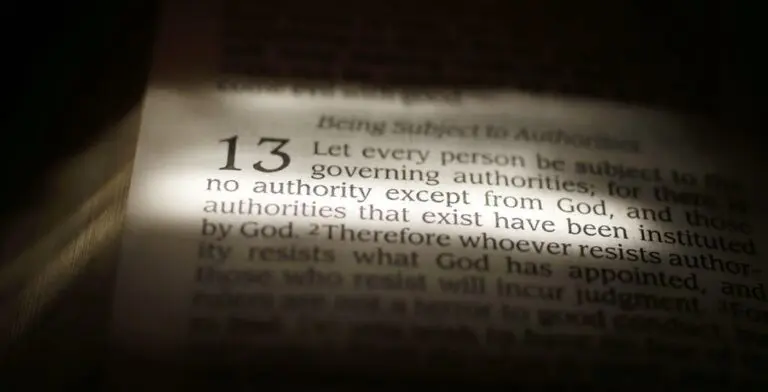
4) Christians must submit to the governing authorities. Christians should never rebel against a government even when the government commits crimes.
5) A person should never use violence as a person, but it is allowed when used in its office. This “office” can be either in the government (executioner, judge, soldier, etc) or in the family (the parents).
6) Laws should be formed by “reason.”
7) Christians are not necessarily better at government than non-Christians.
There is no “best” form of government.
Althaus also does a superb job explaining Luther’s views on vocation, marriage, and economics. His views on economics obviously predate marginal utility theory by centuries so he shouldn’t be condemned to strongly for suggesting a way of arriving at a reasonable price based on the cost of materials and the risk taken by the businessman. Despite this view, Luther argues “that Christ has not given us specific direction in the area of buying and selling but has left the regulation of this area to reason.”
I recommend Althaus’ Ethics of Martin Luther for its in-depth treatment of the difficult areas of Luther’s ethics. The book wasn’t persuasive enough to convince me of all of Luther’s views on government, but significantly improved my understanding.
Please consider buying The Ethics of Martin Luther at Amazon.com and LCC will then get a small kick-back from the sale. Remember, LCC receives a small percentage of any shopping you do at Amazon when you go through an LCC link. Help keep LCC growing and growing; your support is much appreciated!
Tags: Book Reviews, Doctrine of the Two Kingdoms, economics, ethics, government, justice, law, Martin Luther, theology