Welcome

Welcome to LibertarianChristians.com! If you are new here, you may want to see the About Page for a welcome message and more information about the site. Check out the posts on the right and the Top Posts page to get started! Don't forget to subscribe for free with RSS or Email.

Archive for constitution

For those of you who have been on LCC for a while, you know that I am active in the libertarian student movement, and that I help lead the Libertarian Longhorns at UT-Austin. Well, I have some good news…

This week, Students for Liberty announced the nominees for their 2011 Awards, and the Libertarian Longhorns are on the list! Our “More Guns, Less Crime” event with John Lott held this past September is one of the finalists for the “Event of the Year” Award, which recognizes events that had major impacts on their campus and local community. You can vote for the Libertarian Longhorns by clicking here (you can vote once a day). Read More→

Tags: , , , , ,
Categories : News
Comments (1)

Thanks to Jonathan Boatwright for this excellent submission.

In today’s political climate, a hot button issue is the legalization of drugs and more specifically that of marijuana. In this essay, I hope to convince you of two things:

  1. That the Constitution does not grant the authority to deal with matters of drug prohibition to the Federal Government.
  2. That mixing government and morality is highly dangerous, and as Christians we should be willing to help those who are held in the firm grasp of drug addiction.

Constitutional Reasoning Against Prohibition

As a (Christian) libertarian one of the things in the debate over drug legalization that troubles me is the notion that Federal law trumps state law. When the Founding Fathers wrote the Constitution, they delegated to the Federal Government a list of 18 enumerated powers by which the government had the authority and responsibility to fulfill. They also wrote the 9th and 10th amendments, which delegate all other powers to the individual states or to the people of those states. To defend their position proponents of drug prohibition will immediate fall back on the “Supremacy Clause,” and either through willful or forgivable ignorance they forget an essential element to the entire issue: what the Founding Fathers said about the Supremacy Clause.

William Davie, a delegate to the Constitutional Convention from North Carolina said:

“This Constitution, as to the powers therein granted, is constantly to be the supreme law of the land. Every power ceded by it must be executed without being counteracted by the laws or constitutions of the individual states. Gentlemen should distinguish that it is not the supreme law in the exercise of power not granted. It can be supreme only in cases consistent with the powers specially granted, and not in usurpations.”

From The Debates in the Several State Conventions on the Adoption of the Federal Constitution.

Mr. Davie’s point is that the prerogatives of the Federal Government, those eighteen enumerated powers, and any laws to that affect, do hold sway over any laws that emanate from the states, but that this authority does not, nor should it be interpreted to exceed, those 18 enumerated power. Anything not enumerated in the Constitution as an area of authority of the Federal Government is the authority of the states or the people. For the prohibitionist point to be valid they would have to cite at least one of the 18 enumerated powers which might in any way give such authority, and having reviewed those eighteen specific enumerated powers it is my opinion that such a grant of authority does not exist. That being the case, what bolsters my opposition on a Constitutional level to the “Supremacy Clause” argument are the aforementioned 9th and 10th amendments. The 9th Amendment to the United States Constitution states the following,:

The enumeration in the Constitution, of certain rights, shall not be construed to deny or disparage others retained by the people.”

This does further damage to the “Supremacy” argument because it clearly indicates that the Federal Governments authority is limited to those eighteen enumerated powers in the Constitution. I could leave my argument there, but to be sure that there is no flaw I would offer an explanation as to the 10th Amendments meaning as well. The 10th Amendment to the United States Constitution reads as follows, “The powers not delegated to the United States by the Constitution, nor prohibited by it to the States, are reserved to the States respectively, or to the people.” Again, this clearly indicates that the areas of authority of the Federal Government are limited and defined, or enumerated. And that any and all other areas of power are the prerogative of the individual states or the people.

Arguments in favor of the “Supremacy Clause” are at the least unfounded, and at their worst are an interpretation that does away with key elements of the Constitution, the 9th and 10th Amendments, and ultimately make the Constitution a dead letter, as well as making it more easy to simply do away with the rights of the people by Legislative decree.

Moral Reasoning Against Prohibition

First, I want to make one point absolutely clear. Yes, I am arguing for the legalization of drugs, especially marijuana. Does that mean that the consumption of drugs has garnered my tacit approval? No.But for intelligent people to argue against the notion that a man should be allowed to consume in any fashion any substance he chooses is to grant a quiet license to the Federal Government. This quiet license allows the government to legislate on any and all forms of morality, and it goes without saying government is not the best arbiter of what is moral. If the government can legislate on the morality of consuming a potentially dangerous substance where does its assumed authority end? Does it have the right to legislate against speech it deems immoral or dangerous? Does it have the right to bar free individuals from congregating together for the purpose of perpetuating the furtherance of a shared belief that the government views offensive or dangerous? Does it have the right to tell us how to raise our children, where we send them to school or what we teach them ourselves? Or what we teach them about our religious and personal views? Does the government have the right to muzzle our minister, priest, rabbi or cleric in the name of morality? Would we abide by the entrance of a bureaucrat in to our place of worship to tell our minister, priest, rabbi or cleric what he can or cannot preach/teach? Of course not! None of us would abide by the formation of a government agency tasked with the unconstitutional implementation and oversight of such things, nor would we abide by a bureaucrat coming into our home and telling us what books, toys, clothes and food are good or not for our children.

This dependency on government is dangerous and hypocritical. It is dangerous because it does not take into account individual responsibility. It is hypocritical because many who call for prohibition would overwhelmingly defend their right to decide themselves on other matters relating to their own body and beliefs and those of their families. Let us be clear, I am not calling for a libertine society where anything goes. I am calling for individual responsibility. The purpose of the law should be to protect individual rights to life, liberty and the pursuit of happiness.

We live in a country known for its desire to help, to donate money to charitable, social, religious, and first aid programs. The tsunami in the countries of the Indian Ocean, and more recently the earthquake in Haiti are prime examples of this. The large sums of money, reaching the millions, if not billions of dollars, are an indication that a large portion of society could be willing to donate to organizations or programs whose stated goal or more, is to rehabilitate those who are snared in the vice of habitual drug use. This in essence would give individuals the social, secular and religious impetus to open such institutions. And as it relates to Christianity, it is a perfect avenue for healing the body and soul of those on the fringes of society. The prohibitionist argument, it seems, has ensnared well-intentioned Christians in the notions that all drugs users should be locked up and the key thrown away. We see far less compassion today for habitual drug users than Jesus himself had for a prostitute and a man possessed. Jesus Christ did not see an infirmed man, foaming at the mouth and spouting nonsensical ravings. Nor did he see a filthy harlot. He saw a man and a woman, guilty of sin and on their way to an everlasting hell, and in his merciful love, he stooped to forgive one, and worked a miracle in forgiving the other. As far as drug use is concerned, there remains one key question. When are professing Christians going to stop pontificating about charity and kindness and start putting those principles into practice? Instead of asking coercive government to assume a moral responsibility it was never intended to take, we should be diligently seeking to aid those whom society views as disposable, unwanted or undesirable. I am reminded that for all our modernity there are still those in this country, like the homeless, and drug addicts of the Philippines, who I have seen with my own eyes, who still need our help both physically, financially, and spiritually. What of them? Will we leave them hung out to dry? Or will we use our freedom to help those in need, and to bring them the Gospel which God gave us and decreed that we should take to all mankind.

Tags: , , , , , , ,
Categories : Articles
Comments (2)

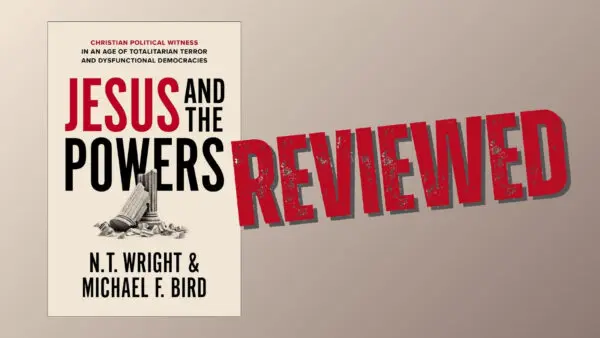
Book review of Disciple of Liberty: Seven Priorities of a Christian Patriot by Jason Rink. The Liberty Voice: Ohio. 145 pages. Retail: $14.95.

image In the world of literature on liberty, books fall into three distinct categories. First are the books for experts scholars, deeper works that address high level concepts, social or economic theory, and philosophical ideas. Next are the books for the informed reader, those that have a working knowledge of libertarian ideas and seek to improve one’s understanding of the philosophy of liberty. Finally, there are books for those just starting their journey in liberty, those who have little knowledge of economics or libertarian theory. Jason Rink’s Disciple of Liberty falls into the latter category, and it fills a particularly useful void in libertarian literature: an easily accessible explication of liberty to the Christian newcomer, from the Tea Party proponent to the disillusioned conservative or liberal.

Rink’s key point, made very early in the book, is that Christians do not need to wonder if it is appropriate or biblical to get involved in politics to defend liberty. On the contrary, it is good and right to become informed and take a stand for what is just, good, and right, we ought to get involved in some way. One cannot simply look at Romans 13 and say that “obeying the powers that be” is all we should do. For those “on the fence,” Rink says to get on board.

But Rink does not simply tell us “just do something, anything!” without a care for what we stand for. “Just get out and vote!” is not a compelling message at all. Rather, he takes the minarchist, constitutionalist position, and defends it wholeheartedly. Rink identifies seven priority areas to which Christians should pay special attention:

  • Define the limits of authority – The government cannot, and should not, have unlimited power. Limits must be clear and precise.
  • Demand fidelity to the Constitution – The limits of authority for the United States Federal Government are found in the Constitution, period. We should continually demand that representatives follow it.
  • Defend liberty for all people – If we expect to have liberty, we need to defend liberty even for people with whom we disagree with their choices. This is a difficult, yet absolutely essential element part of our way of life. Rink quotes Thomas Paine:

“He that would make his own liberty secure, must guard even his enemy from oppression; for if he violates this duty, he establishes a precedent that will reach to himself.”

  • Despise debt – We know that individually we cannot spend more than we make; it is unsustainable and irresponsible. The same should be true of the government. No more can they be allowed to spend like a drunken sailor. And this isn’t even about welfare programs either, which account for a small fraction of total government spending. Rather, we must oppose spending on everything that is unconstitutional, from the FCC to the military-industrial complex.
  • Demand honest money – The US Federal Reserve and it’s fiat monetary system is fraudulent, backed by nothing but empty promises. A return to the gold standard should be at the top of our priorities, for it is the ultimate check against runaway spending by the State.
  • Desire peace with all nations – A Christian is called to love his enemies, not bomb them. We need to understand the history of our current wars in the Middle East and demand that the government cease interventionism.
  • Disciple others in liberty – It is time to get involved in the fight for freedom, and we all can play an important role.

Disciple of Liberty has many commendable strengths. The book’s length, about 100 pages long plus reprints of the Declaration of Independence, the US Constitution, and the Bill of Rights, is very appropriate for a reader who is not ready to tackle a tome about libertarianism quite yet. It is fast paced and lively, yet gently brings the reader to see from a different point of view. The seven principles he outlines are really good, all are worth understanding in detail. Striking a balance between length and depth of material is quite a challenge. Overall, Jason Rink has put together an interesting and useful book that can help Christian newcomers to libertarian thinking grasp some fundamental ideas about liberty.

However, there are a few things in the book (or not in the book) that I don’t like. For one thing, the sources and bibliography are surprisingly short. A bit more along the lines of what to read next would have been nice. If I may be so bold, I’d recommend Rothbard’s For a New Liberty and Ron Paul’s Revolution: A Manifesto (which, I should note, was mentioned in the Bibliography).

Another minor point of contention I have with the book is its interpretation of Romans 13, but it is an admittedly debatable topic. Of course, Rink easily disproves the “you just have to obey the government” line that so many evangelicals take. He take’s Chuck Baldwin’s approach, which emphasizes that our contemporary “powers that be” are the US Constitution and the Bill of Rights, whereas my own approach is quite a bit different. Detailed exegesis, though, is difficult to distill when you are trying to reign in the length of a book, so it is understandable. But following on this point, overall I have certain doubts about making Constitutionalism our prime directive. Personally, I see the Constitution as a bludgeon or mirror, something we can use to say the Federal Government is so terrible that it does not even follow its own rules and never has. We need to remind people that government is aggression, and that our “resistance” against aggression is to expose such truth without apology. Now, Jason does mention each of these things in the book, so this is just the hard-core anarcho-capitalist in me talking. In no way am I downplaying Jason’s work.

As a personal friend of Jason now, I can honestly say that I am very proud of what he’s done despite my reservations on a few points. This is a great book for liberals, conservatives, or Tea Party supporters, who are all in need of some perspective about what liberty should mean to us. I think that it would be great to give to your Christian parents, relatives, or friends who are fed up with the Federal Government and are looking for an alternative. I encourage you to use Disciple of Liberty to strengthen your own resolve and plant new seeds of liberty in Christian hearts.

Visit Jason Rink at www.jasonrink.com. Buy his book here.

Tags: , , , , , , , ,
Categories : Articles, Book Reviews
Comments (8)

imageYou have to hand it to the Federal Government, they really know how to take a bad situation and make it much worse. Consider the new health care bill. Have you paused to think about the expansion of bureaucracy that it will bring? Guess what?

It’s going to be massive.

Estimates run that the one-hundred eleven new groups formed by the bill will need to employ on the order of 50,000 newbie bureaucrats. But whatever, this country is bankrupt and probably won’t be able to sustain this program for a couple of years. Start taking care of yourself better now so you don’t get smashed by statist health care later.

Read the huge list of new bureaucratic groups after the jump.

Read More→

Tags: , , ,
Categories : Articles
Comments (1)

“There is a time for everything,” says Solomon, the wise author of Ecclesiastes. Are we mindful enough of when it is necessary and right to proclaim justice on behalf of others? Let us not be silent when we have good opportunity “to speak truth to power.” Pastor Martin Niemöller had it right in his short, popular poem:

“THEY CAME FIRST for the Communists,
and I didn’t speak up because I wasn’t a Communist.

THEN THEY CAME for the Jews,
and I didn’t speak up because I wasn’t a Jew.

THEN THEY CAME for the trade unionists,
and I didn’t speak up because I wasn’t a trade unionist.

THEN THEY CAME for the Catholics,
and I didn’t speak up because I was a Protestant.

THEN THEY CAME for me
and by that time no one was left to speak up.”

Mary Theroux of the Independent Institute updates Niemöller with some analogous language that perhaps hits closer to our immediate political situation:

“FIRST Truman went to war against Korea without Congress,
and I didn’t speak up because the communists had to be stopped.

THEN Clinton passed the Antiterrorism and Effective Death Penalty Act of 1996,
and I didn’t speak up because innocent people don’t need habeas corpus.

THEN Bush passed the USA PATRIOT ACT,
and I didn’t speak up because terrorists don’t deserve trials.

THEN Obama ridiculed the Supreme Court,
and I didn’t speak up because I don’t like corporations.

THEN Obama classified the Constitution as messy rules standing in the way of important ends,
and by that time no one could remember what a root principle is.”

Will you speak up today? Don’t you think that it’s time?

Tags: , , , ,
Categories : Articles
Comments (0)

Who is behind LCC?

Norman Horn is the creator and primary writer for LCC. Learn a little bit about him in the About Page. You can write him a note or ask a question at the Contact Page. Follow him on Twitter.

Photobucket

Top Ron Paul Sites - Ranking the best Ron Paul related Freedom and Liberty Websites